Your Cart is Empty
Salicylic acid and benzoyl peroxide treat acne in different ways. Salicylic acid is useful for retained cells and comedones; benzoyl peroxide has a stronger guideline recommendation and is especially relevant when inflamed lesions are present. The best choice also depends on tolerance and the rest of your routine.
| Question | Salicylic acid | Benzoyl peroxide |
|---|---|---|
| Main role | Helps loosen retained cells associated with clogged follicles | Antimicrobial acne medicine with activity against C. acnes |
| Common fit | Blackheads, whiteheads and congestion | Inflammatory acne; may be combined with other medicines |
| AAD evidence recommendation | Conditional | Strong |
| Common practical concern | Dryness, stinging and cumulative exfoliation | Dryness, irritation and fabric bleaching |
| What it cannot promise | Permanent pore shrinkage or scar removal | A cure for every acne pattern or guaranteed overnight clearing |
People often have several lesion types at once. A topical retinoid may also be relevant, especially for recurring comedones. The acne overview explains treatment categories; the individual guides cover salicylic acid and benzoyl peroxide in more depth.
Check the Drug Facts panel. A cosmetic that lists salicylic acid or a botanical associated with salicylates is not automatically equivalent to a labeled OTC acne medicine.
Some people can use both within a planned regimen, but dryness and irritation may add up. A formulated combination or clinician-directed plan is different from starting several unrelated products at once. If you are new to treatment, introduce one change and follow the label rather than treating combination as a requirement.
A medicated cleanser is still an active step. Count it when assessing the total routine. A plain cleanser and comfortable moisturizer may be more useful than adding a second exfoliating toner.
Neither ingredient is guaranteed gentle for everyone. Texture, frequency, concentration and the full formula matter. Burning, swelling, rash or persistent peeling is a reason to reassess, not proof that acne is being “purged.” Use the irritated-barrier guide and consult a clinician when needed.
Stop the suspect product and seek urgent care for a severe allergic reaction, including breathing difficulty or swelling of the face or throat. Ask a clinician about acne treatment during pregnancy or breastfeeding.
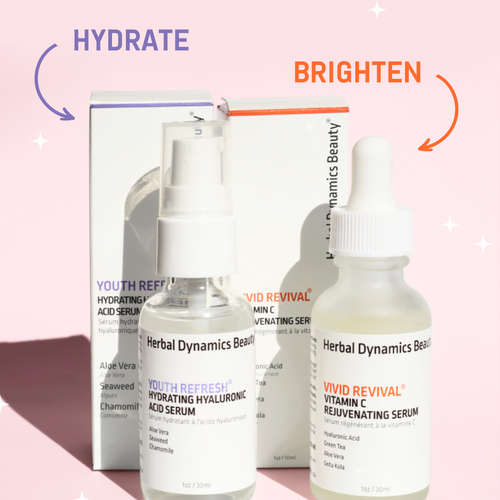
Moisturizers and hydrating serums can make a regimen more comfortable. They do not replace the treatment role of either active. Green tea, aloe or a clay mask should not be presented as having equivalent evidence merely because they are plant-derived or “natural.”
See a dermatologist for deep painful lesions, scarring, substantial distress or inadequate response to consistent care. The next step may be a different prescription strategy rather than adding more OTC actives.
If you are selecting a salicylic-acid format, the clogged-pore exfoliator guide compares the practical options. Review other active combinations before adding an optional acid to acne treatment.
Updated September 20, 2026. General skincare education, not a diagnosis or individualized treatment plan. Seek professional care for deep, painful, scarring, persistent or rapidly worsening acne.
Herbal Dynamics Beauty publishes this article for informational, review and comparison purposes. We sell our own skincare products and have a commercial interest in any Herbal Dynamics Beauty products featured. We are not affiliated with, sponsored by, or endorsed by the third-party brands mentioned. Their product names and trademarks belong to their respective owners and are used solely to identify and discuss their products.