Your Cart is Empty


Short answer: You may be able to reduce the appearance of dark circles, but no single cream, supplement, or lifestyle change works for every cause. The most useful first step is to identify whether the darkness is mainly pigment, visible vessels and thin skin, structural shadowing, puffiness, irritation—or a mixture.
This practical guide explains what you can safely try at home, what topical products cannot change, and when professional evaluation makes sense. For a deeper explanation of the different types, start with Herbal Dynamics Beauty’s dark-circle causes guide.
Dark circles are an appearance, not one diagnosis. Reviews of infraorbital darkness describe multiple possible contributors, and the same person can have more than one. This is why a product can appear helpful for one person and ineffective for another.
| Likely contributor | Common clues | Most realistic approach |
|---|---|---|
| Pigment | Brown or gray-brown color that persists across lighting conditions; may follow rubbing, eczema, or irritation | Sun protection, irritation control, and dermatologist-guided pigment care |
| Thin skin or visible vessels | Blue, purple, or pink tone; often more obvious in fair or translucent skin | Gentle hydration and cosmetic camouflage; evidence for “circulation” creams is limited |
| Structural shadow | Darkness changes with overhead light or facial angle; tear troughs or volume loss may be visible | Topicals cannot replace volume or alter bone structure; specialist assessment if it bothers you |
| Puffiness or under-eye bags | Swelling changes through the day and creates a shadow below it | Cool compresses and trigger management; use Herbal Dynamics Beauty’s under-eye puffiness guide |
| Irritation or allergy | Itching, scaling, redness, watering, or frequent rubbing | Stop irritants, avoid rubbing, and seek medical advice for persistent symptoms |
UV and visible-light exposure can worsen some forms of hyperpigmentation. Use broad-spectrum, water-resistant SPF 30 or higher around the orbital bone as tolerated, plus sunglasses and a hat. Keep sunscreen out of the eyes and choose a different formula if it repeatedly stings or causes watering.
Rubbing can perpetuate inflammation and pigment. If the area is itchy, red, or scaly, pause fragranced products, essential oils, strong exfoliants, and other potential irritants. Use a bland moisturizer and have persistent eyelid symptoms assessed; dark circles caused by inflammation will not be solved by simply adding another brightening active.
Glycerin, hyaluronic acid, ceramides, and other moisturizing ingredients can reduce dryness and temporarily soften the appearance of fine dehydration lines. Hydration may improve light reflection, but it cannot remove deep pigment, change a tear trough, or eliminate a true under-eye bag.
| Ingredient | Possible role | Evidence limit or caution |
|---|---|---|
| Caffeine | May temporarily improve the look of some puffiness or vascular darkness in certain formulas. | It will not correct structural shadowing or permanently remove dark circles. |
| Retinoids | May gradually improve photoaged texture and some pigment irregularity. | The eyelid area irritates easily; do not place a facial retinoid close to the eye unless its directions allow it. Avoid retinoids during pregnancy unless a clinician advises otherwise. |
| Vitamin C | Some stable formulations may support antioxidant care and uneven-tone goals. | Results depend on the formula, and stinging or irritation can make the area look worse. |
| Vitamin K | Small studies of multi-ingredient eye products suggest a possible cosmetic benefit for some participants. | Evidence for vitamin K alone is preliminary, and vitamin K forms can cause contact allergy. Read Herbal Dynamics Beauty’s Vitamin K evidence guide. |
| Hyaluronic acid | Hydrates and can temporarily plump the skin surface. | A topical serum is not the same as injectable filler and cannot correct a deep tear trough. |
Introduce one eye-area product at a time and use only a small amount. Keep products out of the eye. Stop if you develop persistent burning, itching, swelling, or scaling.
Experimental sleep-deprivation studies show that tired faces may be perceived as having darker circles and puffier eyes. However, other research has not found sleep quality to explain every case of periorbital hyperpigmentation. Adequate sleep supports general health and may improve a tired appearance, but it cannot change inherited pigment, visible vessels, or facial structure.
A peach or orange-toned corrector can offset blue or purple tones, while a shade chosen for your skin tone can help cover brown discoloration. Apply a thin layer over moisturized skin and avoid tugging. Makeup changes appearance; it does not treat the underlying cause.
Vitamin K supplements are not an established treatment for ordinary dark circles, and increasing a nutrient above your needs is not a cause-based cosmetic plan. Vitamin K also interacts importantly with warfarin and similar medicines; changes in vitamin K intake can alter their anticoagulant effect. Do not begin a vitamin K supplement for dark circles without medical guidance.
A balanced diet supports overall health, but claims that one food, smoothie, supplement, or caffeine restriction will erase dark circles are not supported for all causes. If a clinician suspects anemia, a nutritional deficiency, thyroid disease, allergy, or another health issue, testing and treatment should be directed at that condition rather than guessed from under-eye color alone.
An eye cream can moisturize, improve surface texture, deliver a well-tolerated active, and create a temporary cosmetic effect. It cannot change bone structure, remove a fat pad, replace lost volume, treat an eye disease, or guarantee permanent pigment removal.
Use Herbal Dynamics Beauty’s cause-based eye-cream guide to compare product categories, then follow the simple morning and evening under-eye routine.
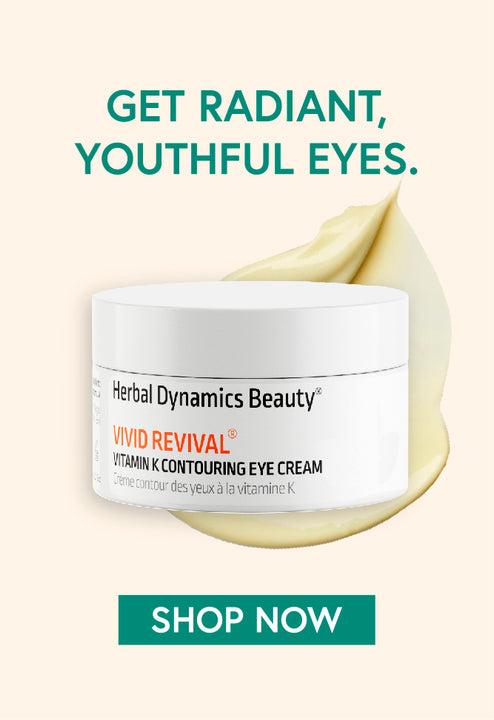
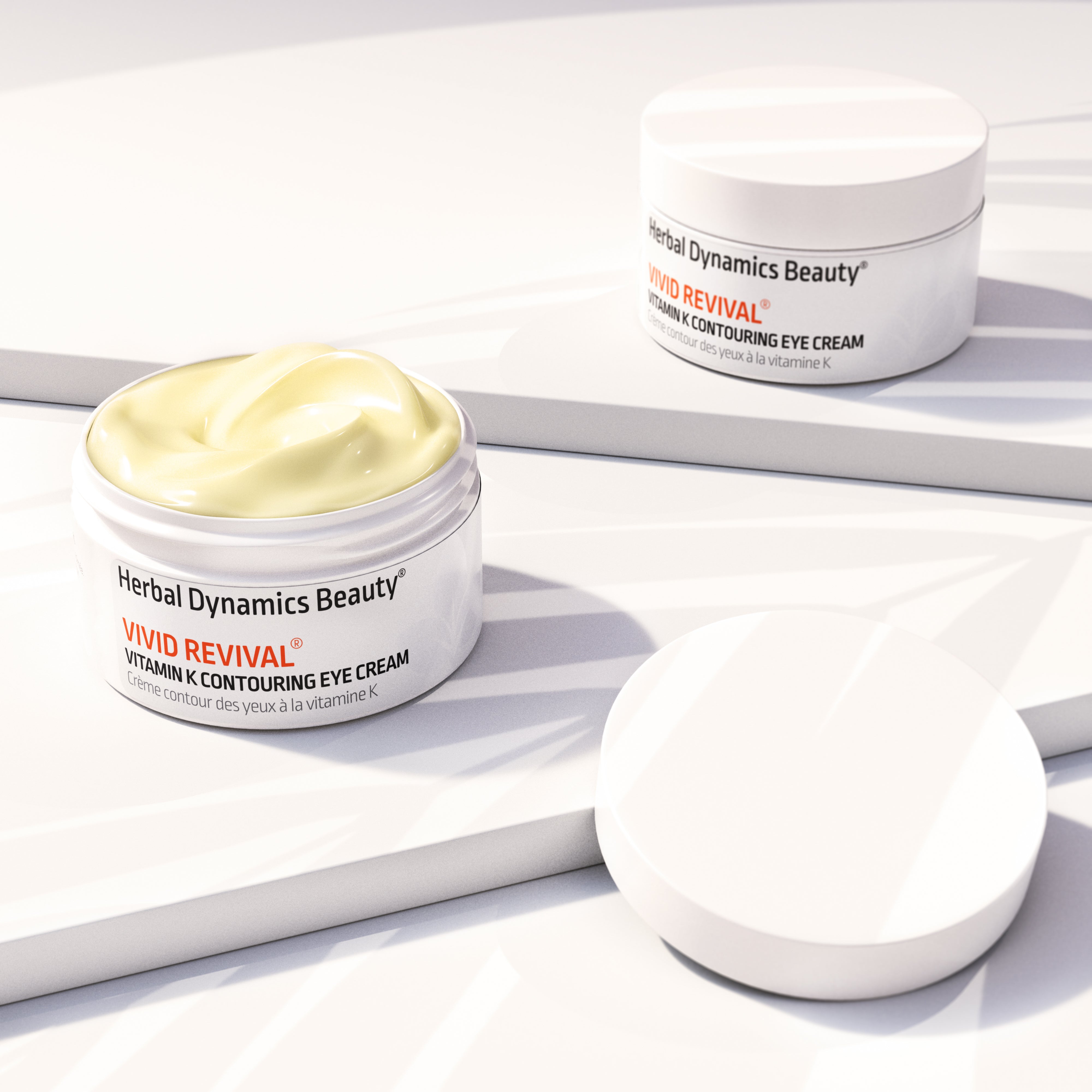
Disclosure: Herbal Dynamics Beauty makes and sells Vivid Revival® Vitamin K Contouring Eye Cream. Its inclusion here does not prove that vitamin K—or the finished product—will correct every type of dark circle. Evaluate it as a complete cosmetic formula and review the ingredient-specific safety information in the Vitamin K guide.
Consider a dermatologist when dark circles are persistent, distressing, associated with eyelid dermatitis, or when you are considering prescription or procedural treatment. Seek prompt medical or eye-care assessment for sudden one-sided discoloration or swelling, pain, vision changes, significant trauma, or other new symptoms. Those situations should not be managed as a routine cosmetic concern.
Sometimes an avoidable contributor—such as irritation—can improve substantially. Genetic pigment, visible vessels, and structural shadowing may persist or recur. “Permanent removal” is not a realistic promise for every type.
Elevation may reduce morning fluid-related puffiness for some people. It will not correct pigment or a tear-trough shadow.
Some retinoid formulas can gradually improve photoaged texture, but claims that an eye cream creates a guaranteed barrier between veins and the surface overstate what topical products can do. Formula, tolerance, cause, and study evidence all matter.
Usually they are a cosmetic, multifactorial feature rather than proof of illness. A new or unusual change accompanied by other symptoms deserves professional evaluation.
Editorial note: This article provides general skin-care education and is not intended to diagnose a medical or eye condition. Individual results vary, and a qualified clinician should evaluate persistent, sudden, painful, or one-sided changes.