Your Cart is Empty
Ubiquinone and ubiquinol are two forms of coenzyme Q10, or CoQ10. Ubiquinone is the oxidized form; ubiquinol is the reduced form. Their relationship involves the transfer of electrons. The words “oxidized” and “reduced” describe molecular states, not whether a cosmetic is spoiled or better quality.
CoQ10 occurs naturally in the body and participates in energy metabolism and antioxidant biology. The CoQ10 skin guide explains the topical evidence separately from those normal biological roles.
| Label or term | Meaning | How to use that information |
|---|---|---|
| Coenzyme Q10 / CoQ10 / Q10 | Names for the coenzyme | Check the ingredient list to identify the form in a cosmetic |
| Ubiquinone | The oxidized CoQ10 form, commonly listed in skincare | Evaluate the complete formulation and its evidence |
| Ubiquinol | The reduced CoQ10 form | Do not assume that a form's role in biology establishes superior topical performance |
A skin cell's antioxidant network is dynamic. Treating these forms as unrelated competing ingredients misses that relationship. Conversely, their relationship does not make every cosmetic containing either form interchangeable.
No. Ubiquinone is the ingredient a manufacturer may intentionally formulate with. Its name does not mean that the bottle has deteriorated. Product spoilage and loss of stability concern the finished formula, its handling and its age.
You also cannot identify the active form or measure potency by looking at a yellow or orange product. Other ingredients influence color. Use the storage and stability guide for practical bottle care.
A supplement's absorption claim concerns swallowing a particular preparation. Skin delivery involves a different barrier and vehicle. A valid topical comparison would need to assess the actual formulas, relevant skin measurements and the outcome being claimed.
In topical research, the starting ingredient is only one variable. Solubility, dispersion and the surrounding formulation matter too. The guide to CoQ10 product formats discusses an excised-human-skin study showing why the vehicle deserves attention.
A body's use of CoQ10 does not prove that applying a cosmetic increases a person's energy or treats an underlying deficiency. “Energizing skin” is too vague to interpret without knowing what was measured. A cellular oxygen-consumption experiment and a visible improvement in facial lines answer different questions.
For cosmetic decisions, focus on what the tested topical preparation did. For supplements, use medical guidance appropriate to oral exposure; the National Center for Complementary and Integrative Health notes potential medication interactions. Skincare shopping is not a reason to start taking CoQ10 capsules.
Read the full list, identify the form and then return to your practical goal: texture, comfort and credible evidence. Do not pay more solely because a label presents “reduced,” “active” or “advanced” as a universal performance ranking.
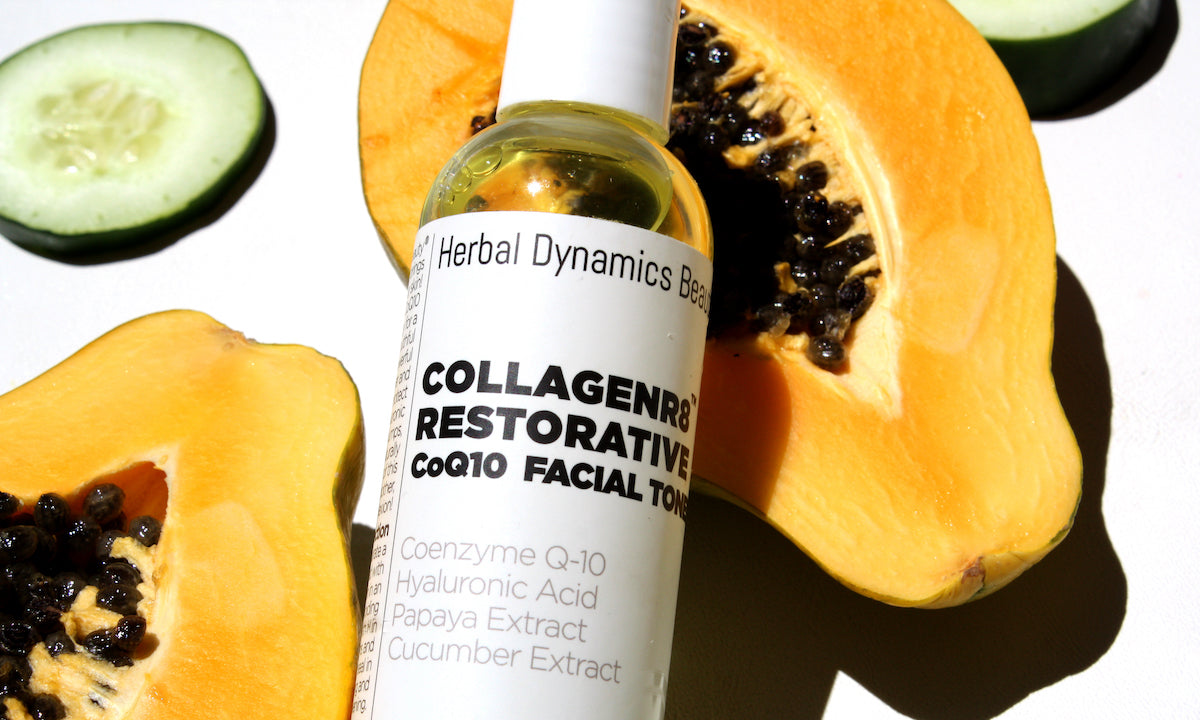
The CoQ10 product-selection guide brings those questions together. If the product is a toner, this formula-level example shows how to interpret Ubiquinone alongside the other ingredients without treating it as a standalone treatment.
By Herbal Dynamics Beauty · September 30, 2026