Your Cart is Empty

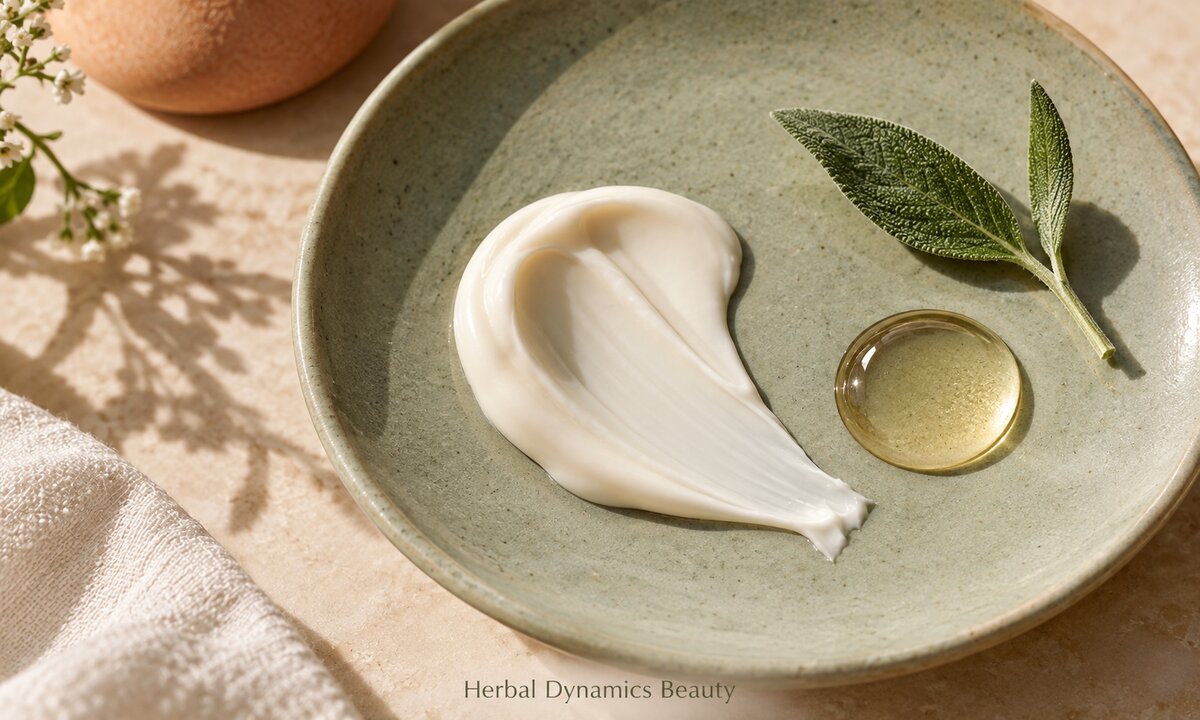
A suitable urea moisturizer can help dry or dehydrated skin hold water and feel less tight. It may also reduce the appearance of light dry scale. The useful choice is a tolerated, hydration-focused finished formula; stronger keratolytic products are not automatically better when the main problem is dryness.
Dry skin commonly includes a tendency toward reduced barrier lipids, while dehydration means insufficient water content. Skin can experience both, and oily skin can also feel dehydrated. These descriptions guide care; they do not establish an NMF deficiency you can diagnose yourself.
Start with dry versus dehydrated skin for the broader concern. The urea overview explains where this ingredient fits.
Urea is part of Natural Moisturizing Factor and acts as a topical humectant. A hydrated outer layer can be more flexible and look less scaly. Comfortable softness after moisturizer is a useful cosmetic effect, but it is not evidence that the skin’s lipids have all been replaced.
A cream’s emollient and occlusive base matters alongside its urea. If a light serum leaves skin tight, adding more humectants may be less useful than choosing a moisturizer that limits evaporation. Moisturizer ingredient roles explains that balance.
The 2022 urea plus NMF research used leg and forearm measurements and a vehicle comparison. It supports improved outer-layer hydration for the studied moisturizer. It does not establish a universal facial result or an exact time when tightness will disappear.
Hydration measurements and TEWL answer different questions. The urea barrier guide explains why a skin-water finding alone cannot prove complete barrier repair.
For ordinary dry-feeling skin, compare hydration-focused urea formulas and the intended body area. The concentration guide gives context for 5% and 10% without promising a precise threshold.
A stronger product may be useful for certain intact, thick rough patches, but light facial flakes can accompany irritation or over-exfoliation. Rough and flaky skin guidance helps assess that difference; the tolerance guide addresses stinging.
| Situation | Useful next step |
|---|---|
| Dry cheeks | Choose a face-labeled moisturizer and review other irritating steps. |
| Dry shins | Use an appropriate body lotion or cream consistently and keep washing gentle. |
| One thick rough patch | Check localized product directions rather than escalating all-over strength. |
| Cracks, rash or ongoing itch | Seek assessment instead of treating the appearance as routine dehydration. |
Facial urea use and hand, foot and body use develop those location-specific choices.
Use the urea moisturizer at the step directed by its label. It can replace a basic moisturizer; it does not require a separate urea layer. Apply after gentle washing without scrubbing away every flake, and use daytime sun protection as usual.
For ingredient alternatives, read glycerin versus urea and urea versus hyaluronic acid. Routine placement and the dry-skin routine cover the rest of care without adding unnecessary steps.
By Herbal Dynamics Beauty · Updated October 4, 2026.