Your Cart is Empty
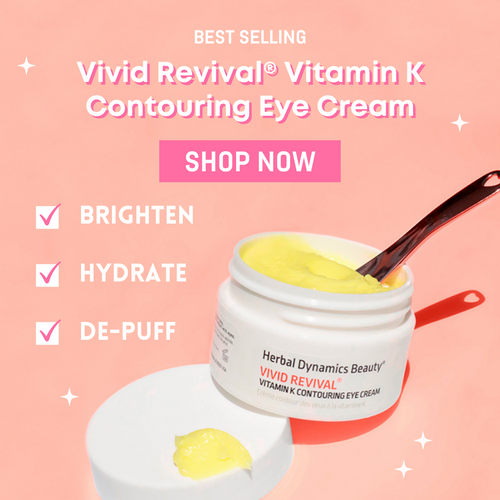
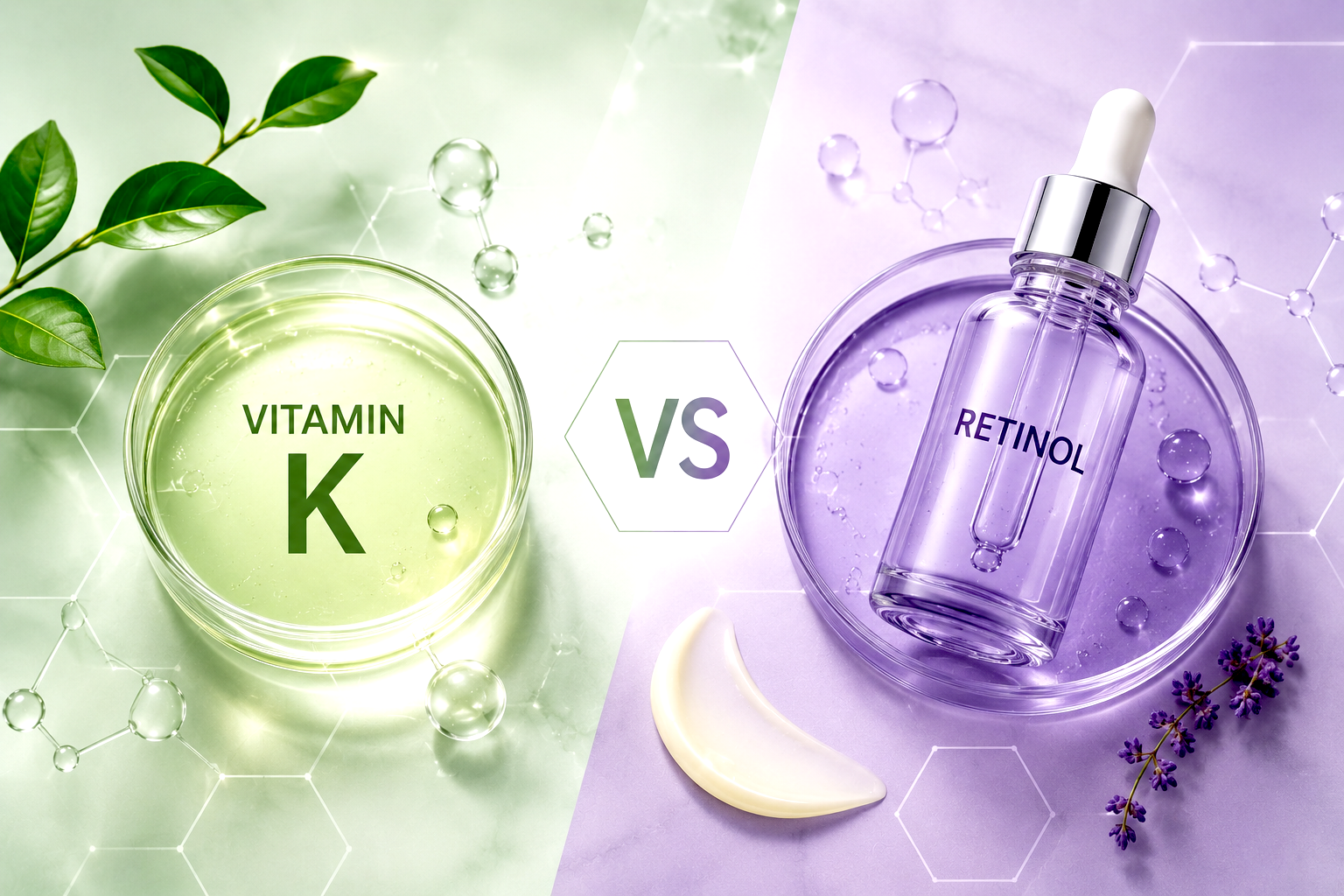
Quick answer: Vitamin K and retinol are not interchangeable. Topical Vitamin K is marketed for vascular-looking darkness, but its evidence is preliminary and based mainly on combination formulas. Retinoids have stronger evidence for fine lines and texture, yet they can irritate delicate eyelid skin.
| Ingredient | Potential role | Important limit |
|---|---|---|
| Vitamin K forms | Preliminary cosmetic option for some vascular-looking discoloration | Does not prove improved circulation or work for every cause |
| Retinol/retinoids | Fine lines, texture, and selected pigment concerns | Can cause dryness, stinging, scaling, and dermatitis |
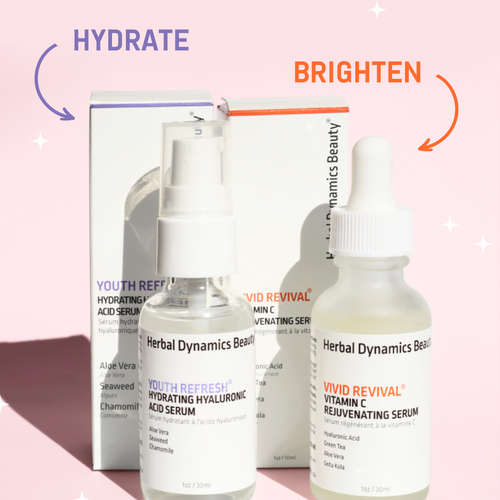
A finished formula may contain a Vitamin K form and a Vitamin A derivative, but layering two separate active products around the eyes can increase irritation. Introduce one at a time and follow the product directions. More ingredients do not guarantee a better result.
People with eyelid eczema, contact allergies, or very reactive skin should be particularly careful. Topical retinoids are generally avoided during pregnancy; ask a healthcare professional about any retinoid product. Vitamin K1/phytomenadione also has documented sensitization concerns, so patch-testing and monitoring are important.
Choose by cause: retinol cannot fill a tear trough, and Vitamin K cannot erase all pigment or fixed bags. Use Herbal Dynamics Beauty’s dark-circle cause guide and Vitamin K evidence and safety hub.
This article is educational and does not diagnose or treat a medical condition. Stop using a product that causes persistent burning, itching, swelling, or a rash, and seek professional care for severe, sudden, or persistent symptoms.