Your Cart is Empty

The best antioxidant moisturizer starts with a moisturizing base that suits your skin. Vitamin C derivatives, vitamin E and plant extracts can be useful additions, but an impressive antioxidant list does not prove superior hydration, sunscreen protection or a guaranteed wrinkle result. Choose the formula for daily comfort first, then the additional goal.
This Herbal Dynamics Beauty guide compares ingredient lists and product roles; it is not an independent head-to-head product test. Check the current package, since formulas can change. No moisturizer suits everyone.
| Formula | Listed ingredients relevant to the choice | Practical limit |
|---|---|---|
| Youth Refresh® Prickly Pear Antioxidant Daily Moisturizer | Prickly pear extract and seed oil, glycerin, shea butter, green tea, tocopheryl acetate and ethyl ascorbic acid | Also contains retinyl palmitate; not a sunscreen or a quantified pigment treatment |
| RevitAge™ Antioxidant Transforming Night Cream | Glycerin, squalane, niacinamide, green tea, tocopheryl acetate and tetrahexyldecyl ascorbate | Also contains sweet orange oil and retinyl palmitate; consider fragrance and active tolerance |
The daily cream is a natural place to consider botanical moisturization in a morning routine, followed by sun protection. The night cream is an evening option when its formula fits. There is no need to use both simply to accumulate different antioxidants.
An ingredient can show antioxidant activity in a laboratory test without proving a visible benefit from every cosmetic containing it. Concentration, stability, delivery, packaging and the rest of the formula affect performance. A published result for one finished product does not transfer automatically to another product with a similar featured ingredient.
The vitamin C literature also distinguishes vitamin C biology from the performance of a specific topical formula. Neither product's ingredient list above supplies enough information to promise an exact collagen, wrinkle or dark-spot outcome. Our vitamin C evidence guide explains the limits.
“Glow” can mean several things: smoother-looking dry skin, a dewy finish or more even-looking tone. Moisturization can improve the first two without treating pigmentation. If you dislike shine, choose a finish you enjoy rather than assuming a glossy result is healthier.
For the role of the featured cactus ingredient, read prickly pear seed oil and extract. For broader ingredient context, use green tea evidence. A plant's antioxidant composition does not establish that its oil treats acne or repairs sun damage.
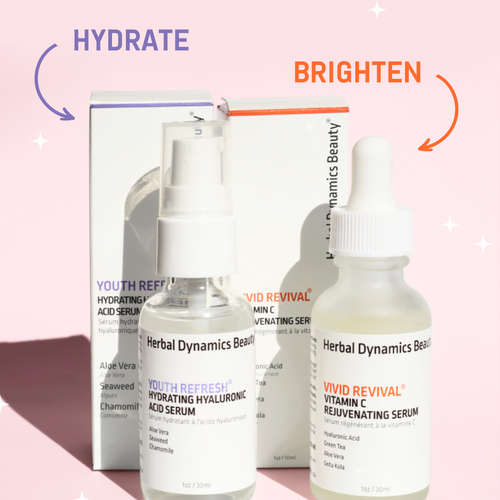
Not necessarily. A moisturizer can provide the everyday hydration you need, and a separate serum is optional. If you want a specific serum outcome, evaluate that product separately. Layering two products containing vitamin C is not automatically more effective, and adding several actives can make irritation harder to trace.
Neither Herbal Dynamics Beauty moisturizer named here is labeled as a sunscreen. Use a broad-spectrum SPF 30 or higher sunscreen according to its directions, with shade and clothing. Do not mix it into cream, and do not read an antioxidant claim as an SPF claim.
If your immediate concern is significant stinging or dryness, a simpler moisturizer may be the better starting point. If you are avoiding fragrance or retinoids, check the full list rather than relying on the front label. The main moisturizer comparison includes other formula types.
By Herbal Dynamics Beauty · Updated September 21, 2026.