Your Cart is Empty
Even if you think your diet is healthy, you probably still need to eat more of these top ten foods for skin beauty.
While our skin is the largest organ, our bodies just don’t consider it the most important one, so most of the nutrients we ingest go to the liver, heart, or pancreas first. By the time the nutrients we eat reach the skin, it can be as little as 1- 3%!
That said, nutrition and skin care are still strongly linked, and your dietary habits will show up on your face, and in a good way if you are eating off of this list on a consistent basis!
Here’s the good news, says the Linus Pauling Institute at Oregon State University, you can enhance the nutrient content simply by adding topical applications and by eating more high-nutrient foods.
AGEs is an acronym for “Advanced Glycation Endproducts.” It was once thought they were merely byproducts of metabolism, but now it’s time to look more closely at the Standard American Diet (SAD) because it’s full of processed, fried, and sugary foods all of which contribute to accelerated aging from glycation.
Collagen and elastin are both proteins that are flexible and repairable - but when sugars in the skin bond to them, they become stiff and unrepairable. On top of that, AGEs also contributes to inflammation and oxidative stress and that results in aging and illness.
The solution to AGEs-related aging is simply to eat more clean (non-processed), high-nutrient foods and less sugary, fatty “comfort and convenience” ones.
You should also make your plate as colorful as possible, says government agency My Plate. Every different color of food has different compounds, phytonutrients, vitamins, and minerals.
For example, yellow peppers are loaded with beta-carotene, which the body converts to vitamin A, an important antioxidant and skin vitamin, while mushrooms, a white vegetable, are a great source of vitamin D, another important vitamin for skin health.
Many factors can deplete our nutrients, so we can be starting in a deficit. These include:
The orange color comes from beta-carotene, which the body can convert to vitamin A. A nutrient’s biological role does not make the food a natural sunblock. Keep broad-spectrum sunscreen and protective clothing in your routine.
For years, there was focus on mainly UVB rays, because they're responsible for sunburn, but science has shown the UVA rays accelerate aging and create photodamage.
These tiny seeds are one of the healthiest foods on the planet, especially when it comes to the skin, because they are loaded with copper. You’ve heard all about copper peptides and their importance in fighting the war against aging, this mineral helps improve skin by aiding in the building of collagen.
Sunflower seeds also fight wrinkles, even skin tone, and stimulateselastin. Just one ounce of seeds also contain 32% of the required daily intake (RDI) of the antioxidant selenium, 10% of the RDI for zinc, 5.4 grams of protein, and 37% of the RDI of vitamin E. Sunflower seeds also have B-vitamins andmagnesium, which combats both acne and dry skin.
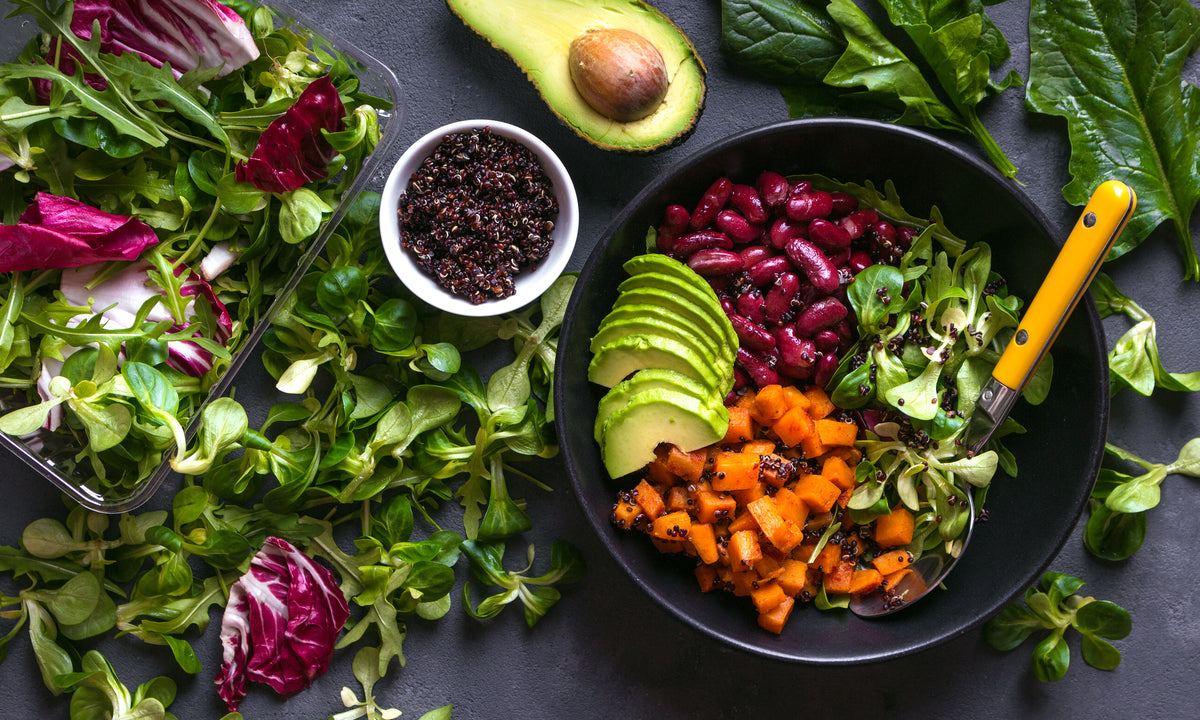
Avocados provide dietary fats and nutrients. Their nutritional value should not be presented as a measured UV-protection benefit or a guarantee of plumper skin.
Even more than that, avocados are packed with antioxidants, which fight free radicals that lead to oxidative stress and premature aging. They also have B-vitamins, especially biotin - which, deficiency of biotin can lead to scaly, red rashes.
Avocado is such a great moisturizer, some people apply the fruit on their skin when there’s a tight, dry feeling. If you wish to do this, patch-test on your forearm first for any allergic reaction.
Good examples of fatty fish are salmon, mackerel, and herring. All are high in the essential fatty acid, omega-3. These fish are also good sources of vitamin E, an important antioxidant, essential for protecting skin against damage from free radicals and inflammation.
Fish can contribute protein and other nutrients to the diet. The zinc in a food does not act as a sunscreen; that claim confuses dietary zinc with zinc oxide in a tested topical sunscreen.
Essential fatty acids have nutritional roles, including in normal cell and barrier function. That does not mean an individual food prevents UV injury or treats acne or psoriasis.
There are two categories of EFAs: linoleic acid (also known as omega-6 fatty acids) and oleic acid (omega-3 fatty acids). Our bodies can’t produce them on their own, so we need to get them through diet, supplementation, and topical application.
However, we can get other EFAs, such as omegas-7 and 9, through metabolism. They can also be included as ingredients in our skin care products.
It’s important to keep them in balance, with the correct ratio of both omega-3s and omega-6s. While both have anti-inflammatory properties, the Standard American Diet tends to have many more omega-6s which can become inflammatory when out of balance to the omega-3s.
When the EFAs are in balance, we can experience bright, clear, skin. Fatty acids hydrate, and they do so without clogging pores or irritating the skin.
Soy foods contain isoflavones, which have been studied in different contexts. Laboratory findings do not establish that eating soy prevents skin cancer or provides sunscreen-level protection.
The National Institutes of Health (NIH) also conducted a study that found that women who ate soy every day for eight to twelves weeks, found a reduction in the appearance of fine lines, as well as an improvement in skin elasticity.
This is NOT an invitation to clean out your cabinets and replace them only with dark chocolate, but so long as the bars you buy are 65-70% cacao, you’ll get a lot of phytonutrients and antioxidants.
That translates to better circulation, and thicker, more hydrated skin with increased protection against photodamage, said the National Institutes for Health (NIH).
Green tea contains polyphenols, including catechins such as EGCG. These compounds are studied for antioxidant activity, but their presence does not give an ordinary beverage a proven medical or cosmetic treatment effect. The oral-versus-topical guide separates the evidence.
Green tea contains polyphenols studied for antioxidant effects. A beverage is not a substitute for UV protection, and its composition does not establish that a particular intake prevents sunburn or skin cancer.
Just one cup (149 grams) of chopped, red bell pepper contains the equivalent of 92% of the RDI for vitamin A. Bell peppers are also a great source of vitamin C, the antioxidant that's necessary for creating the protein collagen, which keeps skin firm and strong. One yellow bell pepper provides 568% of the RDI of vitamin C!
Broccoli provides nutrients and plant compounds including precursors of sulforaphane. Research on an isolated compound cannot be treated as proof that eating broccoli prevents sun damage.
Leafy greens such as spinach, kale and collards contribute vitamins and carotenoids to a varied diet. Those nutrients do not establish a food-based SPF or guarantee prevention of wrinkles.
A healthy diet that is full of these top 10 foods for skin health will contribute to overall wellness and when added to good lifestyle habits - your skin will glow!
Use the facial sunscreen guide to choose broad-spectrum SPF 30 or higher and apply it properly. FDA guidance explains why tested sunscreen claims, protective clothing and correct use matter; ingredient or nutrition research is not an SPF rating.