Your Cart is Empty


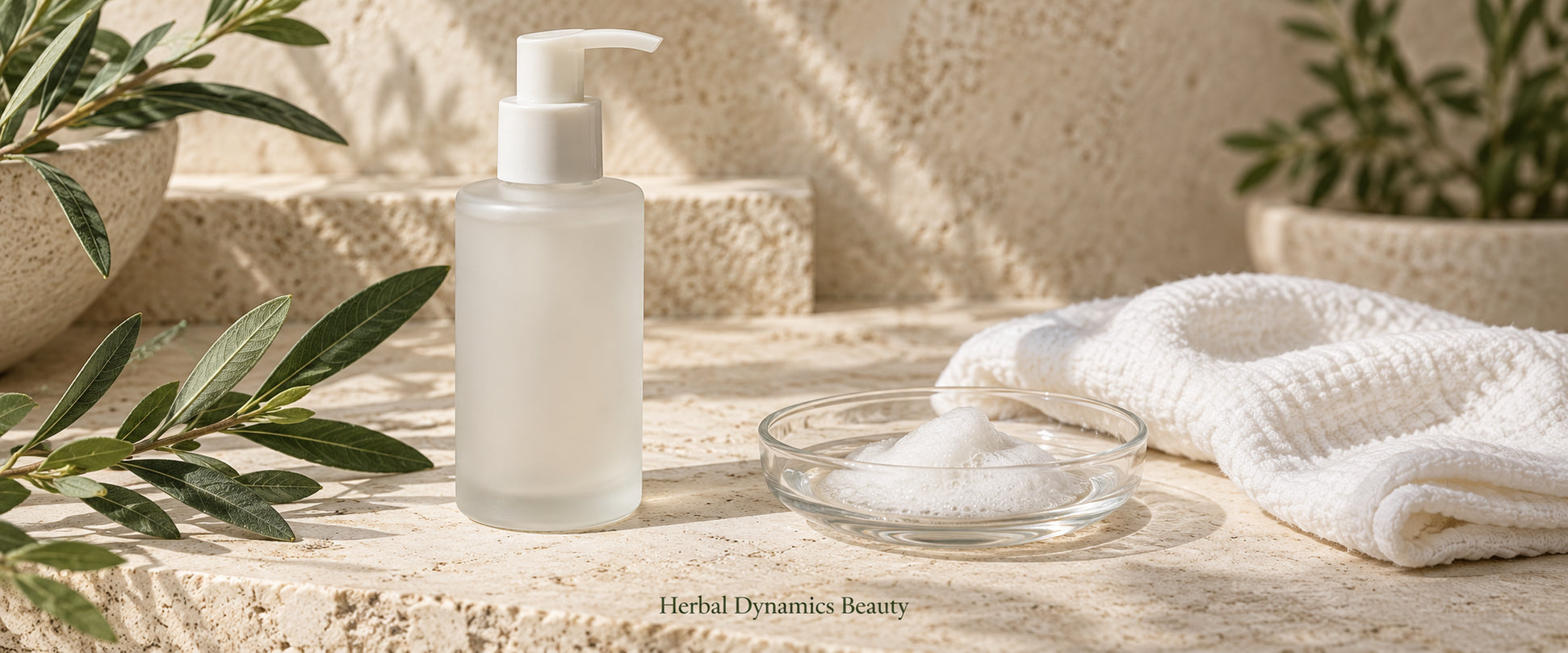
Gel, cream and foam describe aspects of a cleanser’s texture or presentation. They do not reliably rank how gentle or effective a product will be. Choose the finish and removal ability you need, then judge the complete formula and how your skin feels after use.
A gel can foam when mixed with water; a cream can turn into a lather. A pump can dispense a ready-made foam without telling you whether its surfactant system is strong or mild. “Non-foaming” also does not mean that a cleanser contains no cleansing agents.
| Format | What you may like | What remains uncertain from texture alone |
|---|---|---|
| Gel | Easy spreading and a lighter sensory finish | Irritation potential and performance on long-wear products |
| Cream or lotion | A richer, less lathering cleansing experience | Whether it rinses or wipes off and suits your specific skin |
| Foaming wash | Visible lather and a familiar rinse-off feel | Whether it strips skin or is comfortable |
| Low-lather or non-foaming wash | Less bubbling, often preferred when skin feels dry | Removal ability and individual tolerance |
Research comparing cleanser chemistry discusses the importance of surfactants, formulation and pH. These do not map neatly onto a gel-versus-cream split. A label showing moisturizing ingredients is useful context, but it does not cancel out discomfort from the finished wash.
A 2024 formulation study on cleansing foam examined how surfactants, polyols and thickeners affected product characteristics. It illustrates that foam can be deliberately designed alongside moisturizing goals. It does not prove that every foaming cleanser benefits dry skin.
For dry skin, a cream or lotion is a reasonable option to compare, but there is no need to abandon a foam that already works comfortably. For oily skin, a gel may have a finish you prefer, yet a squeaky sensation is not the goal.
For combination skin, evaluate the drier cheeks as well as the T-zone. For sensitive skin, fragrance, known allergens and unnecessary actives may matter more than texture. The focused guides for dry, oily, combination and sensitive skin explain those choices.
A soft after-feel is not automatically dirt left behind, and a very dry finish is not proof of thorough cleansing. Follow the removal directions. If visible makeup remains or the finish is uncomfortable, change the method or formula instead of repeatedly scrubbing.
For persistent makeup, oil-based and water-based cleansers have different formulation approaches worth comparing. Check whether a separate first cleanse is useful before adding one.
Keep your usual moisturizer and other tolerated products steady while comparing a new cleanser. Use it as directed. If burning, itching or a rash appears, stop and reassess; switching from gel to cream without checking the ingredients may repeat the same trigger.
Return to the cleanser overview for the bigger picture, or the buying guide for current formula examples.
By Herbal Dynamics Beauty · Updated September 21, 2026. General skincare education.