Your Cart is Empty
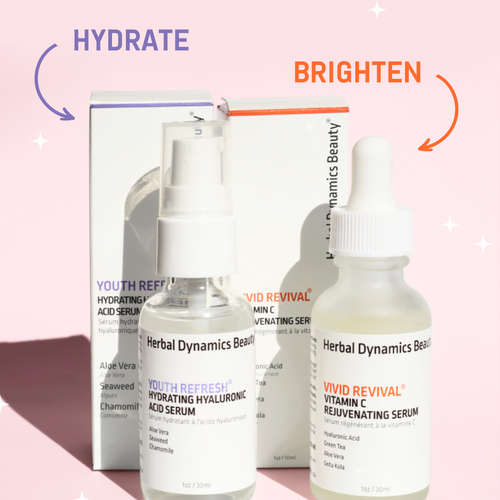
The best tranexamic-acid serum for your skin is a formula that fits a defined concern, has clear directions and works within a routine you can tolerate. The highest percentage or longest ingredient list is not automatically the best choice. Evaluate the complete product, including the evidence behind its claims.
If you are still deciding whether TXA fits the concern, begin with its benefits and evidence. This guide turns that understanding into practical selection criteria without ranking competing products.
| Your question | What to establish before choosing |
|---|---|
| Flat marks after acne | Whether the target is pigment rather than redness or scarring |
| General dark spots or uneven tone | Whether TXA evidence fits the type of discoloration |
| Melasma | How a topical product would fit an assessed melasma care plan |
| A new or changing dark lesion | Medical assessment before cosmetic treatment |
Look for a clearly stated amount of TXA, if disclosed. Check whether a larger front-label number refers to a blend rather than TXA itself. A percentage can help identify what is being discussed, but cannot establish how well the formula works.
Use the concentration guide before assuming that 5% must outperform 2% or that a higher-strength formula is the logical next step. A studied concentration is not automatically an ideal concentration for every user.
A serum can be convenient if you want a light treatment layer before moisturizer. A cream or emulsion may combine the pigment step with moisturization. These categories describe formulation and use; they are not a clinical ranking.
Consider how the product sits under sunscreen, whether the texture is comfortable and whether it makes an existing step redundant. A product that requires several compensating layers may be a poor practical fit even when its ingredient list looks appealing.
Niacinamide, alpha arbutin, vitamin C and other ingredients may appear beside TXA. That can be a coherent formulation choice, but it does not make every combination better than a simpler one.
Use the niacinamide comparison, the alpha-arbutin comparison and the vitamin-C comparison to review the purpose and evidence. The compatibility guide addresses overlap with the products already on your shelf.
Useful evidence names the tested formulation, route, participants, duration and comparator. A cell experiment, an oral medication trial and an uncontrolled consumer survey do not provide the same support as a controlled trial of the actual topical formula.
For example, a 2025 melasma trial compared TXA/niacinamide creams with different carriers and ingredient amounts against hydroquinone. It informs those formulations, but cannot isolate the benefit of a particular delivery system or prove every “advanced delivery” claim.
Check whether photographs use comparable lighting and whether a claim refers to a measured outcome or satisfaction alone. Neither type should be presented as a guaranteed personal result.
Review known triggers and accompanying actives rather than relying on the word “gentle.” The tolerance guide covers testing and reactions. If the routine includes a prescription treatment, check the addition with the prescriber.
Choose a product with directions you can follow. Our application guide helps decide where it would fit. If the new product creates duplication without a clear benefit, keeping the current routine is a valid choice.
Look for an intact package, usable dispensing, a complete ingredient list and clear storage and use instructions. An opaque bottle, pump or dropper does not independently prove TXA stability or clinical effectiveness; the package needs to suit the finished formulation.
Follow the manufacturer’s storage directions and avoid decanting or mixing products. Cosmetic shelf life depends on the complete product and how it is stored and handled, not just the presence of one active.
Keep sun protection in the plan. A well-chosen TXA formula is one considered step, not a substitute for diagnosis, an established treatment plan or prevention.