Your Cart is Empty
Tranexamic acid can appear alongside several skincare ingredients, but compatibility is a whole-formula and whole-routine question. A pair of names does not establish that two finished products will be comfortable together, or that adding the second one improves the result.
Begin with a clear goal from the TXA ingredient guide. Then decide whether another step supports that goal, addresses a different concern or merely repeats what is already in the routine.
| Ingredient | Useful question | Detailed guide |
|---|---|---|
| Hyaluronic acid | Would extra hydration help, or is moisturizer enough? | Discussed below |
| Niacinamide | Is it already included in the TXA formula? | TXA and niacinamide |
| Alpha arbutin | Does another pigment-focused ingredient add a clear purpose? | TXA and alpha arbutin |
| Vitamin C | What form and formula are you using? | TXA and vitamin C |
| Azelaic acid | Is acne or a prescribed treatment also part of the decision? | TXA and azelaic acid |
| Retinol | Is the existing retinoid routine comfortable? | TXA with retinol |
| AHA or BHA | Is exfoliation needed for a separate goal? | Discussed below |
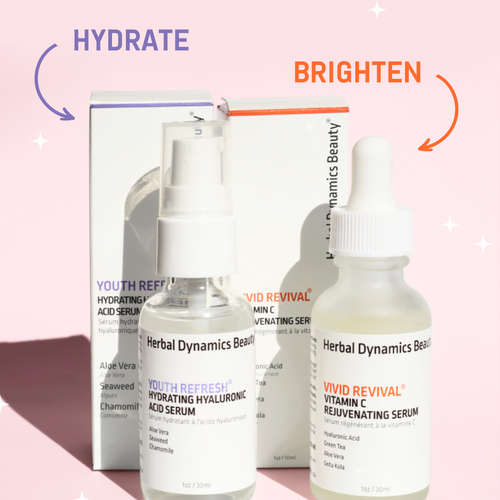
Hydration and pigment care are different jobs. A TXA formula may already contain humectants, and a comfortable moisturizer may make a separate hydrating serum unnecessary. You do not need another bottle solely because the ingredients can coexist.
If a hydrating step is useful, follow the product directions and consider the texture of the combined layers. Our hyaluronic-acid application guide covers practical use. There is no basis for promising that adding a separate HA serum makes TXA fade spots faster.
TXA is not an exfoliating acid in the AHA/BHA sense. Exfoliation should therefore be evaluated for its own purpose, rather than treated as a required partner that “activates” TXA.
If an exfoliant is already useful and tolerated, inspect the proposed TXA formula for overlapping acids. Introducing a multi-active serum while leaving every other exfoliant unchanged can make a reaction difficult to trace. See the exfoliant compatibility guide.
The FDA warns that AHA-containing cosmetics can increase sensitivity to sunlight. That is an AHA-specific concern; it should not be generalized merely because another ingredient has “acid” in its name. Review the differences among exfoliating acids.
A clinical trial of a TXA/niacinamide cream tested one prepared formula. Layering unrelated bottles or mixing them together does not reproduce its carrier, stability or application conditions.
Keep products in their original packaging. Do not combine raw TXA, crushed medication or several serums in a spare bottle. If choosing an integrated formula, evaluate its evidence and directions through the TXA selection guide.
Keep the baseline steady, make one change at a time and note which product was introduced. Separate morning and evening steps if the labels allow and that makes the routine simpler; do not present timing alone as a guaranteed chemical solution.
Use the application guide for order and frequency. If a reaction develops, the tolerance guide is more useful than adding another soothing active to an increasingly complicated routine.
Finally, keep sun protection independent of the pairing decision. A collection of pigment ingredients does not replace that step.