Your Cart is Empty
Ceramides supply barrier lipids; niacinamide can support skin’s lipid-production processes; squalane is an emollient; cosmetic peptides vary widely by type and formulation. They are not interchangeable “repair” ingredients. Choose based on the job your routine is missing.
| Ingredient | Main role in this comparison | Best question to ask |
|---|---|---|
| Ceramides | Lipids used in barrier-supportive moisturizers | Does the whole moisturizer improve my dryness and comfort? |
| Niacinamide | Vitamin-derived ingredient with barrier and other cosmetic research | Is this strength and formula tolerated? |
| Squalane | Softening emollient with an oil-like feel | Do I need more emollience, or already have enough in my cream? |
| Peptides | A diverse group studied for specific cosmetic outcomes | Which peptide and what evidence exists for this finished product? |
Ceramides and niacinamide can complement each other. Laboratory and human research on nicotinamide supports effects on barrier-lipid synthesis and water loss. That is different from adding a lipid-containing moisturizer directly. It does not establish that a high-strength niacinamide serum is better for a sore face.
If niacinamide stings, you do not need to push through it to “make ceramides.” A tolerated moisturizer remains useful. Read niacinamide for the skin barrier for that narrower use.
Squalane is not a ceramide or a complete replacement for the organized lipid system. It can improve softness and the feel of a formula. An oil-only step also does not supply water in the way a water-based moisturizer does. Many creams already contain emollients, making a separate oil unnecessary.
Avoid judging an ingredient by claims that it automatically balances oil production or cannot cause breakouts. Your experience depends on the complete formula, amount and skin response.
“Peptides” names a broad family, not a single treatment. Evidence for one peptide cannot be applied to every peptide serum, and an anti-aging endpoint is not proof of barrier recovery. For types and limits, use our peptide guide.
For an immediate dryness-and-irritation problem, compare moisturizers first. There is no need to add a peptide serum solely to complete a barrier checklist, particularly while skin is reacting to several products.
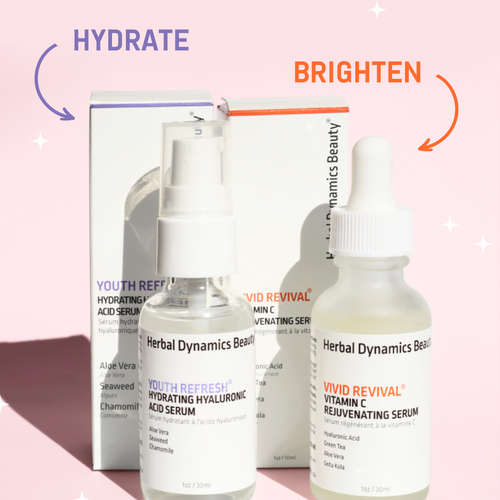
Hyaluronic acid primarily adds water-binding support rather than replacing ceramide lipids. We cover that comparison separately in hyaluronic acid vs. ceramides; there is no need to choose one as a universal winner.
They can appear together in a finished moisturizer. Compatibility is not a reason to layer four new products at once. If your skin is comfortable, choose the simplest formula or sequence that addresses your goals. If it is actively burning, simplify first and investigate the trigger.
The ceramide-moisturizer guide helps select a formula; the barrier-product cornerstone helps decide which product categories are actually worth buying.
By Herbal Dynamics Beauty • Updated September 19, 2026
General cosmetic education, not a diagnosis or treatment plan. Persistent, painful or worsening skin symptoms need professional assessment.