Your Cart is Empty
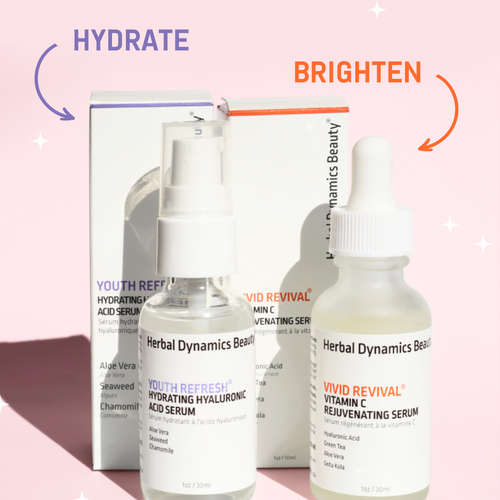

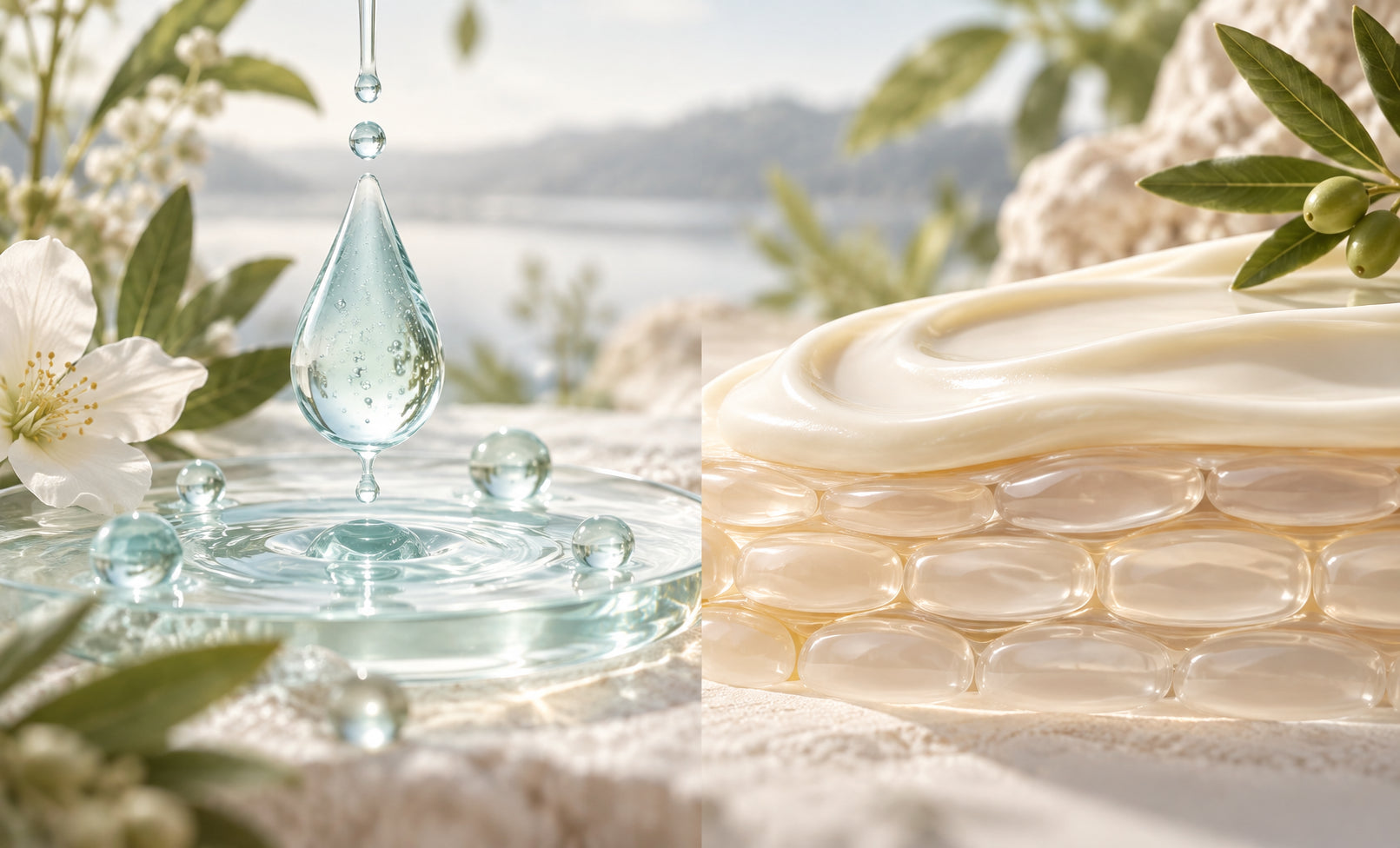
Hyaluronic acid and ceramides solve different parts of a hydration problem. Hyaluronic acid is a humectant that helps bind water near the skin surface. Ceramides are lipids that form part of the skin barrier. Dry or compromised skin may benefit from both.
| Hyaluronic acid | Ceramides | |
|---|---|---|
| Ingredient class | Humectant polymer | Barrier lipids |
| Main job | Support water content and temporary plumping | Support the lipid matrix that limits water loss |
| Common product | Water-based serum | Moisturizer or barrier cream |
| Most useful for | Dehydration in many skin types | Dryness and barrier-support routines |
| Can they be combined? | Yes—serum first, ceramide moisturizer after | |
Hyaluronic acid can give a direct humectant step, but dehydrated skin also needs a routine that reduces ongoing water loss. If dehydration follows over-cleansing or irritation, a bland moisturizer and gentler routine may matter more than adding another serum.
Ceramides often make more sense as the foundational product because dry skin needs lipid and barrier support. Hyaluronic acid can sit underneath for extra hydration. Read our hyaluronic acid dry-skin routine.
Hyaluronic acid may make dehydration lines look temporarily softer as water content rises. Ceramide moisturizer can improve roughness and comfort by supporting the barrier. Neither is a permanent structural wrinkle treatment. Sunscreen and evidence-based retinoids address different long-term concerns.
Yes, depending on the finished formula. Ceramides themselves do not make a product automatically heavy or pore-clogging. Texture, other emollients and individual response determine fit. Likewise, a hyaluronic acid label does not guarantee that every formula will suit acne-prone skin.
For the lipid science, read our complete ceramides guide. For HA evidence, visit the hyaluronic acid pillar.