Your Cart is Empty
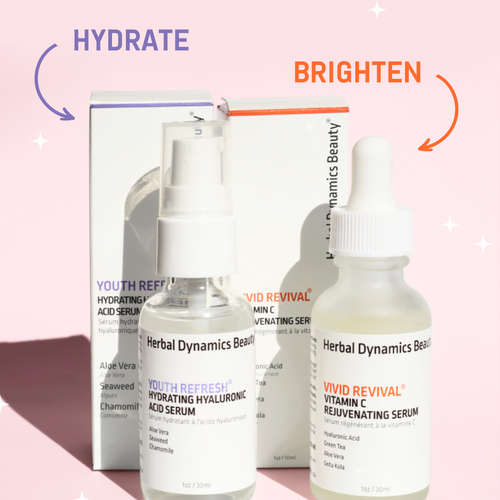
Glycerin helps dry and dehydrated-feeling skin hold water in its outer layer. It is most useful when the rest of the formula also addresses what your skin needs: softness, comfortable wear and protection against excess moisture loss. A glycerin serum can add hydration, but it is not automatically a complete moisturizer for dry skin.
Glycerin, or glycerol, is a water-binding humectant. The stratum corneum is the outermost skin layer, where water helps maintain flexibility. When this layer becomes dry, its surface can feel rough or tight. Glycerin contributes to a moisturizing formula by helping maintain that water content. It does not supply the same lipids or surface film as an oil-rich cream.
“Dehydrated skin” is commonly used to describe skin that feels short of water, including oily skin. It is not a diagnosis you can confirm from a pinch test. For the broader distinction, read dry skin versus dehydrated skin; for the ingredient itself, see glycerin benefits and mechanism.
| What you notice | How glycerin can fit | What else to assess |
|---|---|---|
| Tightness after cleansing | A glycerin moisturizer adds water-binding support | Whether the cleanser or washing habits are irritating |
| Rough, flaky-feeling patches | A cream can combine glycerin with softening ingredients | Persistent, inflamed or painful scaling may have another cause |
| Shine with an uncomfortable tight feel | A light glycerin lotion may feel more comfortable | Oiliness does not measure the water content of skin |
| A serum feels good, then skin feels dry again | Keep the humectant only if it is comfortable | Consider a more complete moisturizer rather than more serum |
A useful product can increase hydration without proving that it has repaired the skin barrier. Hydration measures water content; transepidermal water loss measures water moving outward through skin. They are related, but they are not interchangeable outcomes. Our glycerin and skin-barrier evidence guide explains why that distinction matters.
This is also why a high-glycerin label is not enough to choose a cream. Look at the combination of humectants, emollients and occlusives. You can obtain all three roles from one product.
Keep cleansing gentle and apply a tolerated moisturizer while skin is still slightly damp. If you already like a glycerin serum, place it beneath your moisturizer according to the product directions. A separate serum is optional when the cream itself supplies comfortable hydration.
Assess the feel after the product has settled and later in the day. Immediate slip is not the only useful sign: skin should also remain comfortable without persistent sting. If a serum is tacky, piling on another layer may make the finish worse; review amount and formula texture instead.
Flaking can accompany dryness, irritation or a skin condition. Adding an acid just because a patch looks rough may increase discomfort. Glycerin is a hydration ingredient, not an exfoliating treatment or an eczema medicine. Seek professional advice for recurring rash, painful cracks or dryness that does not improve with a simple, tolerated routine.
For the purchase decision, use how to choose a glycerin serum or moisturizer. For weather-related discomfort, see glycerin in dry climates.
Panthenol can share a moisturizing base with glycerin. Panthenol for dry and dehydrated-feeling skin explains the B5 contribution, while glycerin versus Panthenol keeps the choice centered on the complete formula.
Urea-specific dry and dehydrated skin guidance covers water retention with a concentration-dependent ingredient. A hydrating urea cream may already provide other humectants and an emollient base; it need not be added as a second serum. Glycerin versus urea compares the roles without a universal winner.
By Herbal Dynamics Beauty · Updated October 4, 2026.