Your Cart is Empty
The best green tea skincare product is one that serves a useful step in your routine, identifies its ingredients clearly and suits your skin. An impressive extract percentage or a long antioxidant list is not enough to establish results. Begin with the concern you want to address, then judge the complete formula.
Our green tea skin guide explains the ingredient evidence. This guide turns that background into practical buying criteria, without assuming every product containing tea performs alike.
Look for Camellia Sinensis Leaf Extract or another clearly identified tea ingredient. Green tea extract is a mixture; EGCG, short for epigallocatechin gallate, is one catechin within that mixture. A label that names the extract does not necessarily disclose its EGCG or caffeine content.
Ask what a percentage refers to: the finished formula, a diluted raw material or a standardized constituent. Those measurements cannot be compared as if they were the same. Ingredient order alone also cannot tell you the delivered dose. The EGCG explainer separates the molecule from the wider extract.
| Format | Useful reason to choose it | What to check |
|---|---|---|
| Toner | An optional lightweight step you enjoy | Alcohol, fragrance, directions and whether it duplicates your serum |
| Serum | A focused leave-on step with complementary ingredients | The active forms, tolerability and how it layers |
| Moisturizer | Hydration and a comfortable finish with botanical ingredients | The moisturizing base, richness and your reaction history |
| Eye cream | Moisturizing care specifically labeled for the eye area | Eye-area directions, other actives and realistic limits for bags or discoloration |
A watery texture is not automatically gentler, and a cream is not automatically pore-clogging. A pleasant moisturizer you use consistently can be a more useful choice than adding another serum solely for green tea.
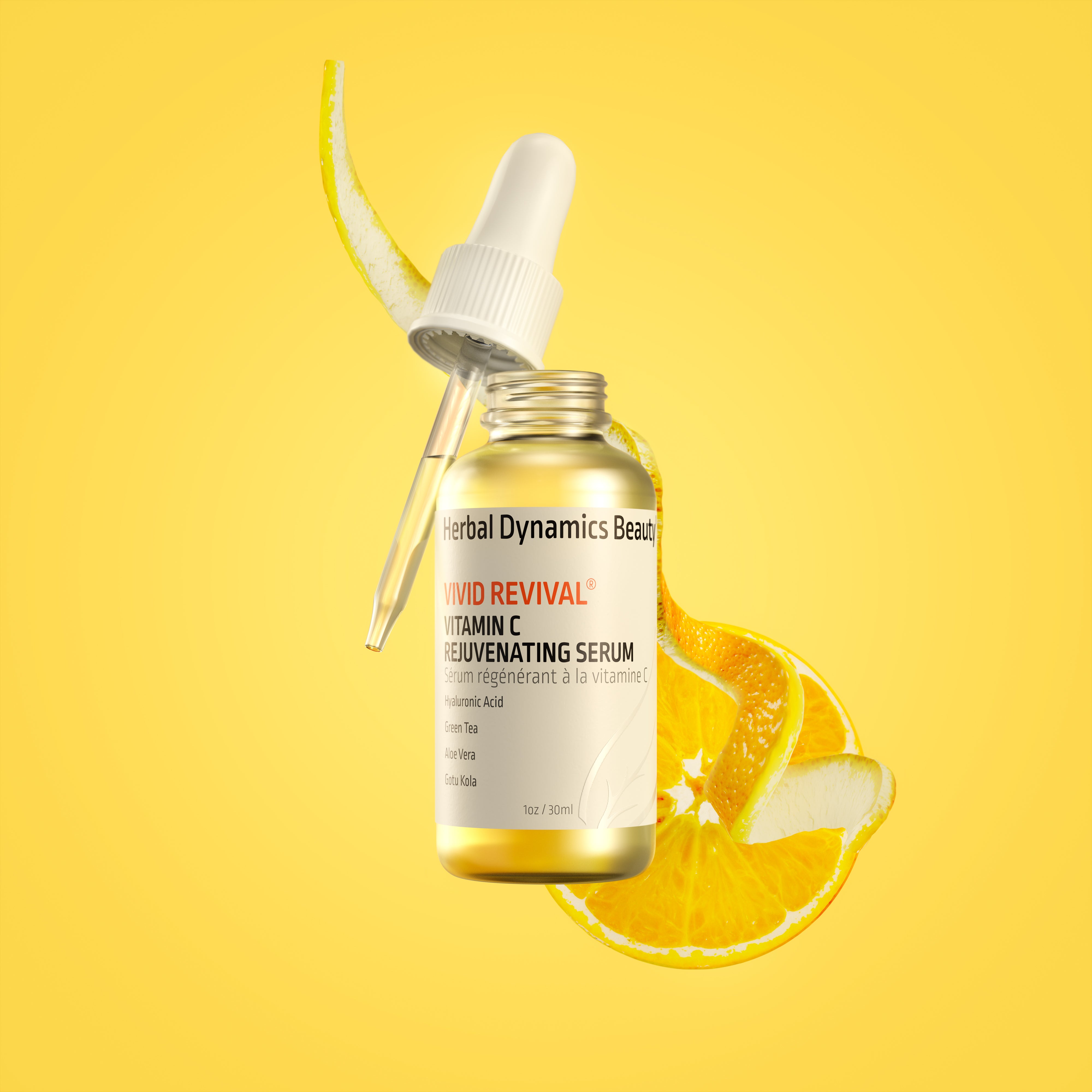
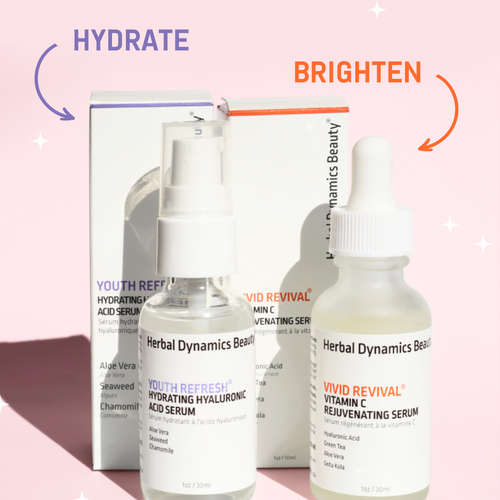
Herbal Dynamics Beauty Vivid Revival® Vitamin C Rejuvenating Serum lists Camellia sinensis leaf extract alongside ethyl ascorbic acid, hyaluronic acid, aloe and glycerin. It illustrates a facial serum format; its label does not establish a standardized EGCG dose.
For a moisturizing step, Youth Refresh® Prickly Pear Antioxidant Daily Moisturizer includes Camellia sinensis leaf extract in an emollient formula. It also lists retinyl palmitate, so assess the entire ingredient list rather than treating it as a single-ingredient tea product.
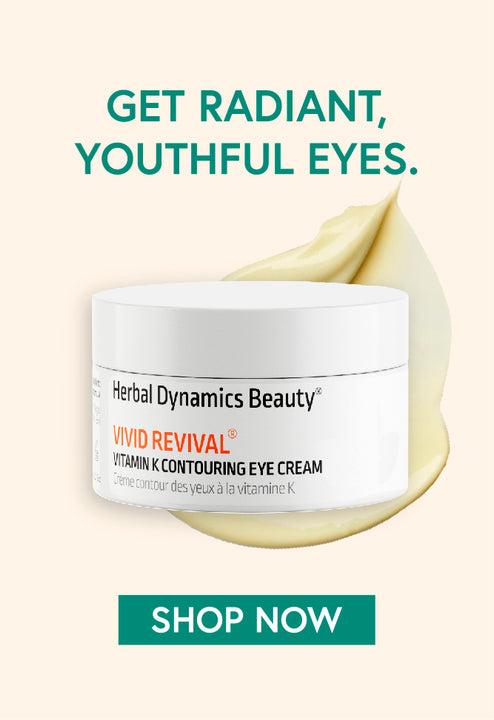
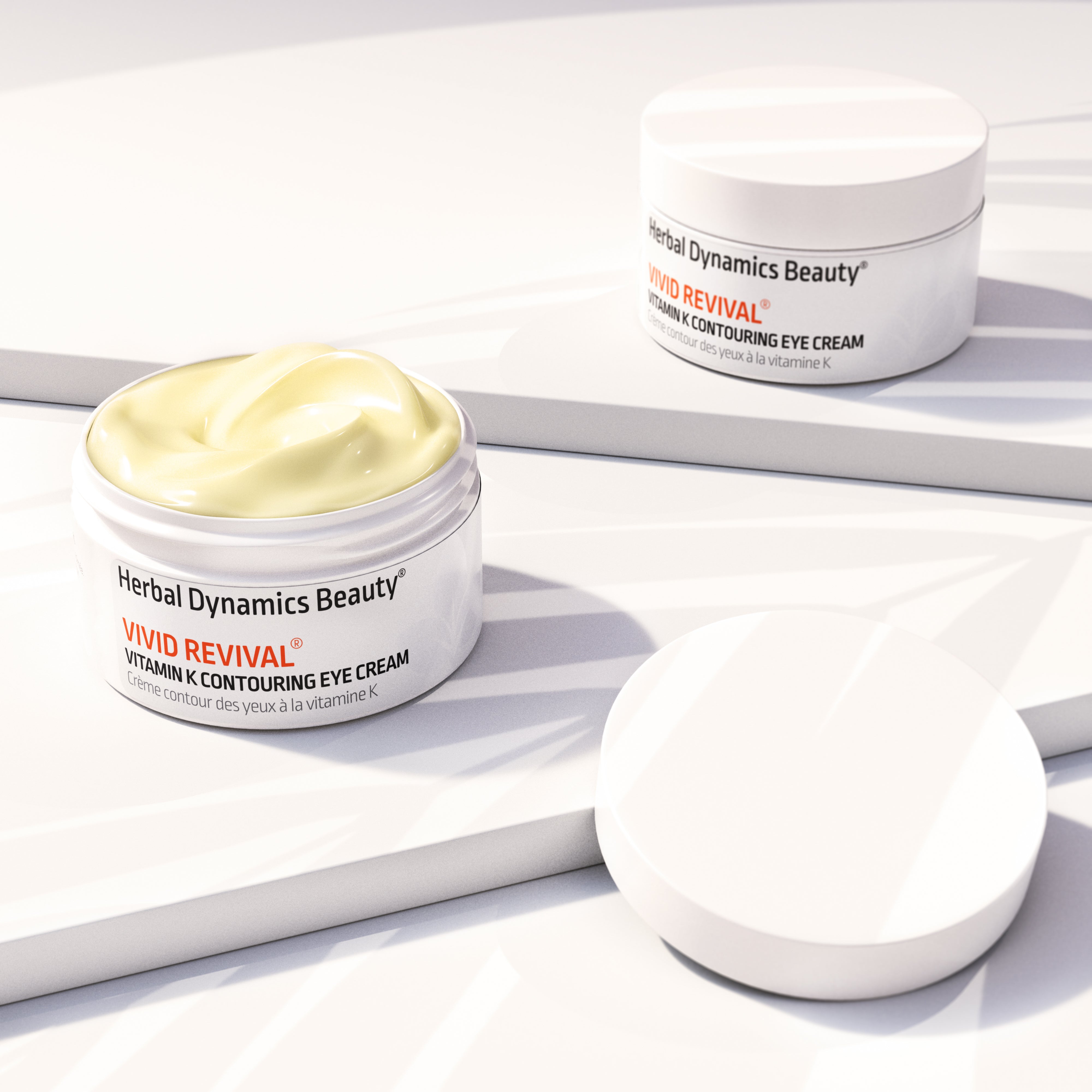
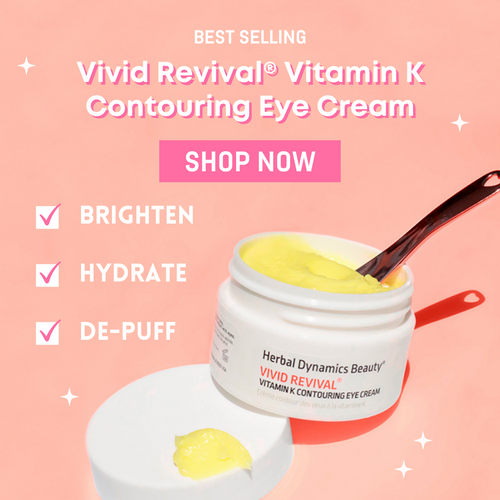
For eye-area care, Vivid Revival® Vitamin K Contouring Eye Cream combines the extract with phytomenadione and moisturizing ingredients. Compare the Vitamin K eye cream options if that combination fits your goal. This is not a recommendation to apply eye cream across oily or blemish-prone facial skin.
Useful evidence identifies the tested formula, comparison, participants and measured outcome. A laboratory antioxidant assay is not a finished-product trial. Research showing variation among tea extracts also makes clear why their shared botanical name is not enough to establish equivalence.
Packaging should suit the formulation and its stability testing. A dark bottle alone cannot prove that the contents remain effective; neither does a jar alone prove failure. Follow the stated storage instructions and avoid transferring the product into another container. Read the formulation and stability guide for these distinctions.
Choose one useful product, introduce it gradually and keep your routine simple. You do not need a complete set of green tea products.
Herbal Dynamics Beauty publishes this educational guide and sells the products mentioned. Ingredient research does not establish identical results for these finished formulas.
By Herbal Dynamics Beauty · October 1, 2026