Your Cart is Empty

Green tea can be a useful soothing and antioxidant ingredient around the eyes, but it is not proven to erase every dark circle or under-eye bag. Its polyphenols—especially catechins such as EGCG—have skin-protective research, while naturally present caffeine may contribute a temporarily refreshed look. Evidence specifically for ordinary dark circles and puffiness remains limited.
Ingredient choice works best after identifying the cause. Start with our guide to dark-circle types.
Green tea comes from Camellia sinensis. Cosmetic extracts can contain polyphenols, catechins and varying amounts of caffeine. The final formula matters: a standardized extract in a preserved product is not equivalent to pressing a wet tea bag against the eyes.
| Potential benefit | Evidence boundary |
|---|---|
| Antioxidant support | Supported by broader skin research, not proof of dark-circle removal |
| Soothing appearance | May help a stressed-looking surface; does not treat eczema or allergies |
| Temporary refreshed look | Caffeine-containing formulas may help some puffiness |
| Photoprotection support | Does not replace broad-spectrum sunscreen |
That depends on the cause. Antioxidant and soothing effects may complement care for irritation-prone or dull-looking skin. Green tea is not an established melanin-removing treatment, cannot fill a tear trough and cannot permanently hide visible vessels.
For brown or gray discoloration, see pigmented dark circles. For blue or purple tones, see vascular dark circles.
A cool product and caffeine-containing formula can create a temporary de-puffing sensation or appearance. Persistent under-eye bags often involve anatomy or fat-pad changes that a topical cannot reverse. Learn the difference in our guide to puffiness and under-eye bags.
Commercial eye products are formulated for stability, preservation and skin contact. DIY tea bags vary in temperature, cleanliness, caffeine content and acidity. A compress should never be hot, leaking into the eye or reused. Stop immediately if irritation occurs.
A formula can contain complementary ingredients, but more actives are not always better near sensitive eyes.
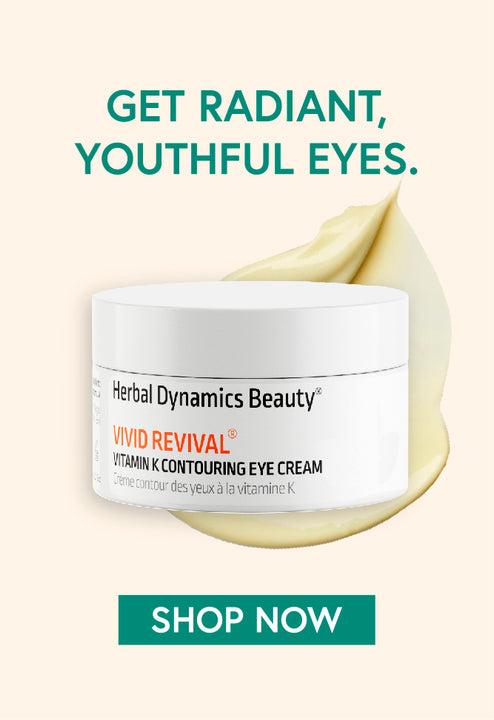
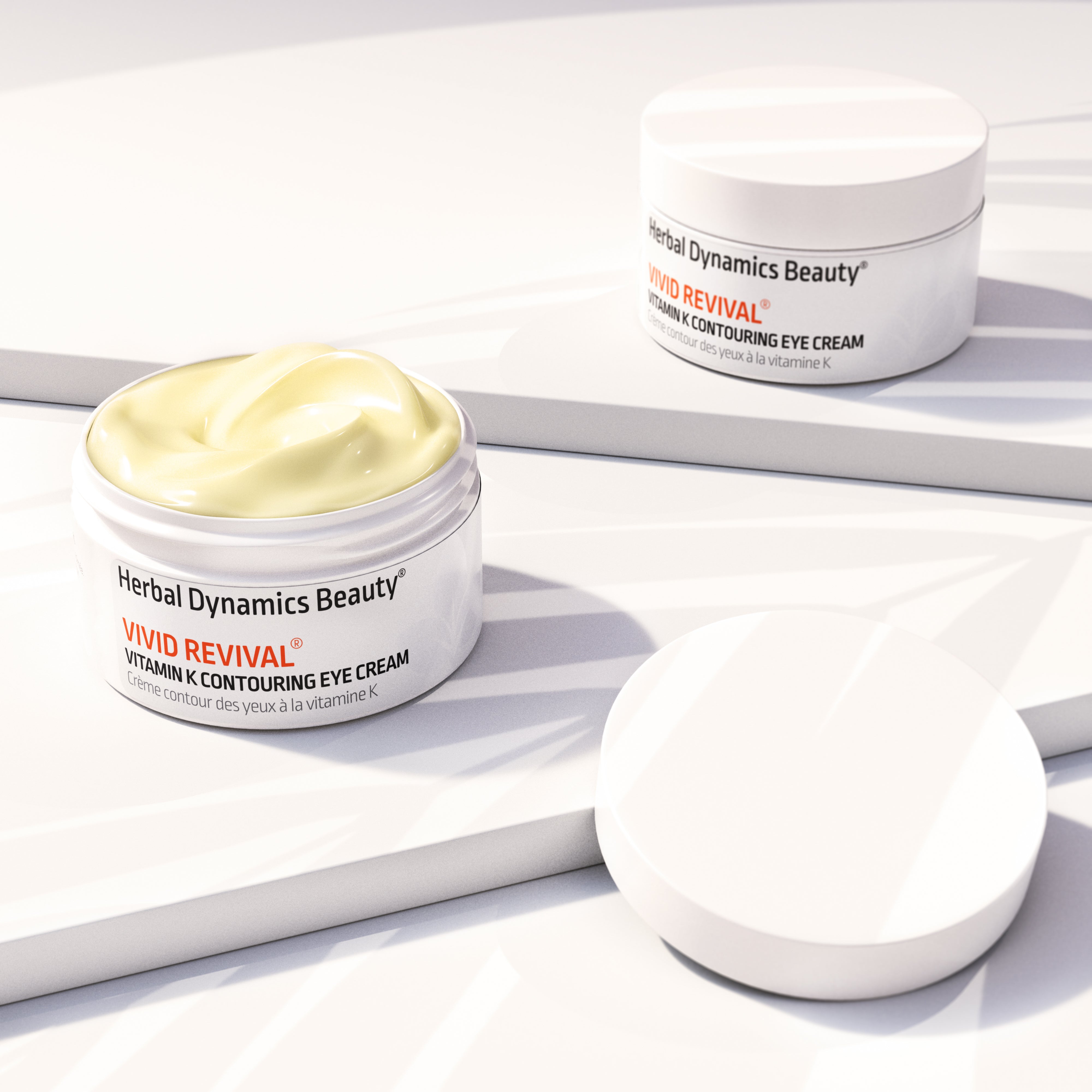
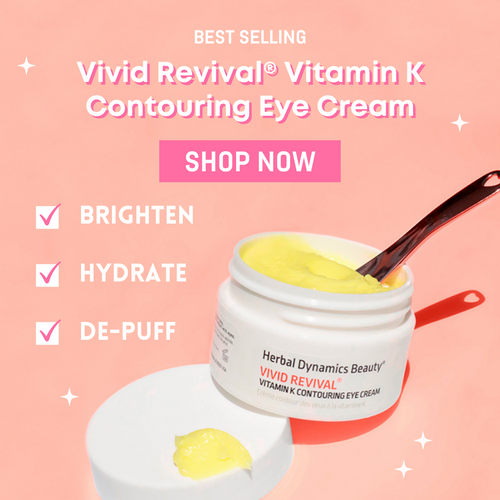
Herbal Dynamics Beauty Vivid Revival® Vitamin K Contouring Eye Cream pairs green tea with vitamin K and moisturizing ingredients. Green tea serves as a supportive antioxidant and soothing component; the product is not presented as a cure for allergies, vascular disease or structural bags.
See how it compares with other formulas in our cause-based eye cream guide.
This article provides cosmetic skincare education and does not diagnose or treat a medical condition.