Your Cart is Empty


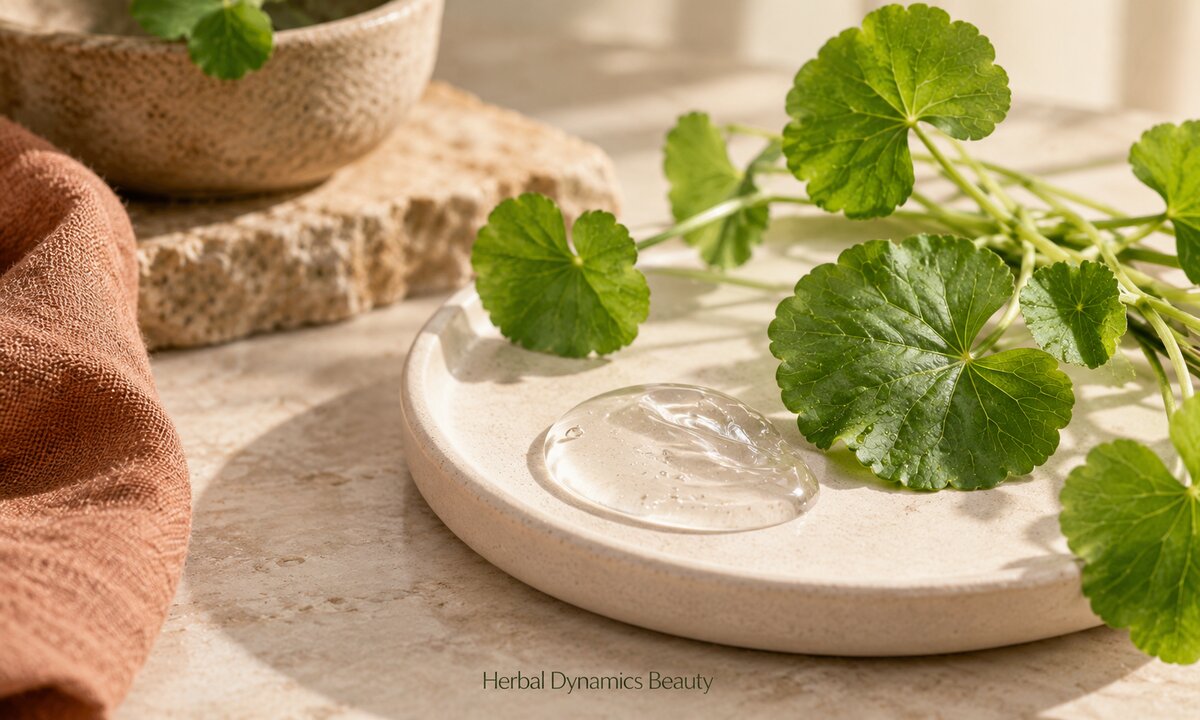
Madecassoside is a triterpene glycoside associated with Centella asiatica. Skincare formulators use it in products intended to support skin comfort and hydration. It is a specific compound, while Centella extract is a mixture whose composition can vary. Neither name tells you everything about how a finished product will perform.
If you are comparing a madecassoside serum with a cica cream, first decide whether you need a light optional step or a moisturizer. The texture, other ingredients and directions can matter more to your routine than which of those two names appears on the front.
| Label | What it identifies | What remains unknown |
|---|---|---|
| Madecassoside | A defined triterpene compound | Its concentration unless disclosed; performance of the full formula |
| Centella asiatica extract | A preparation derived from the plant | The amount of each constituent unless standardized and disclosed |
| Cica | A common skincare description | The actual ingredient identity, dose and product format |
A Centella extract may contain madecassoside without listing the isolated compound separately. Conversely, a madecassoside-containing formula need not contain a large percentage of whole-plant extract. Read the ingredient list and avoid treating the two percentages as interchangeable. The Centella compound guide explains the other major triterpenes.
In cell experiments, madecassoside changed inflammatory signaling and markers connected with water balance. These were cultured cells, including acne-bacterium-stimulated cells, not a clinical test demonstrating acne clearance or redness relief from a retail serum.
A small randomized human study tested vitamin C together with madecassoside on photoaged skin. Improvements in the combination group cannot establish what madecassoside alone would do. That distinction matters when a label borrows “collagen” or “anti-aging” language from research.
Useful questions are therefore: Was the ingredient isolated? Was the study on people? Was the same complete formula tested? A plausible mechanism is a starting point for research, not a substitute for those answers.
For someone who wants an additional conditioning step, a well-tolerated madecassoside moisturizer or serum may be reasonable. It is optional: a comfortable cleanser, moisturizer and sunscreen do not become incomplete because this ingredient is absent.
These names describe different ingredients. Ceramides are lipids; panthenol is a provitamin used in moisturizing formulas. Their coexistence in a cream does not prove that they amplify one another in every formulation. A single suitable moisturizer can be simpler than three separate serums.
Check the product directions and use the Centella compatibility guide for routine decisions. If a formula contains exfoliating acids or a retinoid as well, those ingredients still require their own tolerance assessment.
Look for the actual ingredient name, an appropriate product format, clear directions and any testing on the finished formula. There is no universal madecassoside percentage established as best for every skin type. Do not infer the amount from an ingredient’s position alone.
Introduce one new product at a time, and discontinue a product that causes continuing burning, itching or a rash. Read how to assess a reaction to a cica product if “soothing” skincare is making your skin less comfortable. For the full ingredient overview, return to Centella asiatica for skin.
By Herbal Dynamics Beauty • Updated October 1, 2026