Your Cart is Empty


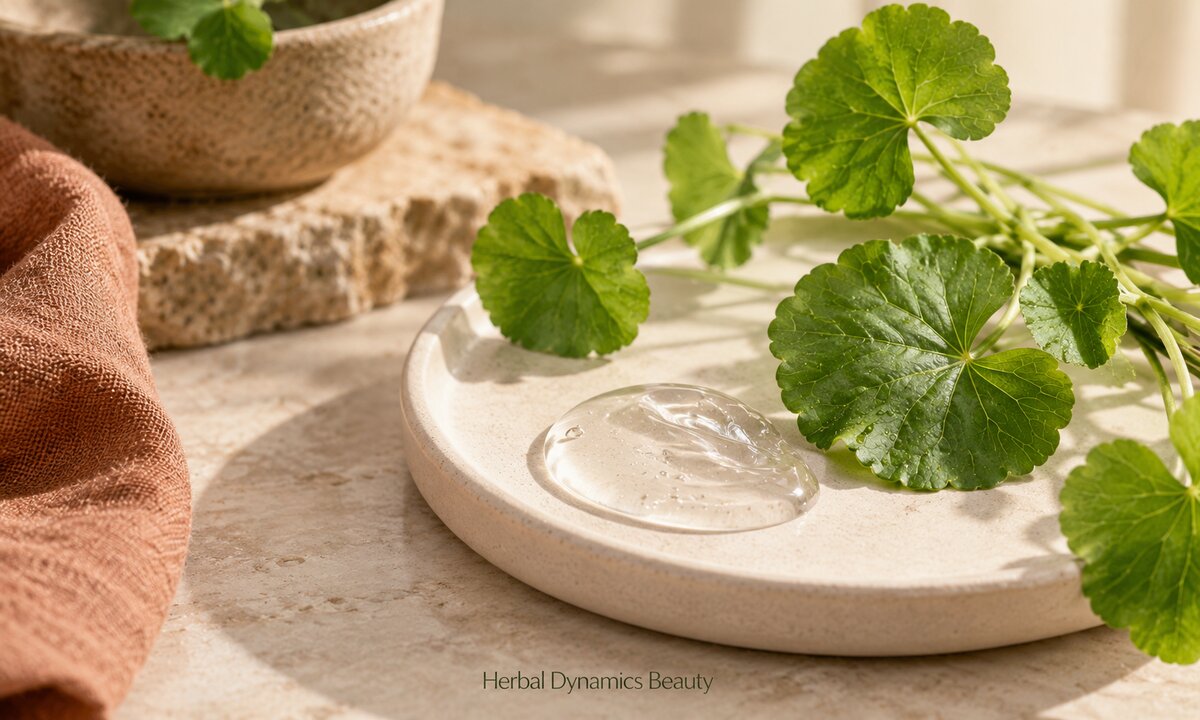
A Centella-containing product may be a useful optional part of a gentle routine for sensitive-feeling or temporarily red-looking skin. Whether it helps depends on the complete formula and your individual tolerance. Centella does not diagnose redness or replace treatment for rosacea, eczema or contact dermatitis.
The first decision is whether your skin needs a new product at all. If it is actively burning, a new botanical serum adds another variable. Begin with the sensitive-skin guide and a routine you already tolerate.
A 2025 observational study followed 88 women using a cream containing Centella leaf extract, ceramide NP and panthenol. Skin-comfort scores and instrument measurements improved. There was no separate untreated comparison group, and the study did not isolate Centella’s contribution. It supports interest in that complete formula, not a promise for every cica product.
An earlier cosmetic study also assessed a controlled redness response on forearms. Experimentally induced redness is different from persistent facial redness with an underlying medical cause. Neither study establishes a Centella treatment for rosacea or eczema.
| What you notice | What to consider | Role of a cica product |
|---|---|---|
| Tightness after cleansing | The wash, water temperature and moisturizer | Optional only after the basic routine is comfortable |
| Stinging immediately after a new serum | A reaction to the finished formula or current skin irritation | Stop the suspected product; do not add more to counteract it |
| Redness that keeps returning | Several possible triggers or skin conditions | Do not rely on an ingredient to identify or treat the cause |
| A dry-looking surface with an otherwise comfortable routine | Whether the moisturizer is adequate | A suitable Centella moisturizer may be one option |
See the facial-redness guide for broader causes and when assessment is appropriate. Seek medical advice for persistent, painful, spreading or worsening symptoms rather than repeatedly changing cosmetics.
Inspect fragrance, aromatic oils, exfoliants and other actives in the same formula. “Cica,” “natural” and “soothing” do not tell you whether those ingredients are present. A short ingredient list is not automatically better, but it can be easier to review when you know a specific ingredient you must avoid.
Contact-allergy reports show that Centella itself is not suitable for everyone. A reaction can also come from another ingredient. A home trial cannot diagnose which substance caused it.
Follow the product directions for frequency. Morning versus evening is less important than avoiding repeated irritation. A Centella serum also does not remove the need for a moisturizer when your skin is dry.
Yes, these ingredients can appear in the same routine or formula, but adding several products is not required. Read Centella versus ceramides and Centella versus panthenol to understand their different roles. Neither a combination nor a higher extract percentage guarantees comfort.
The Centella selection guide helps compare finished formulas; the reaction guide covers what to do when a new product disagrees with your skin. Return to the Centella pillar for the ingredient’s broader evidence.
By Herbal Dynamics Beauty • Updated October 1, 2026