Your Cart is Empty

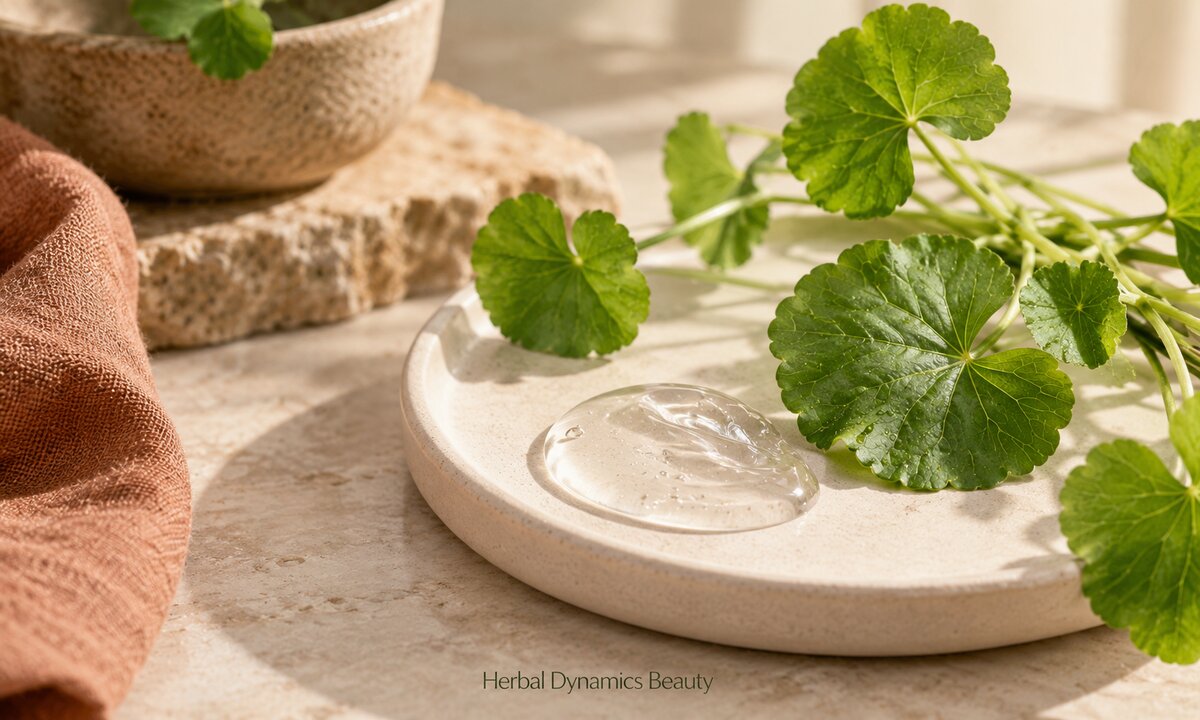
Centella asiatica, often called cica or gotu kola, is a botanical used in moisturizing and soothing skincare. Small human studies support potential hydration benefits in specific formulas. It is not a proven cure for eczema, rosacea or a damaged barrier, and a “cica” label does not guarantee a non-irritating product.
| Label term | What it means | Important distinction |
|---|---|---|
| Centella asiatica extract | An extract of the plant | Composition depends on plant material and extraction |
| Cica | A common cosmetic shorthand | Not a standardized percentage or formula |
| Madecassoside or asiaticoside | Particular plant-associated triterpene compounds | An isolated constituent is not identical to a whole extract |
| Gotu kola | Another common name for Centella asiatica | Not the same plant as ginseng or ginkgo |
A 2016 cosmetic-formulation study followed 25 volunteers using Centella-containing preparations on their forearms over four weeks. It measured surface hydration, TEWL and a controlled irritation model. The findings support further interest in those formulations, not a guaranteed result from every cica product or proof of treatment for a skin disease.
The study setting matters: an experimentally induced response on a forearm is not the same as facial rosacea, allergic dermatitis or an open wound. Laboratory antioxidant or wound-repair findings should not be turned into promises of scar removal or permanent wrinkle correction.
Someone with ordinary dryness who likes a Centella-containing moisturizer may find it a useful conditioning option. Sensitive-feeling skin should judge the entire formula: fragrance, essential oils, other actives and personal allergy history may matter more than the featured plant.
There is no requirement to use Centella during recovery. If a bland moisturizer already feels comfortable, adding a new botanical can introduce another variable rather than solve a missing need.
Our barrier-care routine explains why the number of steps matters less than tolerance. Stinging after moisturizer deserves attention even when the product says “soothing.”
Centella can be part of a formula with ceramides or panthenol; these ingredients serve different roles. Pairing is not proof of synergy in every product. If your skin is actively irritated, use the active-ingredient decision guide before adding a vitamin C or retinol step.
Youth Refresh® Hyaluronic Acid & Oat Overnight Recovery Mask lists Centella asiatica extract and panthenol among its ingredients. It also contains aromatic botanicals, including frankincense oil and rose geranium hydrosol, so it is not the default recommendation for an actively burning or allergy-prone face.
This is ingredient-list context, not evidence that the finished mask reproduces the study above. Use only if the complete formula is appropriate for you and follow its directions.
By Herbal Dynamics Beauty • Updated September 19, 2026
General cosmetic education, not a diagnosis or treatment plan. Persistent, painful or worsening skin symptoms need professional assessment.