Your Cart is Empty
Alpha arbutin can be considered alongside other skincare ingredients, but compatibility depends on the finished formulas and your tolerance. A list of theoretically compatible actives is not a recommendation to use them all. Start with one clear pigment-care goal, then decide whether each additional step serves a different purpose.
For the ingredient’s own role, see what alpha arbutin does for skin. This guide focuses on organizing a routine, not proving that a particular combination works better.
| Ingredient | Reason to consider it | Decision to make |
|---|---|---|
| Hyaluronic acid or glycerin | Hydration and comfort. | Does your current moisturizer already meet this need? |
| Niacinamide | Separate barrier or uneven-tone goals. | Is it already present in another daily product? |
| Vitamin C | A different cosmetic approach to tone and photodamage. | Which form, formula and schedule are involved? |
| Azelaic acid | Different pigment and, depending on the product, condition-specific goals. | Would one product be sufficient? |
| Retinol or another retinoid | Visible aging or a prescribed treatment purpose. | Is the existing routine already comfortable? |
| AHA or BHA | Exfoliation or a separate pore-related goal. | Is an exfoliant actually needed? |
Hyaluronic acid is a humectant, not an exfoliating acid. It does not need to be avoided simply because “acid” appears in the name. It may already be included in the serum or moisturizer, so a second hydration bottle is optional.
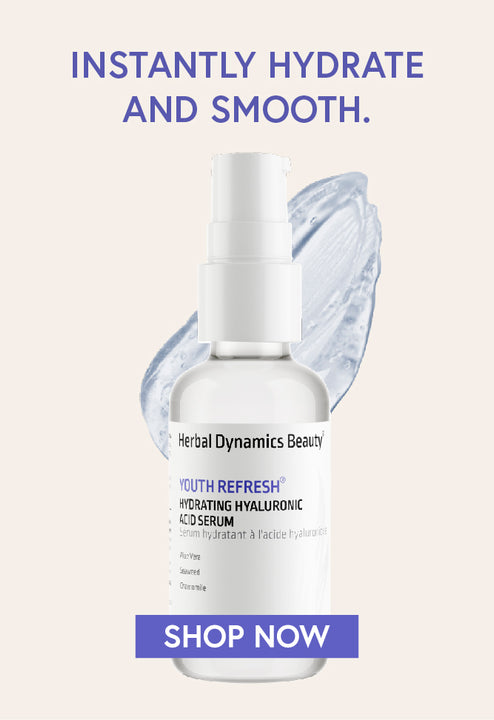
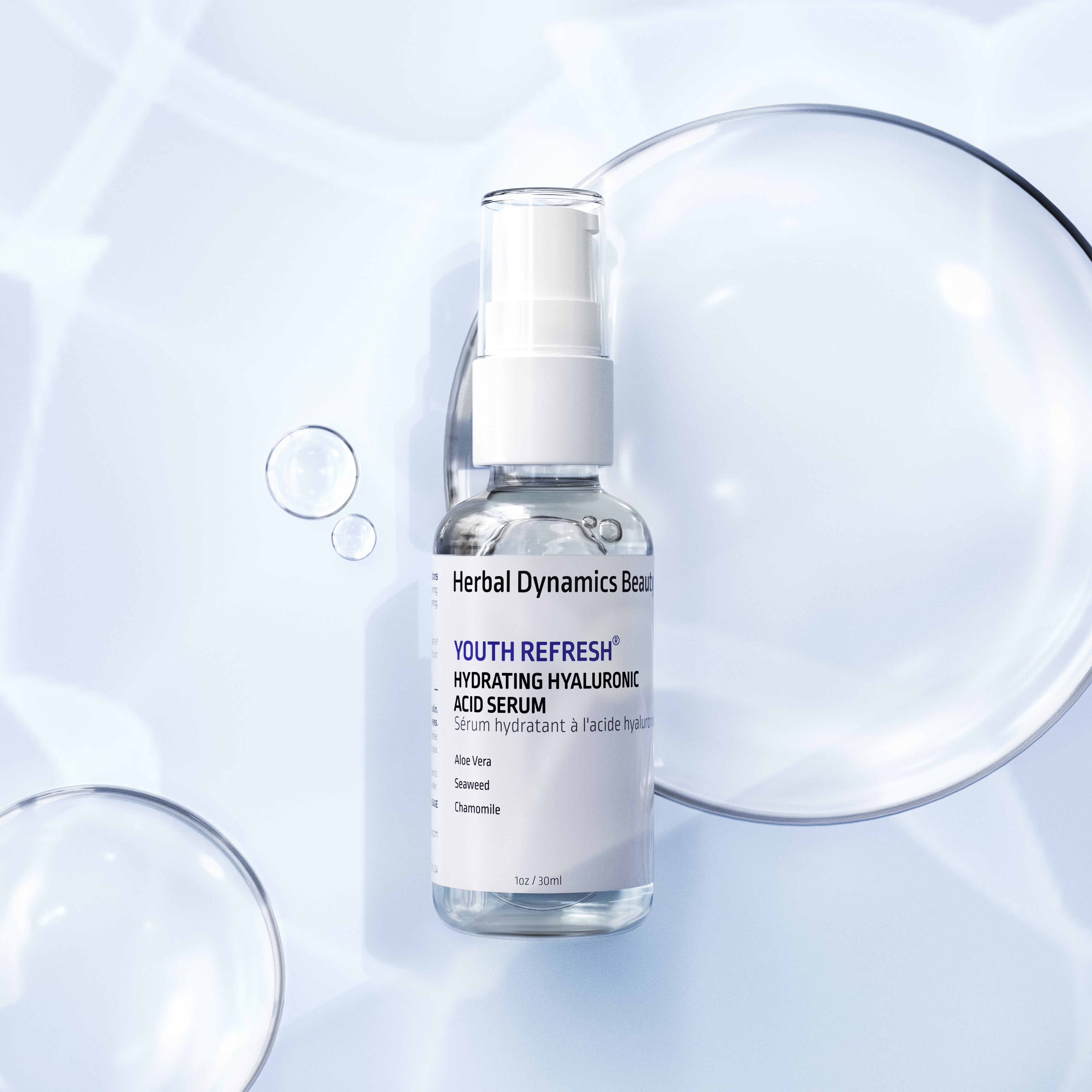
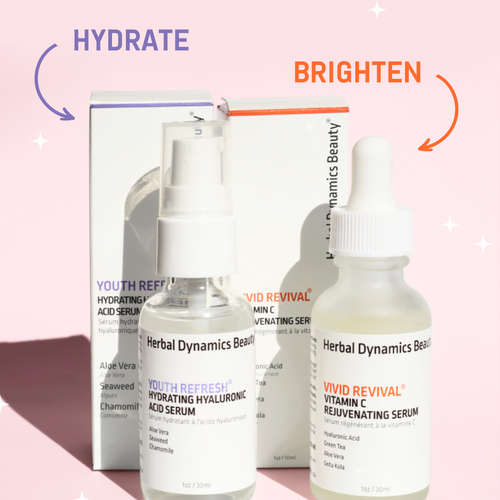
Read how hyaluronic acid supports hydration if dryness is the concern. One current hydration option is Herbal Dynamics Beauty’s Youth Refresh® Hydrating Hyaluronic Acid Serum. It contains hyaluronic acid, glycerin and sodium PCA; it does not contain alpha arbutin and is not a substitute for it or a proven enhancer of its pigment effect.
Alpha arbutin does not create a requirement to exfoliate. If you already use an exfoliating product comfortably for texture or congestion, assess whether the extra serum is necessary and introduce it separately. Same-routine use may be too much for some skin even when an ingredient chart shows no absolute conflict.
A conservative option is to use them at different times or on different days within each product’s directions. This is a tolerance strategy, not proof that a fixed separation interval prevents every reaction. For the exfoliant decision, read AHA versus BHA versus PHA and how much exfoliation is too much.
The FDA notes that AHAs can increase sun sensitivity. Follow the exfoliant’s warnings and sun-protection instructions; alpha arbutin does not cancel them.
These pairings deserve formula-specific guidance. Use alpha arbutin with vitamin C, alpha arbutin with niacinamide or alpha arbutin with retinol. If you want to choose one ingredient, the existing brightening-ingredient comparison answers that different question.
The azelaic acid versus alpha arbutin guide covers both selection and using them in one routine. Adding alpha arbutin to a comfortable azelaic-acid routine is not automatically necessary. Preserve any prescribed treatment instructions and ask the prescriber before changing that plan.
Arbutin stability research shows that formulation conditions matter. It does not establish a universal rule that every acid-containing serum is incompatible on skin. Follow manufacturer guidance, and avoid mixing raw powders or separate products into a shared bottle.
Use the application guide for order and frequency. If the routine begins to sting or peel, simplify; tolerance and reaction guidance is more useful than adding another soothing active to an increasingly complicated stack.