Your Cart is Empty
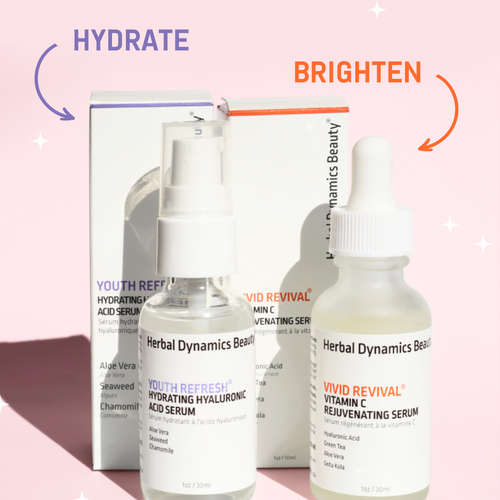

Bakuchiol and vitamin C can appear in the same skincare routine, but the exact formulas determine whether the pairing is useful and comfortable. There is no reason to assume the ingredients automatically cancel each other out. Equally, a tested combination serum does not validate every pair of separate products.
Consider why you want both. If your main concern is uneven-looking tone, one well-chosen formula may already address it. Start with bakuchiol’s evidence and vitamin C’s role before adding layers.
A 2019 clinical report investigated a serum-in-oil containing bakuchiol, melatonin and ascorbyl tetraisopalmitate, a vitamin C derivative. The research supports examining that complete formula. It cannot isolate bakuchiol’s contribution, establish a universal synergy or prove that layering bakuchiol with an acidic L-ascorbic acid serum produces the same result.
This is an important formulation distinction: the ingredient family name “vitamin C” covers products with different chemistry, vehicles and tolerability.
L-ascorbic acid formulas often require an acidic environment, while derivatives have different formulation needs and evidence. A comfortable derivative-based emulsion and a strong acidic serum are not interchangeable experiences for sensitive skin.
The guide to L-ascorbic acid and vitamin C derivatives covers that choice. Do not use a bakuchiol pairing claim to skip reading the vitamin C product’s own directions.
| Approach | When it may be useful | Limit |
|---|---|---|
| One finished combination formula | You prefer fewer steps and the complete product suits your skin. | Ingredient presence alone does not mean the product has clinical testing. |
| Vitamin C in the morning, bakuchiol in the evening | You want a simpler application sequence or less pilling. | Separating application times does not eliminate cumulative irritation. |
| Both in one routine | You already tolerate each product and both labels permit it. | Add gradually and stop if the combined routine becomes uncomfortable. |
Follow specific directions before a general texture rule. A thin water-based serum commonly precedes a richer emulsion or oil, but an ingredient name does not tell you the vehicle. Let each layer settle enough to spread comfortably; no evidence-based universal waiting period is required for every bakuchiol–vitamin C pairing.
Keep sunscreen separate as the final morning skincare step. Antioxidant claims do not make either product a sunscreen or justify mixing them into it.
Reduce the number of active products and return to familiar, comfortable basics. Persistent burning or a rash is a reason to pause, not to add more moisturizer over an intolerable routine and continue indefinitely. See bakuchiol for sensitive skin if reactivity is the main issue.
If the goal is discoloration, also read what bakuchiol may offer dark spots. You may decide that a single focused product is easier to assess than two new serums.
Use the broader vitamin C compatibility guide for your existing routine and the bakuchiol compatibility overview for other options. The most useful combination is one that remains understandable and comfortable, not the one with the longest ingredient list.