Your Cart is Empty
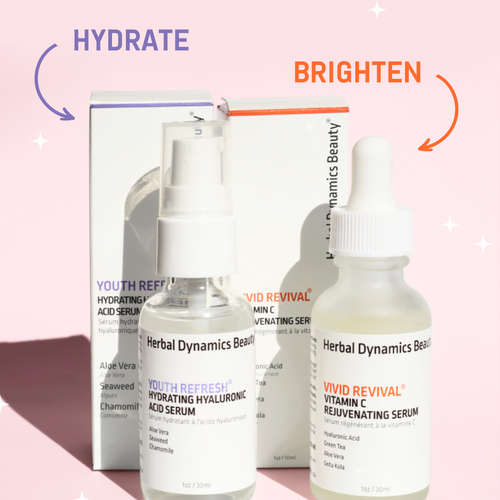
The best Ferulic Acid serum is a stable, well-supported formula that fits your concern and routine. Compare the declared ingredient, Vitamin C form, antioxidant partners, texture, packaging and tolerance. A higher percentage or a longer active list is not enough to identify the better choice.
Use the Ferulic Acid overview for the ingredient science. This guide turns that information into a purchase decision without ranking competing products.
| Your priority | A useful selection question |
|---|---|
| An antioxidant step alongside sunscreen | Does the finished formula have relevant stability or human testing? |
| Dull-looking skin | Is the appearance related to dryness, roughness or uneven tone, and what does the whole formula address? |
| Dark spots | Does the product have evidence for the actual pigment concern, rather than only an antioxidant assay? |
| Sensitive-feeling skin | Are the other actives, fragrance and known personal triggers acceptable? |
| A simpler routine | Will it replace a redundant serum or add a distinct function? |
For broader category choices, the face-serum guide and antioxidant education explain the alternatives. Ferulic is an optional ingredient choice, not a requirement for every face.
Check for Ferulic Acid in the full ingredient declaration. Botanical origin language or a grain extract is not proof of a specified Ferulic concentration. “Antioxidant complex” may describe several materials rather than a disclosed dose of each one.
Ask whether a percentage refers to pure Ferulic Acid, an encapsulated raw material or an entire blend. US ingredient-order rules do not let you calculate a dose from the lower part of the list. The concentration guide explains the distinction between research numbers and a universal optimum.
L-ascorbic acid and Vitamin C derivatives are different formulation choices. A study using one form does not validate every other form. Vitamin C with Ferulic Acid explains that decision; C + E + Ferulic examines the defined triple system.
Likewise, Tocopherol and Tocopheryl Acetate are different ingredient names. The presence of Vitamin E does not establish that a formula matches research using alpha-tocopherol. More partners can increase complexity without proving better performance.
An opaque or airless package is a useful design feature, not proof of preserved active content. Storage and stability guidance explains what color and packaging can, and cannot, tell you.
A low-pH Vitamin C partner, exfoliating acids or fragrance can change the tolerance decision. Ferulic does not cancel their properties. For reactive-feeling skin, use the sensitivity guide and finished-product testing guidance.
For an ordinary leave-on serum, check whether its texture layers comfortably with moisturizer and sunscreen. Ferulic routine placement addresses order and frequency; the combination guide covers a routine that already includes treatments.
Was it a radical-scavenging assay, a controlled UV challenge, an arm-cream comparison or a facial study with a professional procedure? Those are different endpoints. Ask whether the study compared against a suitable control and tested the product you are buying.
No serum earns an SPF claim from antioxidant research. Keep sunscreen selection separate from serum selection, and use the timeline guide to assess visible-result promises realistically.
By Herbal Dynamics Beauty · Updated October 4, 2026.