Your Cart is Empty

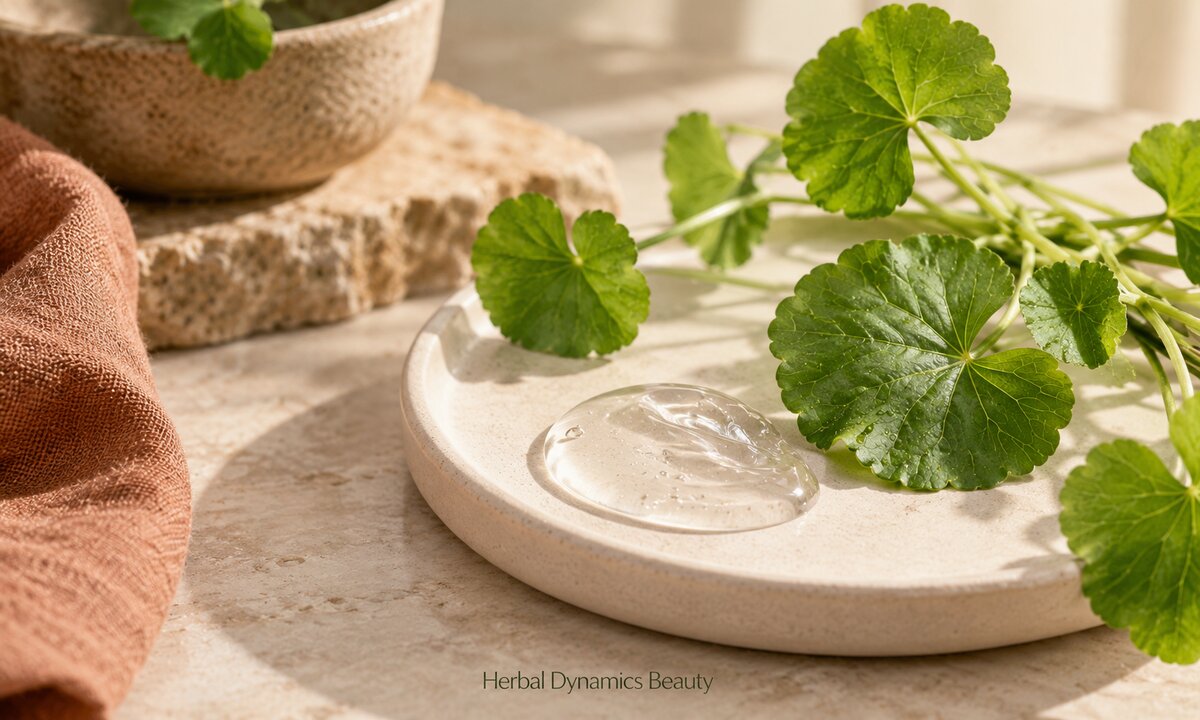
Centella can be an optional ingredient in a moisturizer or serum for acne-prone skin. It should be chosen for formula tolerance and cosmetic support, not as a replacement for a treatment that addresses acne. Evidence does not establish that an ordinary cica product clears breakouts, removes scars or reliably fades post-acne discoloration.
Some of the interest comes from madecassoside laboratory research. Scientists measured changes in inflammation-related signals in cells exposed to acne-associated bacteria. This was not a trial counting pimples on people’s faces. It cannot tell us the best serum concentration, how quickly acne would clear, or whether an untested product would help.
The practical distinction is between a supportive cosmetic step and acne treatment. Our acne-prone skin guide explains the broader treatment categories and routine decisions.
| Concern | Reasonable role for cica skincare | What it cannot establish |
|---|---|---|
| Dryness during an acne routine | A comfortable moisturizing step | That acne medicine can be used more aggressively |
| An oily-looking surface | A texture you find comfortable | Reliable oil control or pore clearing from Centella |
| Tender or inflamed blemishes | Gentle surrounding skincare | A substitute for an effective acne treatment |
| Flat red or brown marks | General routine support | Proven removal of residual redness or pigment |
| Indented or raised scars | Ordinary cosmetic moisture care | Reshaping established scar tissue |
You cannot predict a finished formula’s behavior from Centella alone. A rich cream and a water-based serum can contain the same extract while having very different bases. Introduce one product at a time and observe whether new bumps repeatedly appear with it.
A new rash, itching or burning is not evidence that the ingredient is working. Centella is not an established exfoliating acne treatment, so do not assume that new spots are an expected purge. Read Centella, breakouts and irritation for a more detailed troubleshooting approach.
Flat discoloration and changes in skin texture need different approaches. The acne scars versus dark-spots guide helps separate those concerns.
Research involving a standardized Centella preparation after laser resurfacing is sometimes borrowed to market scar products. A supervised post-procedure protocol is not evidence that a retail cica serum removes untreated acne scars. Do not use a regular cosmetic on freshly treated skin without your clinician’s guidance.
Keep a gentle cleanser, an appropriate treatment plan, a tolerated moisturizer and daytime sun protection as your foundation. If adding Centella, choose a product that fills a real gap. A comfortable moisturizer may be more useful than a second or third serum.
Apply products according to their directions; prescription treatments take priority over generic layering advice. If treatment causes significant irritation, ask the prescriber about adjusting the plan rather than trying to cancel the irritation with cica.
The acne-prone routine guide covers sequencing. The moisturizer selection guide helps assess texture without assuming that all oily skin has the same needs.
Persistent acne, painful deeper lesions or scarring deserve professional care. The 2024 dermatology guideline supports established acne therapies; an appealing botanical mechanism should not delay an effective plan.
Return to the Centella ingredient guide for its broader evidence, or use the cica selection checklist when you are choosing a supportive cosmetic.
By Herbal Dynamics Beauty • Updated October 1, 2026