Your Cart is Empty


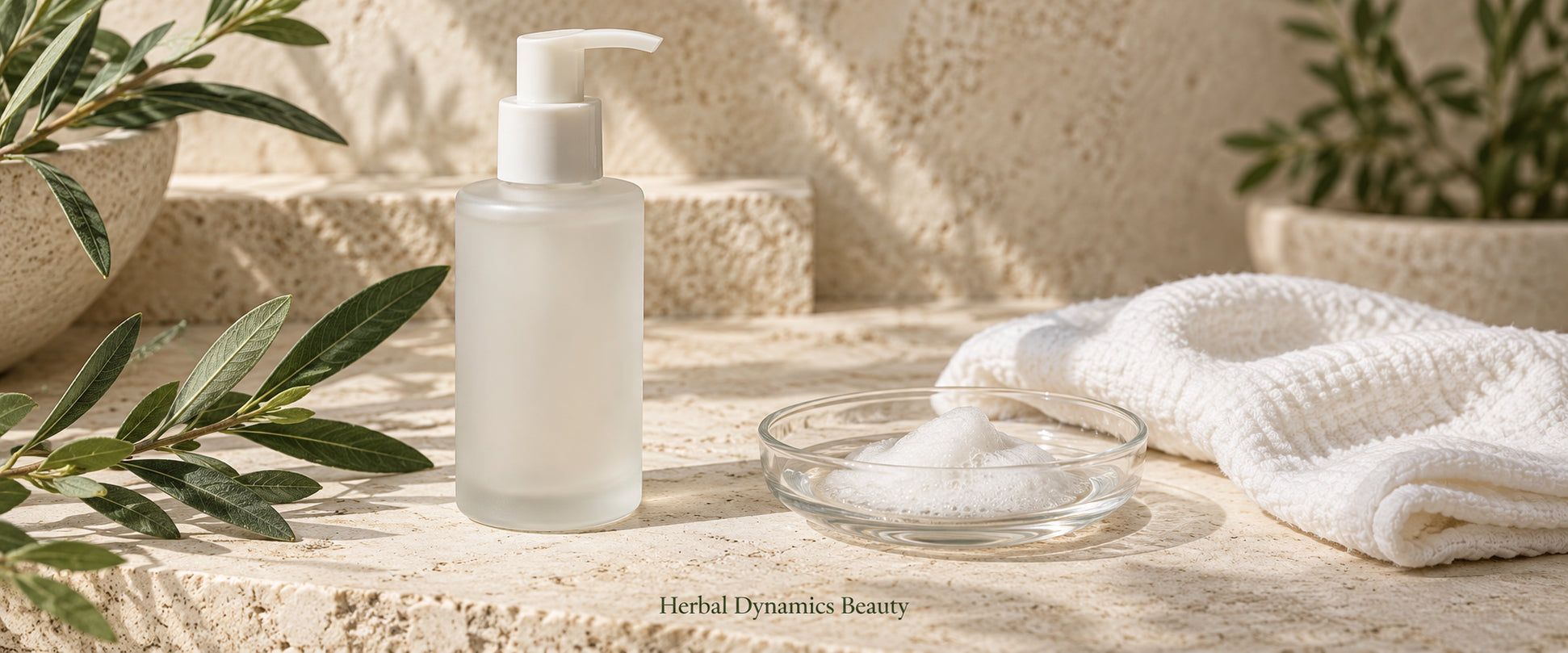
A cleansing balm starts as a solid or semi-solid texture that softens during use; a cleansing oil starts as a liquid. Both can be formulated to loosen makeup and sunscreen and disperse during rinsing. Texture alone does not establish which removes more, rinses better or suits sensitive skin.
| Feature | Cleansing balm | Cleansing oil |
|---|---|---|
| Texture | Often waxy or buttery initially | Already fluid |
| Dispensing | May require scooping from a jar or squeezing a tube | Often poured or pumped |
| Spreading | Usually softens with warmth and contact | Usually spreads readily |
| Rinsing | Depends on the emulsifying system and directions | Depends on the emulsifying system and directions |
| Removal and tolerance | Formula-specific | Formula-specific |
Choose a dispenser you can use cleanly and a texture that spreads with light contact. There is no advantage to scrubbing harder because a balm feels solid at first.
Many rinse-off balms and oils contain ingredients that allow them to disperse with added water. That helps move the oily base and loosened residue away. Plain facial oil or cooking oil may behave differently and can require more wiping.
Some rich cleansers leave a soft after-feel by design. Follow the label and assess whether makeup remains or the finish is uncomfortable, rather than treating any softness as proof of inadequate cleansing. Oil versus water-based cleanser explains the broader chemistry.
Use a remover with directions appropriate to the product and area. An eye-makeup remover claim is especially relevant for mascara; do not infer eye suitability from a face-cleansing label.
The sunscreen-removal study supports a role for a formulated cleansing oil in removing the tested resistant sunscreen. It did not compare all balms with all oils. Choose based on your products and the formula’s stated use.
Dry skin may enjoy a richer feel, but a balm is not automatically more moisturizing in practice. Oily skin can use an oil-rich remover when useful and tolerated. Sensitive skin needs attention to fragrance, essential oils, known allergens and rubbing, whichever texture you choose.
A breakout or rash after introducing a new remover deserves reassessment. Do not continue a painful reaction on the assumption that an oil is bringing “toxins” to the surface. Cosmetic contact reactions depend on the individual and the formulation.
Follow the first cleanser’s instructions and your removal needs. If it works alone, another wash is not a universal requirement. If it is part of a two-step routine, choose the second wash for comfort. The double-cleansing guide covers the full sequence.
For choosing across all cleanser types, return to the facial-cleanser guide and the buying comparison.
By Herbal Dynamics Beauty · Updated September 21, 2026. General skincare education.