Your Cart is Empty

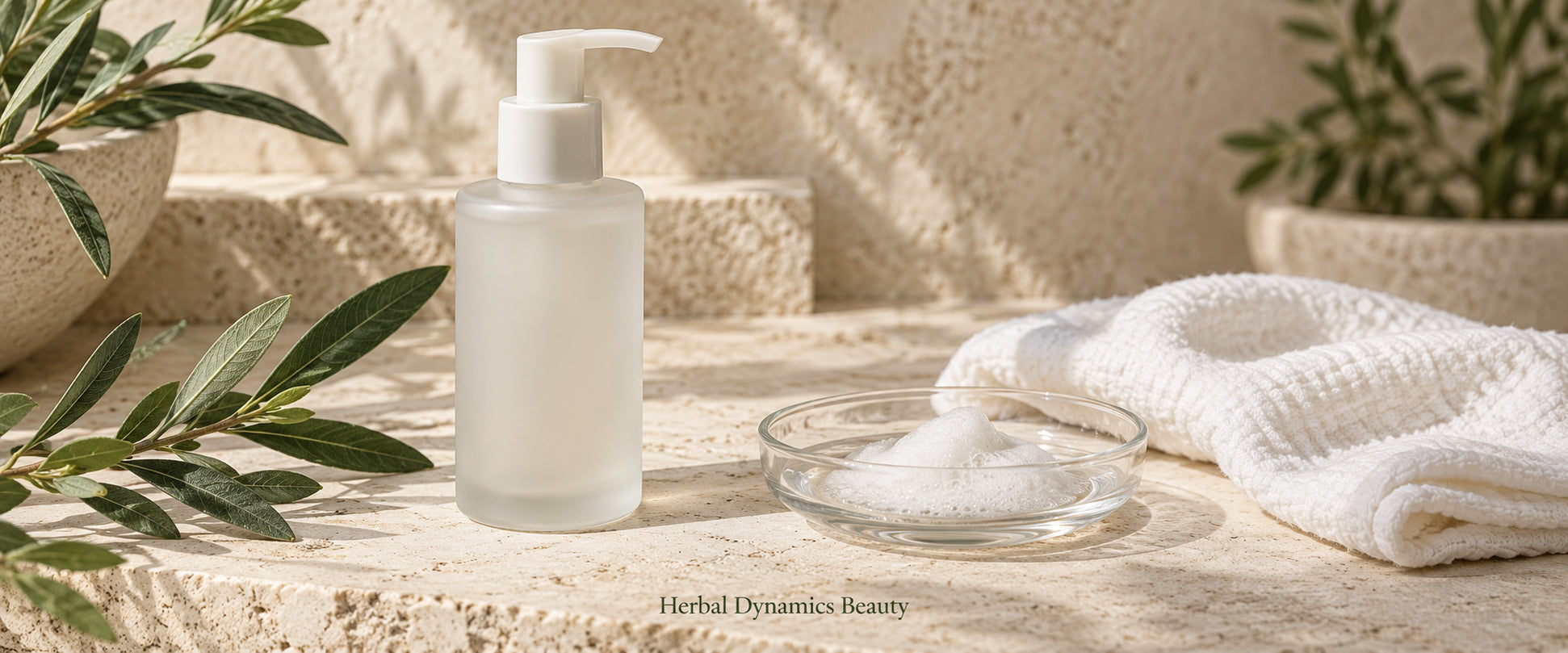
Remove sunscreen with a facial cleanser or remover suited to the formula you wear. A regular wash may handle some sunscreens, while a persistent water-resistant film may be easier to remove with a formulated oil or balm. Water alone is not a dependable removal method, and double cleansing is not required in every case.
Water resistance, film-forming ingredients, texture and the amount applied all affect removal. The labels “mineral” and “chemical” do not by themselves determine which cleanser you need. A tinted sunscreen also introduces pigment, which may make remaining residue easier to see.
Check both the sunscreen and cleanser directions. Keep using enough sunscreen for daytime protection; removal concerns are a reason to improve the evening routine, not to reduce protection.
A 2019 study with 20 participants compared water, a foaming cleanser and a cleansing oil using the tested sunscreens. The cleanser and oil removed the tested non-water-resistant sunscreen more effectively than water alone. For the tested water-resistant sunscreen, the oil left less measured residue than the foaming wash.
The study examined specific products and short-term removal. It did not test every sunscreen, establish one universally best cleanser or prove that everyone needs two washes. The practical inference is to match the removal method to the formula.
Oil versus water-based cleansing explains the difference, and the double-cleansing guide covers the optional sequence.
Visible pigment or obvious product remaining after label-directed cleansing suggests you should reassess removal. A soft after-feel by itself is not proof that sunscreen is still present. Equally, a squeaky feeling does not verify complete removal.
At home, there is no simple touch test that confirms every sunscreen filter has been removed. Avoid chasing an imagined zero-residue standard with repeated washing or consumer-camera comparisons that have not been validated for that purpose.
Choose a method that reduces the need for friction. A well-matched single cleanser may be preferable to two poorly tolerated products. Review dry-skin cleanser options and sensitive-skin cleanser options; stop and reassess persistent burning or a rash.
Micellar water can be useful when its product-removal claims fit your sunscreen, but do not assume every micellar formula removes every resistant film. See micellar water versus face wash.
Water resistance does not mean sunscreen lasts indefinitely. Follow the sunscreen’s reapplication instructions while outdoors. When the activity is finished, use a gentle removal routine and avoid stacking repeated full washes unnecessarily. The workout guide helps fit cleansing into the day.
For selecting a daily product, return to the facial-cleanser guide. If makeup is also part of your day, use the makeup-removal guide for eye and long-wear products.
By Herbal Dynamics Beauty · Updated September 21, 2026. General skincare education.