Your Cart is Empty

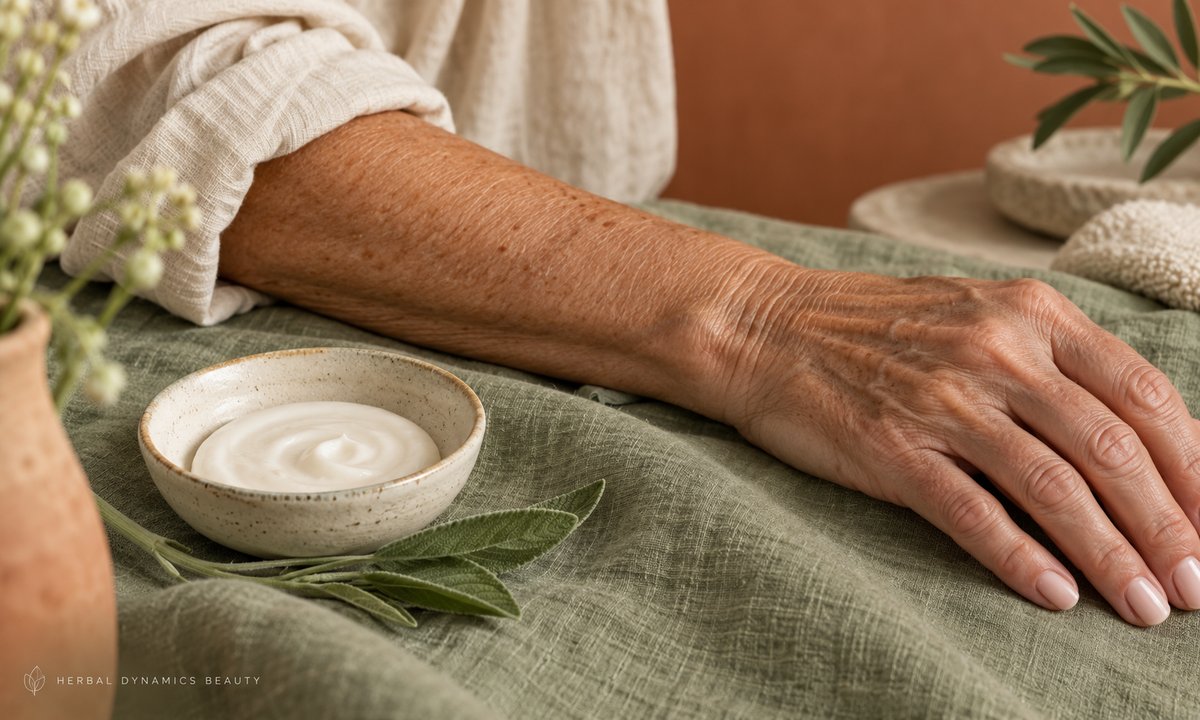
Crepey-looking skin describes a thin, finely crinkled texture over an area rather than one isolated wrinkle. Aging, cumulative sun exposure and dryness can contribute. Moisturizer may soften its appearance, but sudden fragility, unexplained bruising or a persistent rash should not be assumed to be routine aging.
An expression line follows repeated movement; crepey texture can look like many shallow folds across the upper arms, chest or other areas. Dry skin may also feel rough, tight or flaky. These patterns can overlap, and appearance alone cannot identify the cause.
Read fine lines versus wrinkles for facial creases and dryness versus persistent wrinkles if the texture changes mainly with moisture.
Skin changes with time in several ways, including its barrier, dermal matrix and ability to repair. Cumulative UV exposure adds another source of damage. The review of chronological and sun-induced skin aging describes these interacting processes; there is no single collagen percentage that diagnoses everyone’s skin.
Weight changes, health conditions and some medicines can also influence skin appearance or fragility. Do not stop a prescribed medicine or add supplements on the basis of a cosmetic description. Ask the prescribing clinician if a change seems related.
| Ingredient role | Examples | Practical purpose |
|---|---|---|
| Humectants | Glycerin, hyaluronic acid | Bind water in a moisturizing formula |
| Emollients | Suitable oils, fatty alcohols and other smoothing ingredients | Improve surface feel and flexibility |
| Occlusives | Petrolatum or other water-loss-limiting ingredients | Help retain moisture, especially in dry areas |
| Barrier lipids | Ceramides within a complete moisturizer | Support the moisturizing system without promising a lift |
A rich texture is not mandatory for every person. Choose the lightest formula that keeps the area comfortable; a serum alone may be insufficient. The ceramide guide explains why a complete moisturizer matters.
Some formulas may improve aspects of visible aging, but delicate or fragile skin can be easily irritated. Do not assume a strong facial active is suitable for every body site. Compare retinol and peptides and check the label’s intended area of use.
Topical collagen should not be described as replacing the skin’s dermal network. A temporary smoothing effect is useful in its own right, but differs from rebuilding tissue. Our firming-skin guide explains the limits of topical claims.
Arrange a clinical assessment for persistent itching, painful cracks, recurrent skin tears, unexpected bruising or rapid changes. A new or changing lesion, bleeding spot or nonhealing sore needs evaluation rather than treatment with a stronger cosmetic.
A dermatologist can also discuss options if gradual texture changes bother you despite gentle care. No one needs a procedure merely because their skin shows age.
General cosmetic education; not a diagnosis or individualized treatment plan. A qualified clinician can assess persistent skin changes and prescription or procedure options.
By Herbal Dynamics Beauty • Updated September 19, 2026