Your Cart is Empty
The best alpha-arbutin serum for your skin is a well-formulated product that matches a clear pigment-related concern and fits your existing routine. Percentage alone cannot make that decision. Look at ingredient identity, evidence, texture, supporting ingredients and practical use before treating a “maximum strength” claim as an advantage.
First review what alpha arbutin can and cannot do. If the goal is mainly dry skin, deep wrinkles or indented acne scars, another category may be more relevant than a pigment-focused serum.
For flat dark marks or uneven-looking tone, consider how a cosmetic would fit alongside sun protection and control of ongoing inflammation. For melasma or unexplained pigmentation, get the concern assessed rather than choosing solely from a brightening label.
Use the dark-spot guide or post-acne mark guidance to keep the expected outcome specific. A serum does not need to promise every skincare benefit to serve one useful purpose.
Look for Alpha-Arbutin in the ingredient list. “Arbutin,” a botanical extract and a proprietary brightening blend are not automatically equivalent disclosures. See the label-identity guide if the naming is unclear.
A disclosed percentage helps you understand the formula but does not prove superiority. The concentration guide explains 1%, 2% and category-specific safety context. Ask whether any advertised percentage refers to alpha arbutin itself or to a larger mixture.
| Need | Potentially useful feature | Question to ask |
|---|---|---|
| Dry or tight-feeling skin | A hydrating base or suitable moisturizer alongside it. | Will this reduce the need for another layer? |
| An existing niacinamide routine | A formula that avoids unnecessary duplication. | Am I already getting that ingredient elsewhere? |
| A vitamin C or retinoid routine | Clear combination instructions and manageable texture. | Does the added serum serve an unmet goal? |
| Reactive skin | A formula that avoids your known triggers. | Can I introduce it without changing several other products? |
Use the compatibility guide for specific pairing questions. A long list of fashionable actives is not the same as evidence for the whole product.
A watery serum may suit a layered routine, while a more emollient product may be easier for dry skin. A cream containing alpha arbutin can also be a reasonable format; “serum” does not automatically mean better delivery or stronger clinical results.
Think about how it wears beneath sunscreen and makeup, whether it pills and whether the fragrance or finish makes consistent use difficult. A technically attractive ingredient list is less useful if the product is unpleasant to apply.
Arbutin stability depends on formulation conditions. Packaging should be appropriate to the tested formula; a dark bottle alone cannot prove stability. Prefer clear instructions, identifiable manufacturer information and sensible handling over a packaging aesthetic presented as clinical evidence.
Keep the container closed, follow stated storage and expiry guidance, and avoid decanting or adding ingredients. A change in color cannot tell you the amount of any degradation product. Contact the manufacturer about an unexpected change rather than trying to correct the formula yourself.
Ask whether the research studied the product you are buying, used a comparison group and measured a relevant outcome. Before-and-after images should be interpretable, not dependent on changed lighting. A combination study cannot establish the isolated contribution of alpha arbutin.
The results guide explains why a study duration is not a guaranteed deadline. Cosmetics are also not generally FDA-approved before sale; “available in the United States” does not mean approved to treat melasma.
Choose one product to trial, follow the application guide and make no other unnecessary changes. If your skin reacts easily, read the tolerance guide first.
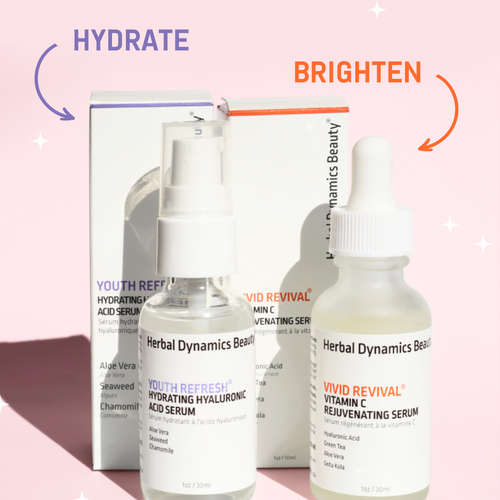
The current Herbal Dynamics Beauty catalog does not include an alpha-arbutin product. This guide therefore focuses on evaluating the category. Hydration or antioxidant products have their own roles; they should not be presented as equivalent substitutes for an ingredient they do not contain.