Your Cart is Empty
The best licorice root skincare product is the one whose complete formula fits your concern and skin tolerance. Start with the named extract, then check the product format, supporting ingredients and evidence for that finished product. A higher extract percentage or a serum label does not establish better results.
| Main goal | Useful questions before buying |
|---|---|
| Dark spots or uneven-looking tone | Does the formula explain its pigmentation ingredients and disclose anything about the licorice preparation? Can you use it comfortably alongside sunscreen? |
| Visible redness or sensitive skin | Does the product identify a relevant licorice material, such as an extract studied for licochalcone A? Is the moisturizing base suitable, with your known triggers excluded? |
| A routine with several active ingredients | Would this replace an existing step, or simply add another brightening product? Check the entire ingredient list for acids, retinoids and fragrance. |
For a pigment goal, the dark-spot evidence guide helps set expectations. If comfort is the priority, use the redness and sensitivity guide rather than assuming a brightening serum is a soothing moisturizer.
Glycyrrhiza Glabra Root Extract identifies a botanical extract; it does not disclose a standardized glabridin amount. Glycyrrhiza Inflata Root Extract, named glabridin and Dipotassium Glycyrrhizate also describe different materials. Their evidence should stay separate. Our extract-label guide explains species, compound names and what percentage claims can leave unanswered.
Useful transparency includes the species, plant part, relevant compound specification and whether a stated percentage refers to the final product or to a supplied ingredient blend. Missing detail is a limit on what you can infer, not proof that the product is ineffective.
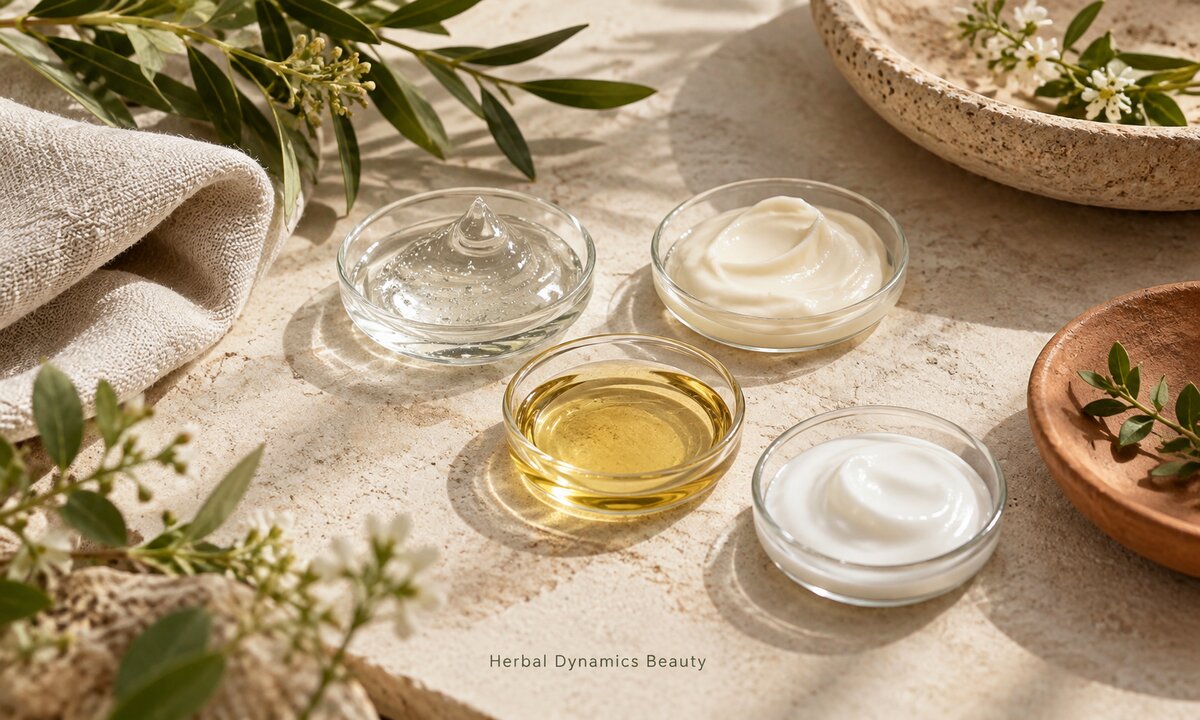
A moisturizer may be the practical choice if you need both moisture care and an optional botanical ingredient. A serum can fit when you already have a suitable moisturizer and want a targeted step. A toner is optional. The format comparison covers these differences without treating watery texture as superior delivery.
Vitamin C, niacinamide, alpha arbutin, azelaic acid, tranexamic acid or kojic acid may appear alongside licorice. Their presence changes the formula’s purpose and introduction needs. Several brightening names on a label do not prove synergy or make a product better for reactive skin. The compatibility guide helps assess these combinations.
For sensitive skin, review fragrance, essential oils, exfoliants and any ingredient you already know you react to. Botanical origin does not guarantee tolerance. Test a new suitable formula on a small area of intact skin before wider use; home testing cannot clear a known allergy.
Licorice cosmetics cannot diagnose dark spots or replace treatment for acne, rosacea, eczema or melasma. Persistent or changing discoloration deserves assessment. The human-evidence review explains why there is no universal result schedule for every licorice product.
By Herbal Dynamics Beauty · Reviewed October 6, 2026.