Your Cart is Empty

Quick answer: Licorice root extracts contain compounds such as glabridin that have shown antioxidant, anti-inflammatory and pigment-pathway activity in laboratory research. The ingredient is promising for the appearance of dark spots, but direct high-quality human evidence is limited and results depend on the extract and finished formula.
Cosmetic licorice extracts are derived from Glycyrrhiza species. Depending on the extract, they may contain glabridin, liquiritin, licochalcone A and other compounds. An ingredient list may use names such as Glycyrrhiza glabra root extract, so the specific INCI matters.
Laboratory research suggests that glabridin can influence tyrosinase-related pathways involved in melanin production, while other licorice compounds have antioxidant or soothing properties. Those mechanisms make licorice relevant to brightening formulas, but a mechanism is not the same as proof that every topical product will fade dark spots.
Published reviews describe potential dermatologic uses for licorice compounds, but direct randomized human trials for hyperpigmentation are limited. Extracts are not interchangeable, and studies may use concentrations or vehicles unlike commercial skincare. We therefore describe licorice as a supporting botanical, not a proven treatment for melasma or another disorder.
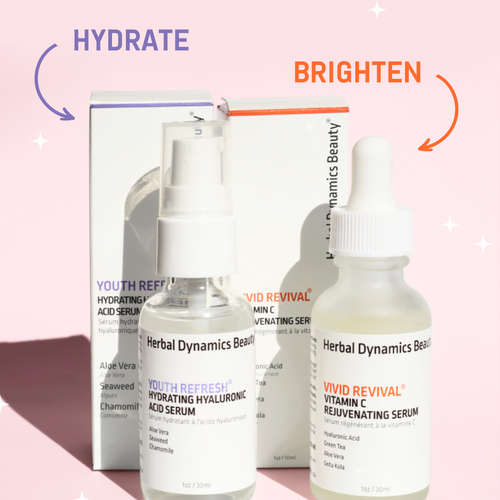
The two ingredients may be used in the same routine when the formulas are compatible and comfortable. Vitamin C has a larger topical evidence base overall; licorice can add a different botanical approach. See our comparison of dark-spot ingredients and the complete hyperpigmentation ingredient guide.
Seek evaluation for persistent melasma, rapidly changing pigment, an irregular spot, or discoloration that appears after a medication or health change. A botanical cosmetic cannot diagnose the cause.
This article discusses cosmetic use and research limitations; it is not medical advice.