Your Cart is Empty
Body butter is a rich body moisturizer that can soften dry-feeling skin and help it retain moisture. Some formulas are waterless blends of oils and plant butters; others are emulsions containing water. Apply a small amount, spread gently and add more where needed. A heavy butter can aggravate bumps for some people, so match it to the area.
Shea, mango and cocoa butter are ingredient fats. A finished “body butter” can also contain glycerin, water, oils, emulsifiers and preservatives. Those supporting ingredients help determine how the product spreads, keeps and moisturizes. Butter on the front label does not tell you the whole formula.
Use our butter ingredient comparison for the plant ingredients, or body butter versus lotion and cream for finished-product formats.
A suitable body butter can improve slip, softness and the appearance of dry surface roughness. If it contains water-binding ingredients, it may also supply a different moisturizing balance than a plain waterless butter.
Do not equate these effects with repairing every cause of dryness, replacing collagen or removing cellulite. The body moisturizer guide explains those boundaries. An ingredient list alone cannot promise a particular result or duration.
For a waterless butter, slightly damp skin can make it a useful finishing step. Do not pour water into the jar or mix fresh fruit into a finished product. You can change the product’s stability and preservation by modifying it.
If you prefer using a separate oil, see body oil layering. More layers are optional, and too much product can simply feel sticky.
It can contribute to breakouts or follicular bumps in some people, particularly when a heavy product feels occlusive on the chest or back. That does not mean every butter clogs every person’s pores. Raw-ingredient comedogenic scores do not reliably predict a finished formula’s performance.
Try a small area first and consider a lighter noncomedogenic body lotion for bump-prone sites. Dermatology advice for back acne also emphasizes reducing friction and avoiding abrasive scrubbing. Persistent itchy, painful or uniform bumps may need assessment; they are not all ordinary acne.
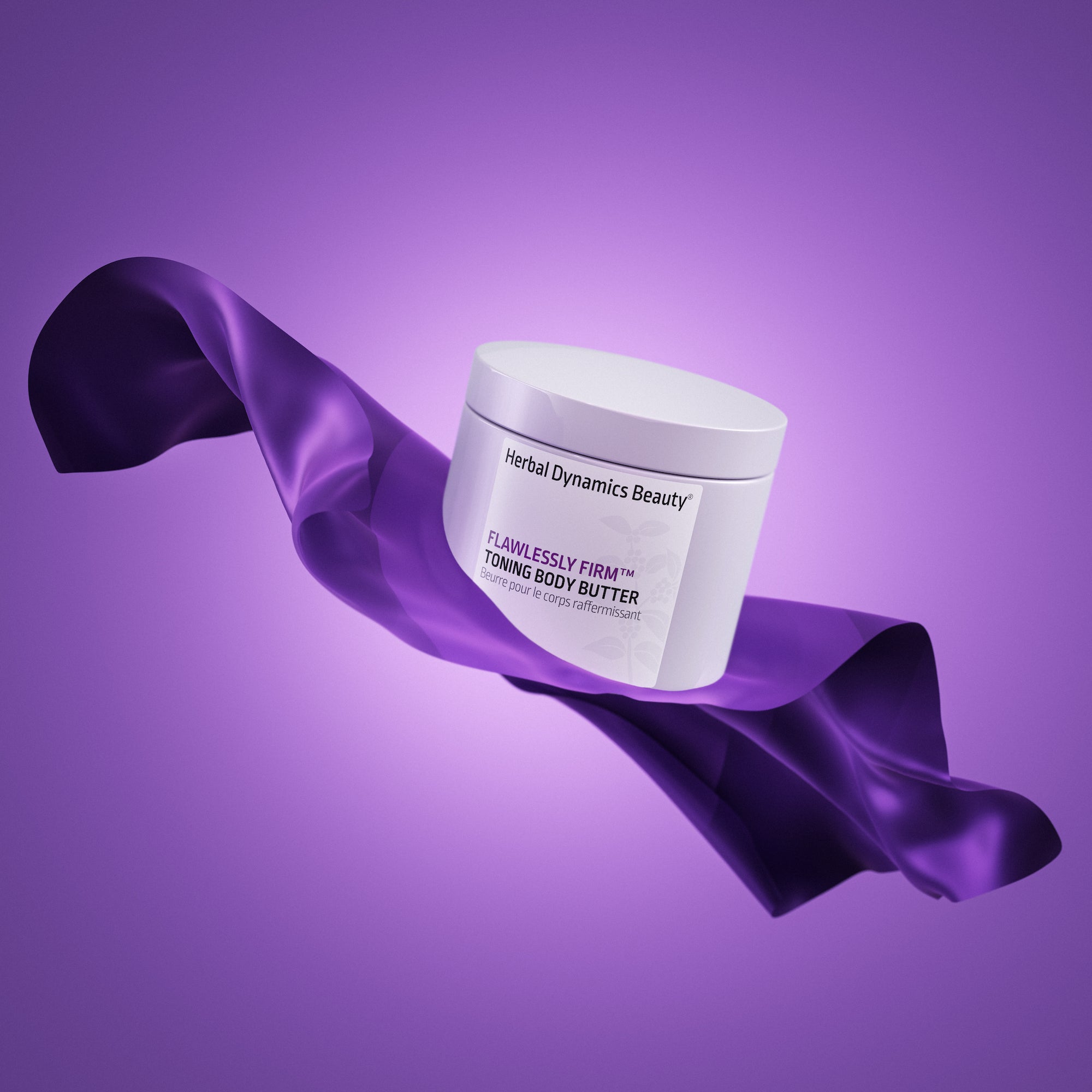
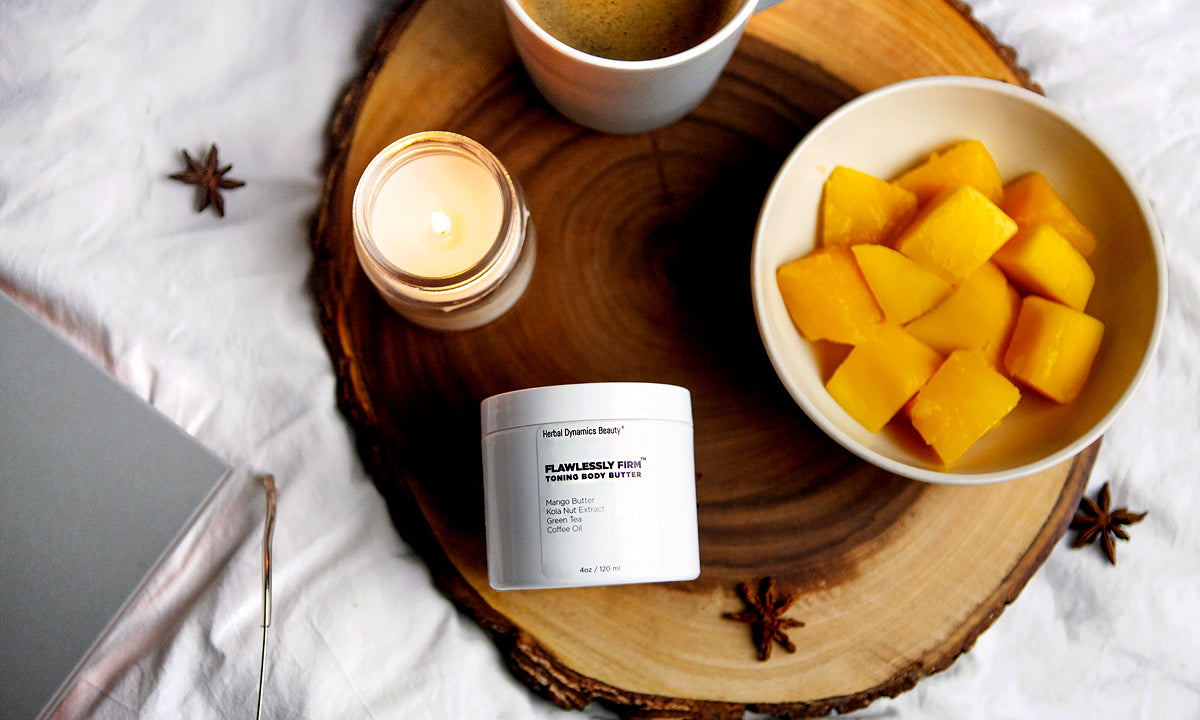
Flawlessly Firm™ Toning Body Butter lists water first and includes glycerin, mango butter, oils and dimethicone. It is an emulsion, despite its rich butter name. It can suit someone who enjoys the texture and tolerates its complete formula.
The formula contains fragrance and retinyl palmitate, a vitamin A derivative. Choose a fragrance-free alternative for fragrance-sensitive or actively irritated skin. Avoid retinoid-containing products during pregnancy or while trying to conceive; ask your clinician about use while breastfeeding. See our retinoid pregnancy and breastfeeding guide.
A lotion may be easier for a humid morning or a hairy area. A fragrance-free cream may be more comfortable on reactive skin. For very dry, thick patches, a targeted ointment may be useful. Choose by comfort and response rather than assuming body butter must be the strongest option.
By Herbal Dynamics Beauty • Updated September 24, 2026