Your Cart is Empty


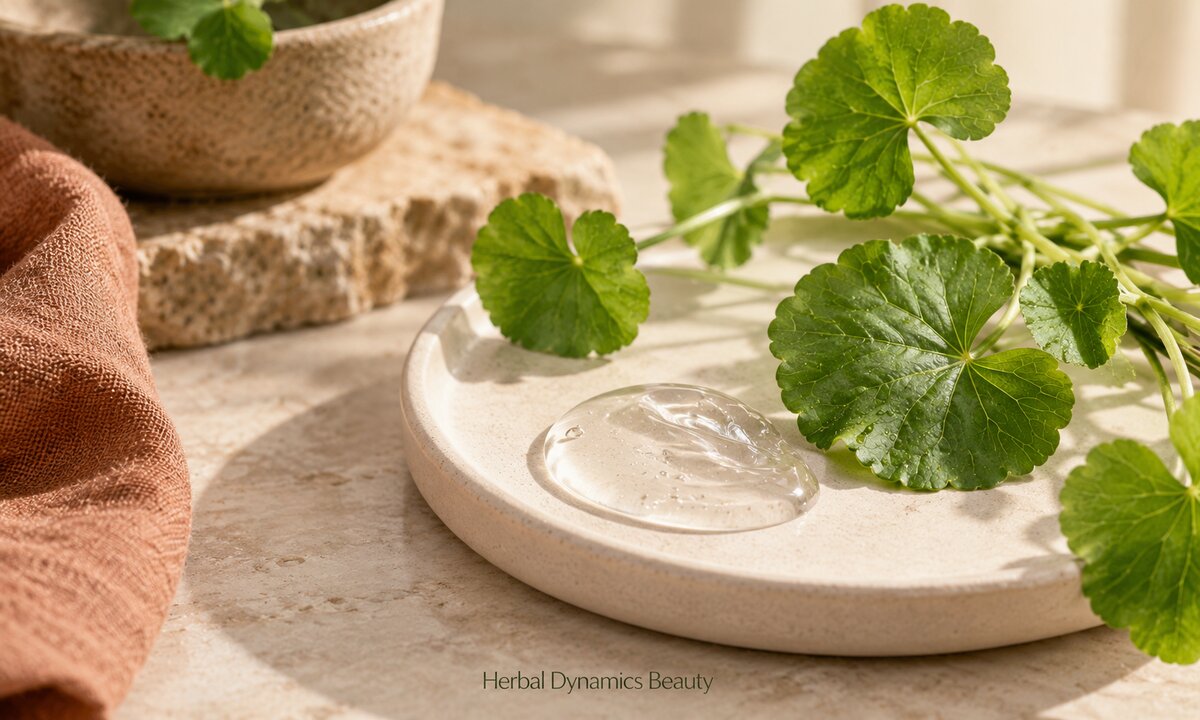
Centella and ceramides play different roles in skincare. Ceramides are a family of lipids associated with the skin’s outer barrier; Centella is a botanical ingredient used in conditioning and moisturizing formulas. A Centella serum is not a substitute for adequate moisturizing care, and a ceramide label does not guarantee that a cream suits every person.
| Question | Centella | Ceramides |
|---|---|---|
| What kind of ingredient? | Botanical extract or associated constituent | Lipid family |
| Typical label clue | Centella asiatica extract, or a compound such as madecassoside | Names such as Ceramide NP, AP or EOP |
| What should you assess? | Extract identity, other actives and the base | The entire moisturizing formulation, not just the number of ceramide types |
| What cannot be assumed? | That it replaces barrier lipids or treats barrier disease | That an ingredient name proves instant repair |
Read the ceramide guide and the guide to ceramide types for their biology. This comparison is about whether products containing these ingredients fill different needs.
A clinical moisturizer comparison in older adults with dry skin evaluated a ceramide-containing cream against another moisturizing base. It supports assessing actual formulations, rather than assuming that every product listing ceramides behaves identically.
A Centella, ceramide NP and panthenol study examined all three in one cream without a separate control group. It was not a head-to-head trial of Centella versus ceramides. You cannot use it to rank the ingredients or infer that two separate products would reproduce the result.
Consider whether the routine needs a more adequate moisturizer. A water-based serum may add a light hydrating layer without enough emollient or occlusive support for your skin. Applying more of that same serum may not address the missing function.
A comfortable moisturizer can contain ceramides, Centella, both or neither. The barrier-product selection guide helps assess the complete formula. Avoid turning one ingredient into a requirement that makes an otherwise comfortable routine feel incomplete.
They can appear together in a cream, or in separate appropriate steps. If using a light Centella serum and a ceramide moisturizer, the serum generally goes before the moisturizer when their directions agree. You do not need a fixed waiting period based solely on these ingredient names.
One suitable cream may be easier to assess than several layers. For other combinations, use the Centella compatibility guide.
If a cleanser is stripping your skin or an active repeatedly causes burning, adding another barrier-labeled product may leave the trigger unchanged. Review the routine using the barrier-care sequence and the active-ingredient decision guide.
Persistent pain, a rash or recurrent redness needs appropriate assessment. This ingredient comparison is not a treatment plan for eczema or another inflammatory condition.
Choose the format and moisturizing performance you need, inspect the full ingredient list, then consider evidence on the exact product. A high Centella percentage and a long list of ceramide names are different marketing details, not a common scoring system.
Read how to choose a Centella product or return to the Centella ingredient pillar.
By Herbal Dynamics Beauty • Updated October 1, 2026