Your Cart is Empty


Short answer: Vitamin K may improve the appearance of some under-eye darkness, but current evidence is too limited to call it a proven treatment for dark circles. The available eye-area studies are small and test vitamin K with other ingredients, so they cannot show how much—if any—of the result came from vitamin K alone.
It is most reasonable to think of vitamin K as a preliminary cosmetic option, not a cure. Whether any eye cream helps depends heavily on why the area looks dark.
| Study | Formula and duration | Result | Major limitation |
|---|---|---|---|
| 2004 open-label eye study | 2% phytonadione, 0.1% retinol, and vitamins C and E; twice daily for 8 weeks; 57 adults | Some improvement in dark circles and wrinkles; pigmentation was not clearly removed | No placebo control and four active ingredients, so vitamin K’s independent effect is unknown |
| 2015 split-eye study | 3% caffeine plus 1% vitamin K in an emu-oil base; 4 weeks; 11 women | The treated side improved on several appearance measurements | Very small study and a multi-ingredient formula |
| 2002 laser-bruising trial | Topical vitamin K before or after laser-induced bruising; 22 adults | Pretreatment did not prevent bruising; post-treatment use reduced early bruise severity | Procedure-related bruises are not the same as ordinary dark circles |
A 2021 systematic review of periorbital-hyperpigmentation treatments concluded that the evidence base is limited overall and that recommendations should be interpreted selectively. It identified pigmentary, vascular, structural, and mixed causes—which is why one ingredient cannot be expected to work for everyone.
Vitamin K is commonly positioned for blue, purple, or vascular-looking darkness. However, clinical evidence has not established the popular claim that a cosmetic vitamin K cream “improves circulation” or “strengthens capillaries.” Those mechanisms should not be presented as proven.
Vitamin K is less likely to meaningfully change:
Many people have more than one cause. Use Herbal Dynamics Beauty’s dark-circle cause guide to compare pigmentary, vascular, structural, and mixed patterns.
The two small eye-area studies used their combination products for four to eight weeks. That describes the study periods; it does not guarantee that a vitamin K product will work within that time. Hydration may make the area look smoother sooner, while inherited pigment or structural shadow may not respond to the formula at all.
Take a baseline photo in the same lighting and compare at sensible intervals. Changing lighting, concealer, sleep, allergy symptoms, and morning puffiness can all make a before-and-after comparison misleading.
Vitamin K1 may appear on an ingredient list as phytomenadione or phytonadione. It has caused allergic contact dermatitis and is prohibited in European Union cosmetics because of sensitization concerns. The oxidized form, phytonadione epoxide, is a different ingredient. After a 2025 call for data, the European Commission formally asked its Scientific Committee on Consumer Safety in June 2026 to evaluate it because of sensitization concerns; that assessment is ongoing as of this update.
Patch-test the finished product on a small area of intact skin. Keep it out of the eye, do not use it on broken or freshly treated skin, and stop if persistent itching, burning, swelling, or scaling develops. People with eyelid eczema or known cosmetic allergies should ask a dermatologist before using a vitamin K eye product.
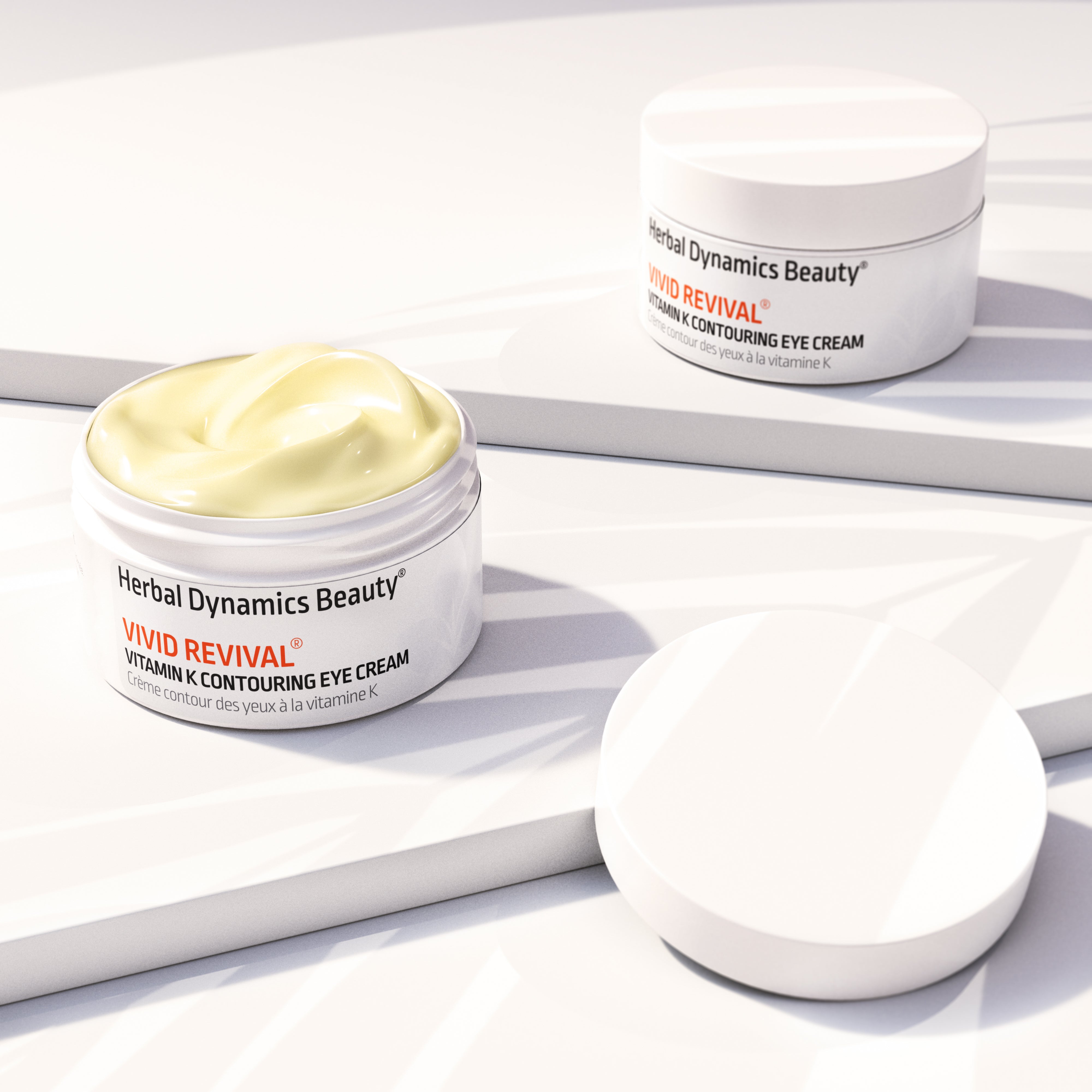
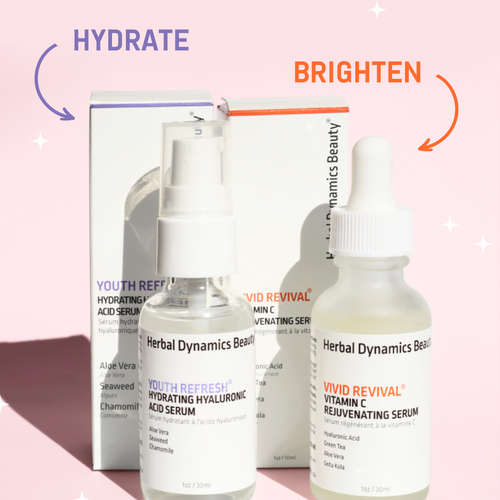
Disclosure: Herbal Dynamics Beauty makes and sells Vivid Revival® Vitamin K Contouring Eye Cream. Its current ingredient list includes phytomenadione along with moisturizers and botanical ingredients. It should be evaluated as a complete cosmetic formula; this article does not establish that the product—or vitamin K alone—will correct every dark circle.
For ingredient names, compatibility, bruising and wound-healing research, and the full regulatory context, read the central Vitamin K for Skin evidence guide.
To compare vitamin K with hydration-, caffeine-, retinol-, and pigment-focused options, see Herbal Dynamics Beauty’s best eye creams for dark circles guide.
There is not enough head-to-head evidence to name a universal winner. Caffeine is often used for temporary puffiness or vascular appearance, while vitamin K has preliminary research in combination formulas. Cause and complete formulation matter more than a simple ingredient ranking.
No evidence shows that a vitamin K cosmetic permanently removes every type of dark circle. Genetics, anatomy, pigment, irritation, and puffiness may require different approaches.
Not without medical guidance. There is no good evidence that supplements clear ordinary dark circles in someone without a deficiency, and vitamin K can interact seriously with warfarin and related medicines.
Vitamin K is most relevant to the cosmetic appearance of some vascular or mixed discoloration—not every brown circle, allergy-related shadow or tear trough. Read the microcirculation evidence guide for the limits of “circulation” claims, then see what results may be realistic over time.
For a cause-first decision, use the dark-circle types guide and the eye cream comparison.
This article provides cosmetic education and is not a diagnosis. Seek care for sudden eye-area discoloration, pain, pronounced swelling, vision changes, or unexplained bruising.