Your Cart is Empty
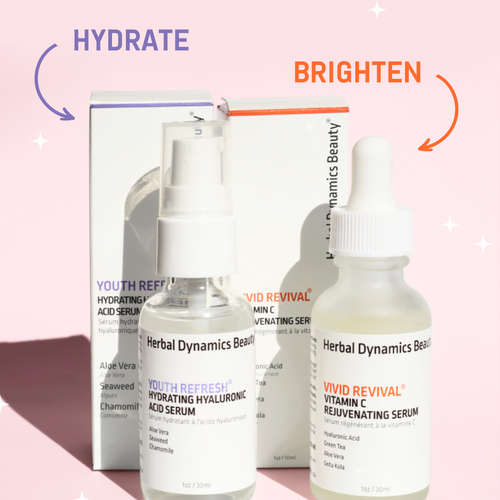

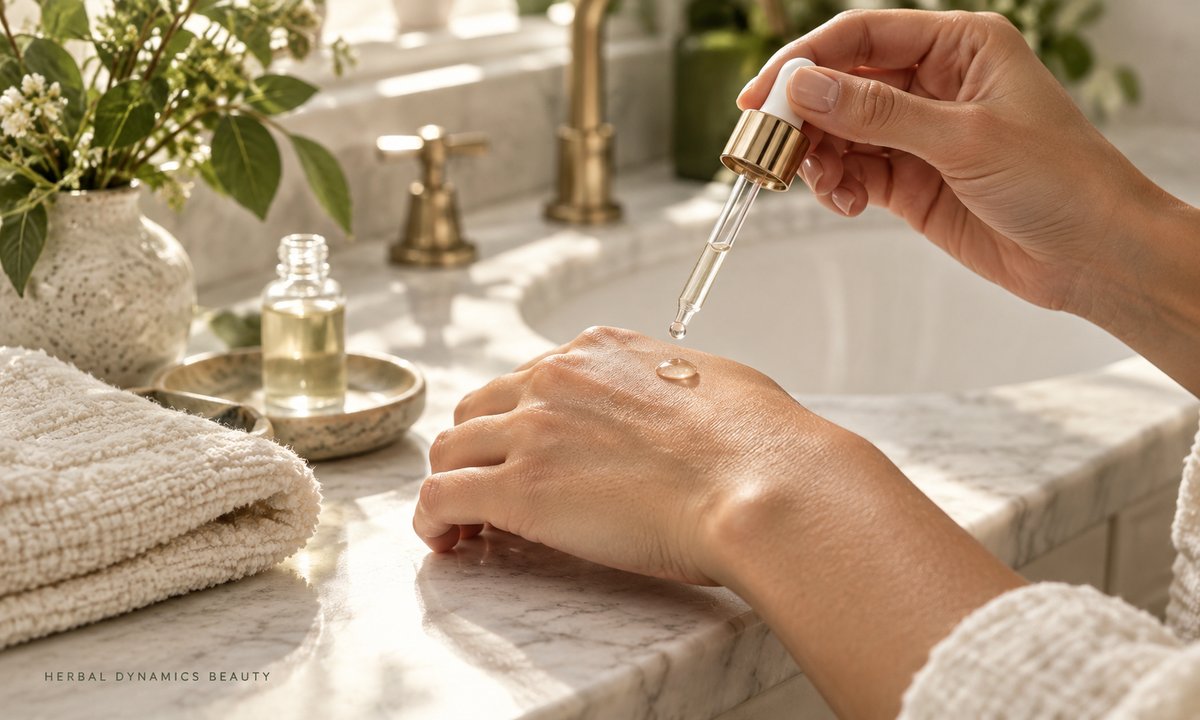
Apply peptide serum as directed, usually after cleansing and before moisturizer. Morning or evening can work. Start with one new formula, use the recommended amount and check any restrictions involving vitamin C, acids or retinol. Twice-daily use is not a requirement for every product.
Products vary in texture and delivery system, so the manufacturer’s instructions take priority over a generic thinnest-to-thickest rule. Our peptide ingredient guide explains why formulas matter.
There is no universal requirement to apply all peptides to wet skin. Follow your formula’s directions. Slightly damp skin may suit a hydrating product, while another active in the same routine may be intended for dry skin. Do not soak the face or dilute a serum to chase deeper penetration.
| Situation | Practical approach |
|---|---|
| New to the product | Introduce gradually and without other new actives so tolerance is easier to judge |
| Comfortable with the formula | Follow its once- or twice-daily directions; more applications are not necessarily better |
| Already using several actives | Simplify first and check compatibility before adding another step |
| Burning, peeling or a rash | Stop the new product rather than increasing frequency |
| Missed an application | Return to the normal routine; do not double the amount |
Choose the time that fits both the label and your existing routine. Morning use can work under moisturizer and sunscreen if the textures layer well. Evening use may be simpler if you use vitamin C in the morning and your peptide maker recommends separating them.
For copper peptides or a routine with retinol, use the peptide compatibility guide. Moving a product to night does not remove its other restrictions.
A peptide ingredient does not make the entire product hypoallergenic. Fragrance, botanical extracts, preservatives or added actives may matter more to your tolerance than the peptide name. A small-area trial can help identify an obvious reaction, but cannot guarantee that no allergy will develop.
When skin is already uncomfortable, start with the simple barrier-care routine. Do not scrub, exfoliate or microneedle before applying a serum to increase absorption. Cosmetics are not sterile treatment solutions for broken skin.
There is no evidence-based birthday when everyone needs a peptide serum. Use your concern, budget and routine tolerance to decide. Sunscreen and moisturizing habits are useful without adding another anti-aging step. Peptides are not a necessary preventive purchase for children or teenagers.
Choose one goal, such as improved surface comfort or less obvious fine-line texture, and compare under similar lighting and expression. Immediate softness can come from moisturization; it does not establish newly formed collagen. Read the evidence and realistic-results guide before assigning a deadline.
If a product does not earn its place in the routine, you do not need to keep buying it. The peptide-serum buying guide can help compare a simpler option.
General cosmetic education; not a diagnosis or individualized treatment plan. A qualified clinician can assess persistent skin changes and prescription or procedure options.
By Herbal Dynamics Beauty • Updated September 19, 2026