Your Cart is Empty

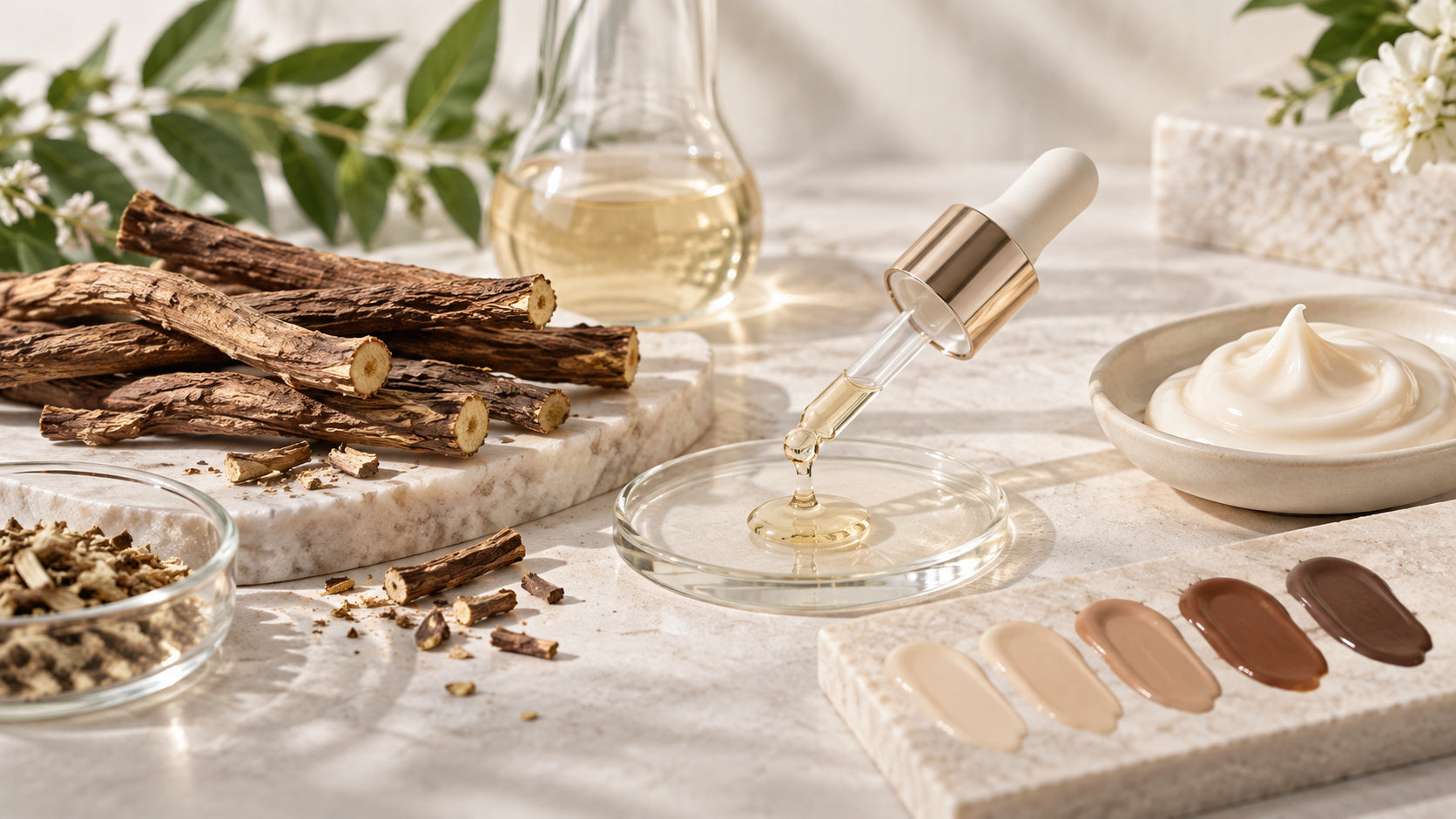
Licorice may fit a cosmetic routine for flat, dark marks left after blemishes, but that is a different goal from treating acne. Pigmentation-related research does not establish that a licorice serum clears clogged pores, active inflamed bumps, red vascular marks or indented scars.
| Concern | Typical distinction | Role of the licorice evidence |
|---|---|---|
| Active acne | New comedones or inflamed blemishes | Licorice pigment research is not an acne-treatment trial. |
| Post-inflammatory hyperpigmentation (PIH) | Flat dark discoloration after inflammation | Most relevant to the pigment-oriented cosmetic question. |
| Post-inflammatory erythema (PIE) | Residual red or purple vascular discoloration | Glabridin/tyrosinase evidence does not establish its clearance. |
| Structural scars | Indented or raised changes in texture | An extract cannot be assumed to rebuild scar structure. |
Color alone is not always enough to distinguish these concerns, and they can coexist. The acne-scar and dark-spot guide explains the broader differences. Seek assessment when you are unsure what you are seeing.
Inflammation can leave pigment after a blemish settles. Licorice constituents such as glabridin have pigment-pathway laboratory research, giving them a rationale for brightening formulas. That evidence remains separate from proving a specific finished cosmetic works for post-acne PIH in people.
A cream studied in melasma, or an irritation experiment with licochalcone A, does not automatically answer the post-acne question. The evidence review separates those study settings. Choose expectations based on the actual formula and the kind of mark.
If new blemishes continue, new marks may continue too. Your acne plan and the optional licorice cosmetic have different jobs. The acne-prone serum guide helps distinguish a cosmetic goal from a treatment need; the azelaic acid acne guide covers that ingredient’s separate role.
Do not abandon a prescribed regimen to replace it with a root extract. If treatment is causing substantial irritation, discuss how to adjust the regimen with the clinician rather than assuming another botanical layer will solve it.
Licorice itself is not a reason to expect purging. Breakouts after adding a product should prompt a full-formula review; the side-effects guide explains that question.
Use appropriate daily sunscreen and other sun precautions. For ongoing pigment care, the routine guide keeps the sequence simple. There is no validated universal licorice timeline for PIH, and improvement in texture or comfort is not the same as fading a mark. Persistent discoloration or scarring may need professional options.
By Herbal Dynamics Beauty · Reviewed October 6, 2026.