Your Cart is Empty
If skin feels tight after moisturizing, the product may be too light, the routine may be stripping the barrier, or irritation may be masquerading as simple dryness. Adding more and more humectant is not always the answer.
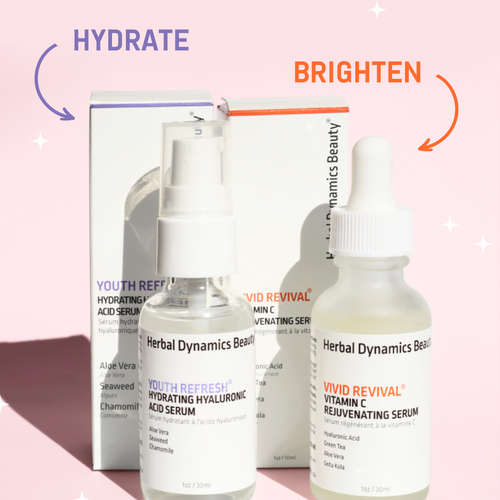
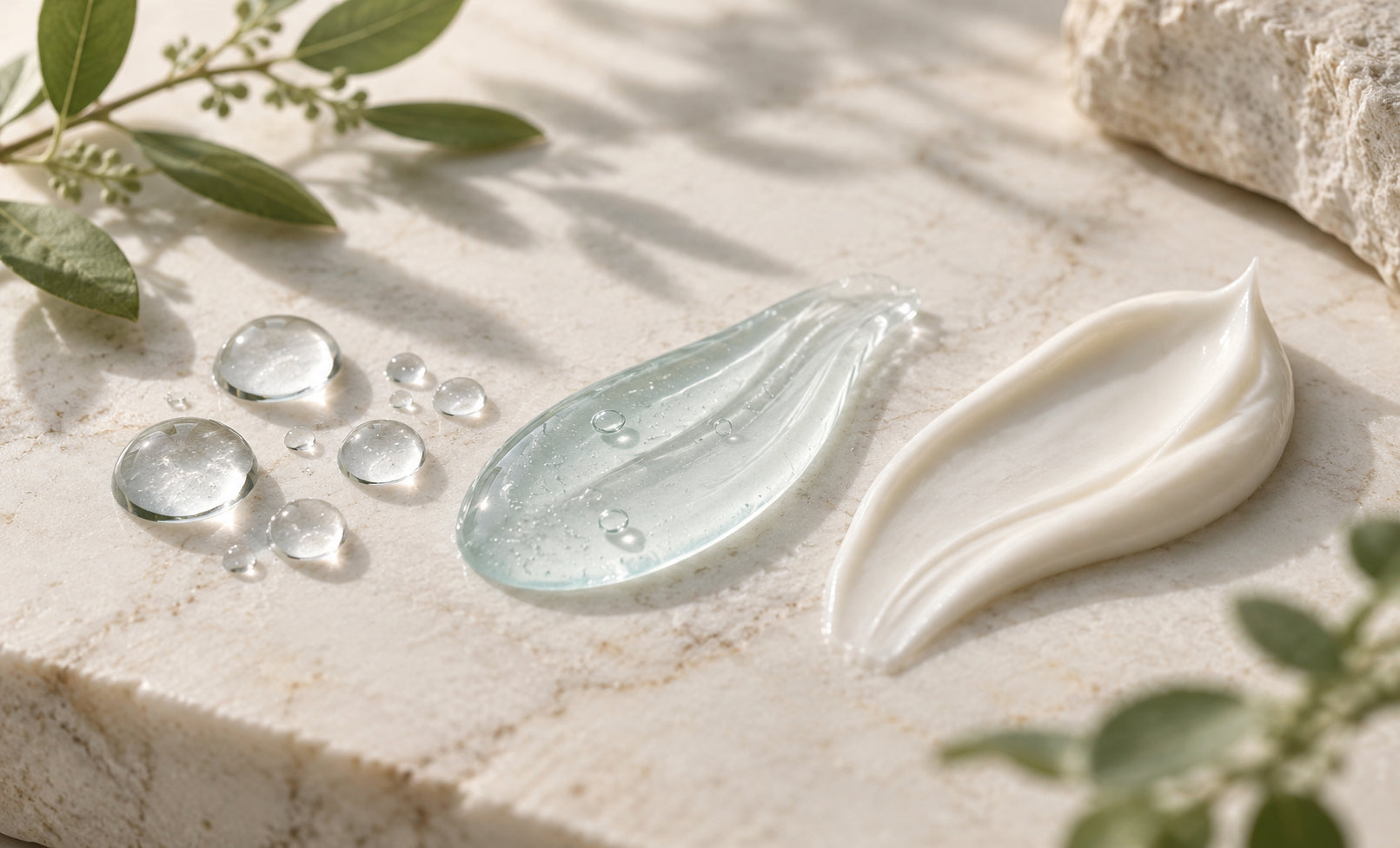
Hydration refers to water in the outer skin layer. Moisturization is broader: humectants support water, emollients smooth rough spaces and occlusives reduce evaporation. A serum rich in hyaluronic acid may hydrate, while a moisturizer supplies the richer support dry skin needs.
Learn the difference in our humectant guide and moisturizer science guide.
| If your skin is... | Consider... |
|---|---|
| Oily but tight | Lightweight lotion with humectants and modest emollients |
| Dry and flaky | Cream with emollient and occlusive support |
| Sensitive or burning | Simple fragrance-free formula; fewer new ingredients |
| Very dry in spots | A richer layer only where needed |
See a dermatologist for persistent itching, cracks, oozing, swelling, significant redness or a rash that does not improve. Stop any product that causes immediate burning or hives. Do not use hydration language to self-diagnose a medical condition.
It may be the finished serum or the way it is layered—not necessarily hyaluronic acid itself. Use less, apply to slightly damp skin and follow with moisturizer. If tightness continues, discontinue it. Read can hyaluronic acid dry out skin?.
For the evidence and limits of the ingredient itself, read Hyaluronic Acid for Skin.