Your Cart is Empty

Structural dark circles are shadows created by the contours beneath the eyes. A tear trough, under-eye hollow, prominent cheek contour or lower-eyelid bag can block light and look dark even when the skin itself is not heavily pigmented. Skincare can hydrate and smooth the surface, but it cannot fill a deep hollow or rebuild facial anatomy.
Dark circles are often mixed. Use our dark-circle type guide to compare structural, vascular and pigmented clues.
The tear trough is the groove that can run from the inner corner of the eye toward the upper cheek. Anatomical research describes a tear-trough ligament and related structures that help form this contour. Genetics may make it visible early, while age-related changes in skin, fat pads, bone and soft tissue can deepen it.
| Observation | What it suggests |
|---|---|
| Darkness follows a groove under the eye | A tear trough may be casting shadow |
| The area looks lighter in flat, front-facing light | Lighting and contour are strongly involved |
| Color changes when you tilt your head | Shadow may matter more than fixed pigment |
| Puffiness sits above a darker crescent | A bag may be creating a shadow below it |
These observations do not replace an in-person evaluation. Under-eye pigment and visible vessels can sit on top of the same contour.
Topical skincare acts primarily on the skin surface and upper layers. It may improve dryness, fine texture and light reflection, but it cannot reposition fat pads, change bone structure or remove a ligament. That is why a product can make the eye area look smoother while the same shadow remains.
This distinction is central to choosing a product honestly. Read why eye creams disappoint when the cause and formula do not match.
Humectants such as hyaluronic acid and glycerin draw water into the outer skin layers. Emollients reduce roughness and can make the transition between the lower eyelid and cheek look softer.
Antioxidant or tone-supporting formulas may help when pigment is layered over a hollow. They will not remove the underlying contour.
A well-tolerated moisturizer can temporarily plump dry surface lines. Retinoids have broader evidence for photoaged texture, but the eye area is irritation-prone and not every formula is designed for use there.
Any product promising to “erase” structural circles is overstating what topical cosmetics can deliver.
Vitamin K is used in formulas for the appearance of under-eye discoloration, and small studies have examined topical combinations. It does not act as a filler. If a hollow is the main cause, any benefit from an eye cream will be limited to the skin and discoloration over the hollow.
For the evidence and limitations, read does vitamin K work for dark circles?
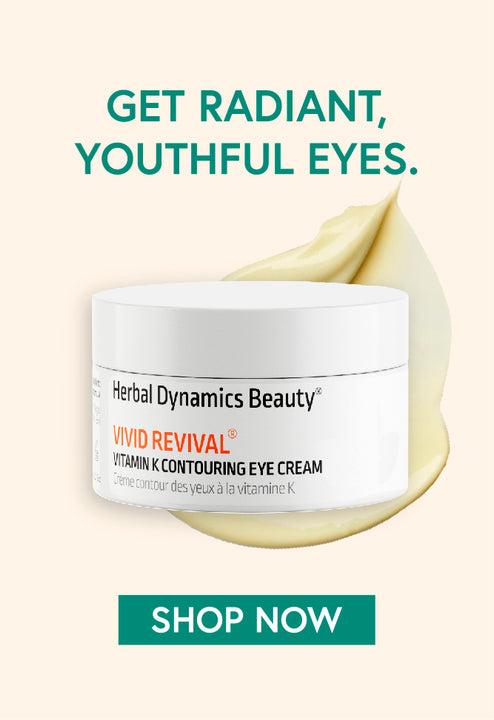
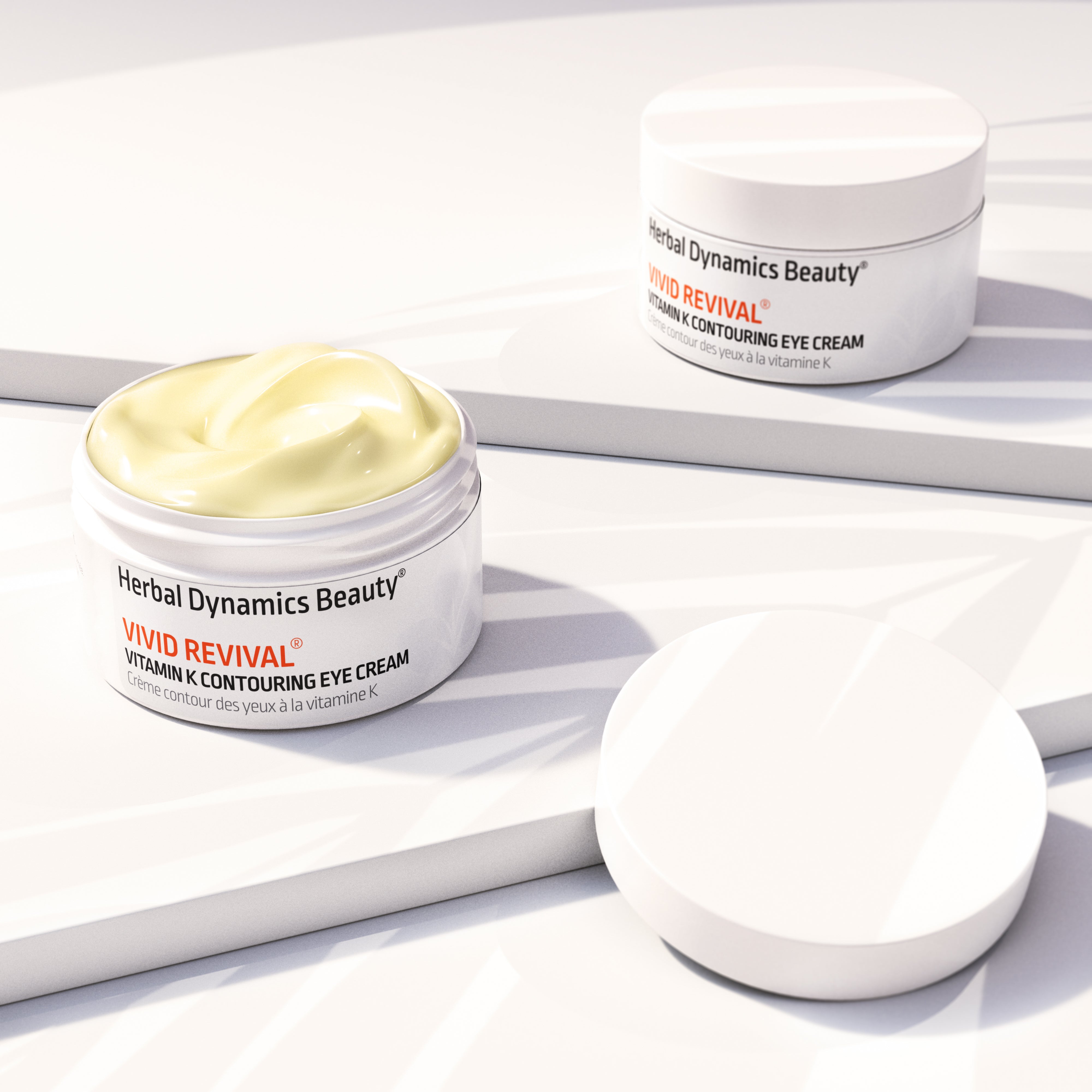
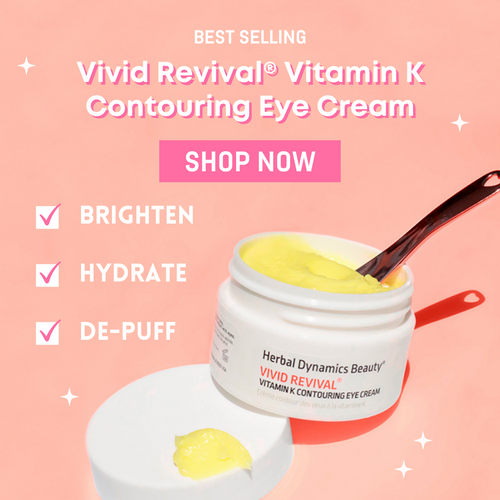
Herbal Dynamics Beauty Vivid Revival® Vitamin K Contouring Eye Cream is designed to improve the appearance of mixed discoloration, puffiness and dry-looking texture. It cannot change a tear trough. If structure is your dominant concern, use Find My Routine for supportive skincare rather than expecting a topical anatomical correction.
Clinicians may discuss options such as fillers, lasers, peels or surgery depending on the cause, anatomy and skin tone. Each has limitations and risks; the eye area requires an appropriately licensed, experienced medical professional. This article does not recommend a specific procedure.
Get prompt medical evaluation for sudden one-sided swelling, pain, vision changes, trauma or a rapidly changing contour. Long-standing symmetrical hollows are commonly cosmetic, but a qualified clinician can assess uncertainty.
If discoloration and dryness are also present, compare cosmetic options in the cause-based eye cream guide while keeping the structural limits above in mind.
This article is educational and is not a substitute for medical advice.