Your Cart is Empty



Dark circles can run in families, but “genetic” is not one single type. Inherited traits may include under-eye pigmentation, naturally thin skin, visible vessels, a pronounced tear trough or a combination of these. The best cosmetic strategy depends on which trait is creating the darkness—not on genetics alone.
Compare the main patterns in our guide to what causes dark circles under the eyes.
Some families naturally have more melanin around the eyelids. This may look brown or gray-brown and can become more noticeable with sun exposure or irritation.
When under-eye skin is naturally thin, vessels and deeper tissue can create a blue, purple or reddish cast. Hydration may improve texture, but it cannot make inherited skin anatomy disappear.
Facial structure influences how light reaches the under-eye area. A genetically pronounced groove can cast a shadow from childhood or early adulthood. Read what skincare can and cannot do for tear troughs.
Families may share a tendency toward allergic disease. Congestion and repeated eye rubbing can add swelling or post-inflammatory discoloration to an inherited baseline.
| Clue | Interpretation |
|---|---|
| Close relatives have a similar pattern | Inherited traits may contribute |
| Circles began in childhood or adolescence | Baseline pigment or anatomy may be involved |
| Sleep changes do not eliminate them | Fatigue is probably not the only cause |
| Color and shadow coexist | A mixed genetic pattern is likely |
There is no routine consumer genetic test that tells you which eye cream to buy. Visual pattern, history and—when needed—professional assessment are more useful.
Inherited dark circles may be improved, but complete removal is often unrealistic. Pigment-focused care may soften brown discoloration; hydrating products can improve surface texture; sun protection can help prevent additional pigment and photoaging. A topical will not change bone structure or permanently fill a hollow.
This is also why “get rid of dark circles” claims should be treated cautiously. Our cause-based reduction guide explains what different options can reasonably achieve.
See our ingredient guide for dark circles and cause-based eye cream comparison.
Vitamin K appears in eye products intended for the look of under-eye discoloration. Human studies are small and often test combination formulas or post-procedure bruising, so they do not prove that vitamin K reverses inherited circles. It may be most relevant when visible discoloration—not a deep hollow—is part of the pattern.
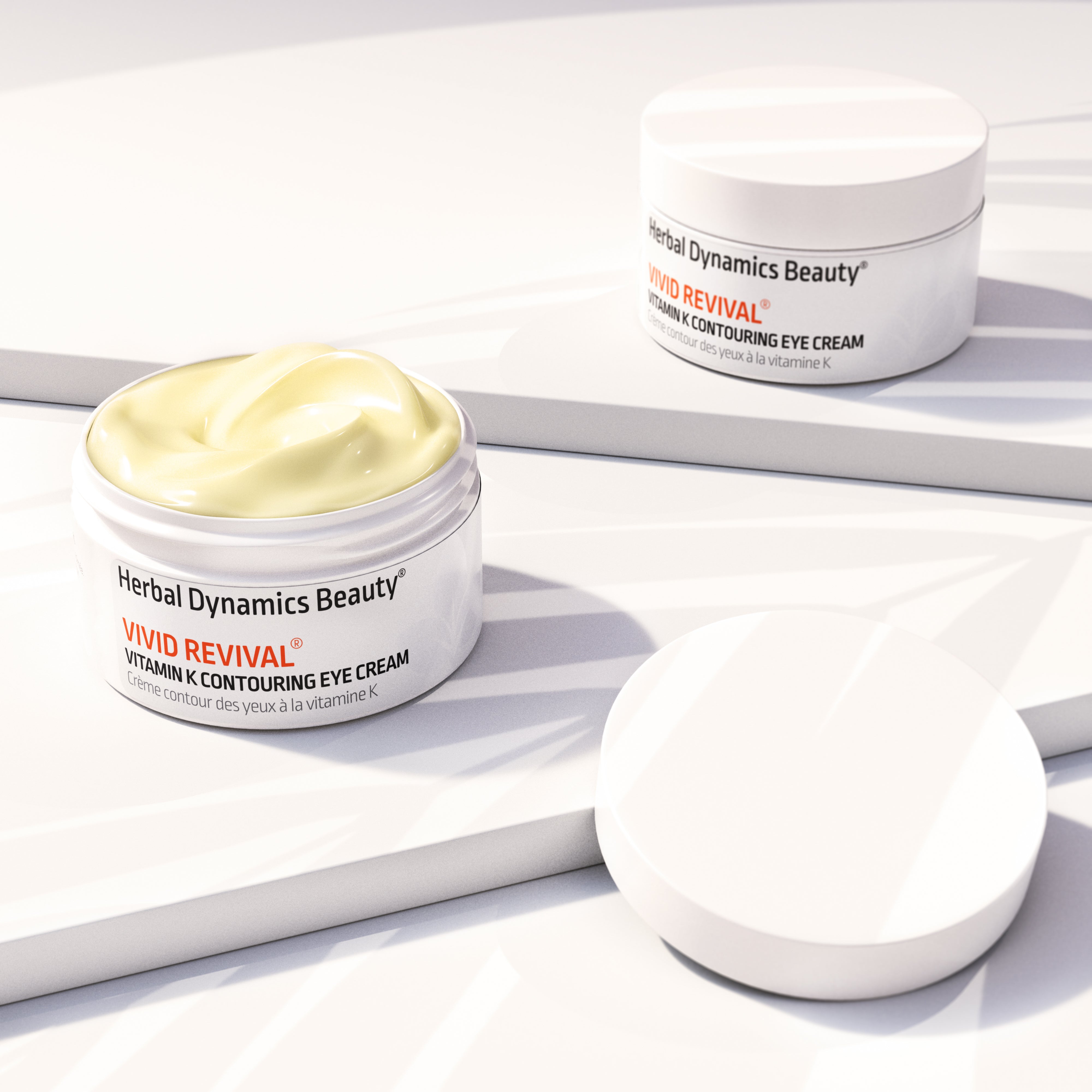
Herbal Dynamics Beauty Vivid Revival® Vitamin K Contouring Eye Cream combines vitamin K with green tea and moisturizers. It is a cosmetic option for discoloration, puffiness and dehydration, with results that vary by cause.
Our under-eye routine guide puts these steps in order.
Long-standing symmetrical circles are usually a cosmetic concern. Seek medical advice for sudden onset, one-sided change, pain, significant swelling, vision symptoms or persistent dermatitis. A dermatologist can also help distinguish pigment from vessels and shadow.
This article provides general education and does not diagnose a condition.