Your Cart is Empty

The best serum for sensitive skin is an optional formula that addresses a clear need without making your routine harder to tolerate. For ordinary dehydration, a simple hydrating serum is often a more relevant starting category than a strong exfoliating or anti-aging treatment. If moisturizer already keeps your skin comfortable, you may not need a serum at all.
| Goal | Ingredients or format to investigate | Important limit |
|---|---|---|
| Extra hydration | Glycerin, hyaluronic acid or sodium PCA in a comfortable formula | A water-binding serum may still need moisturizer over it. |
| A comfortable conditioning step | Panthenol, beta-glucan or a suitable cica formula | The featured ingredient does not prove that the product treats redness. |
| Uneven-looking tone | A carefully chosen vitamin C or niacinamide formula, once basic care is tolerated | An active serum can irritate; the highest percentage is not the automatic goal. |
| Fine-line care | A separate discussion of retinoids or peptides, if appropriate | A “sensitive” label does not remove active-ingredient precautions. |
| Burning, swelling or a recurring rash | Assessment and removal of suspected triggers | A new soothing serum is not a diagnostic test or treatment plan. |
Keep these decisions separate. Buying a product because it contains every trending ingredient makes it harder to identify what is useful and what you tolerate. The sensitive-skin guide explains how a serum fits around the essentials.
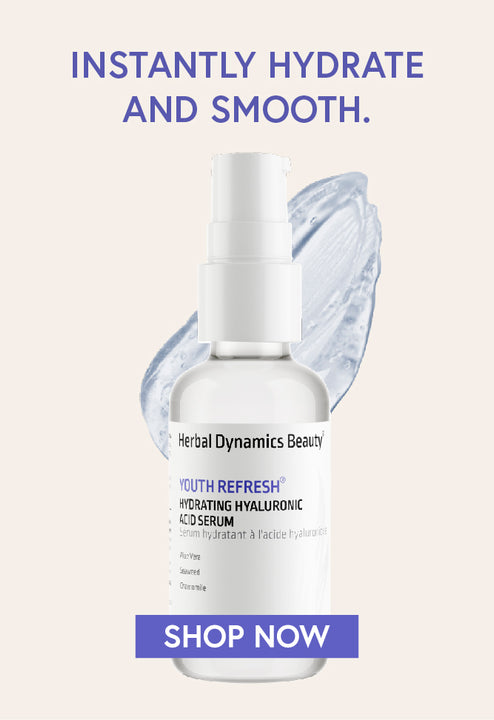
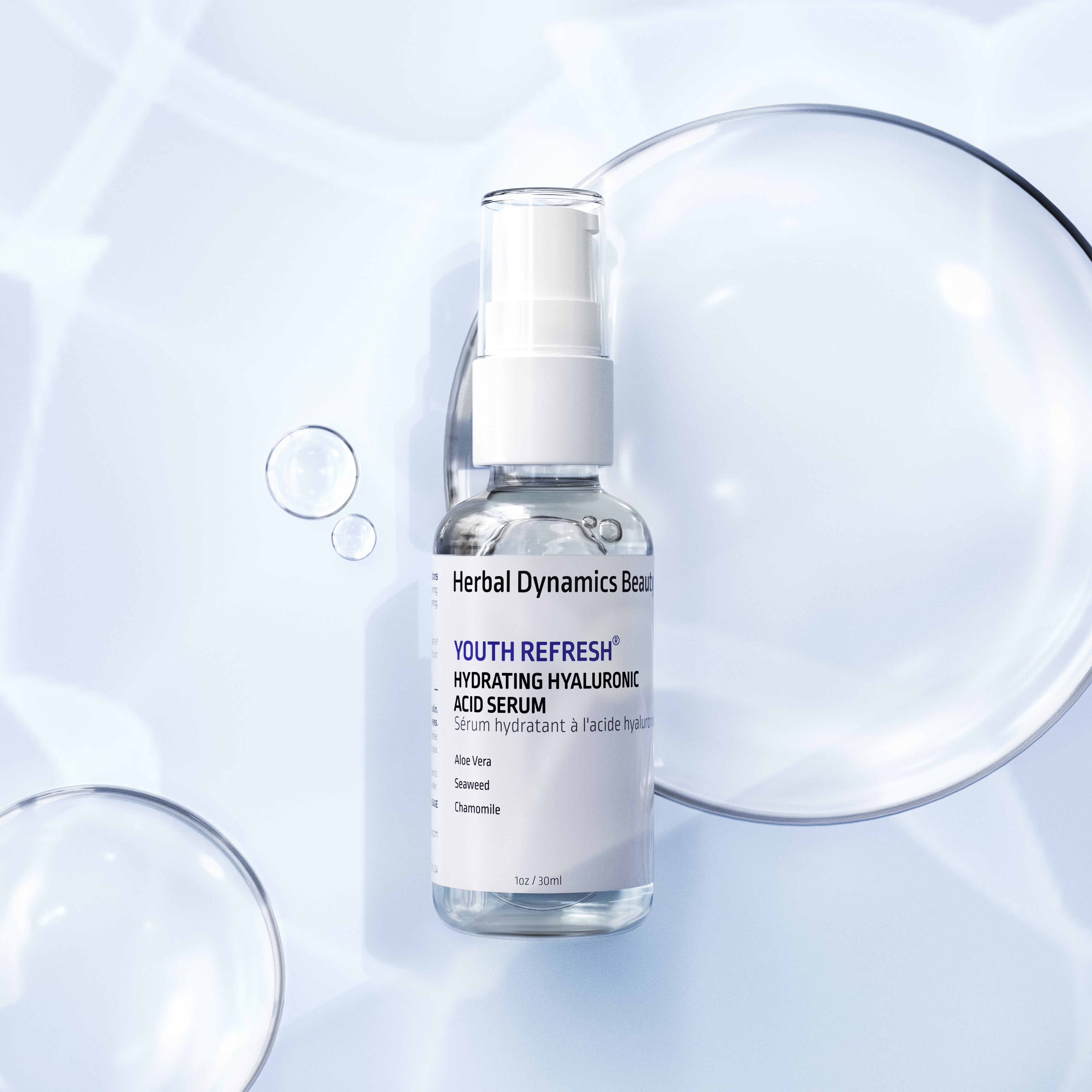
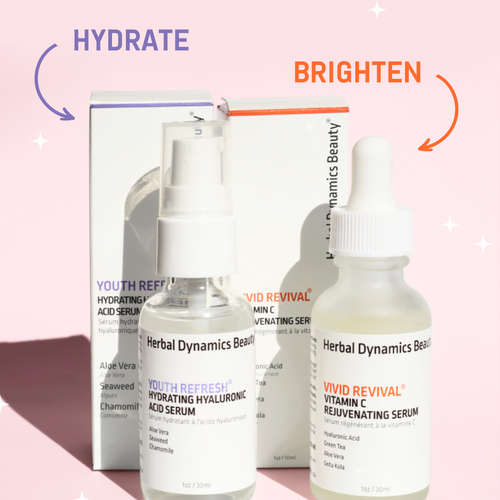
Youth Refresh® Hydrating Hyaluronic Acid Serum is an available cosmetic hydration option. Its current list includes aloe gel, hyaluronic acid, glycerin, sodium PCA, bladderwrack, chamomile and grape-seed extracts. The humectants fit a hydration goal; the botanical mixture is not suitable for every allergy history.
Consider it when your skin is comfortable and the complete formula fits your needs. If you react to chamomile or are avoiding botanical mixtures, choose a different suitable formula. Do not apply it to a newly inflamed face to test whether the featured ingredients will “repair” a reaction. Follow the product directions and use moisturizer when needed.
Panthenol, beta-glucan and Centella asiatica have different evidence bases. A small study of one formula does not prove that every serum sharing an ingredient has the same result. An ingredient's laboratory effects are also different from a product's measured effect on facial sensitivity.
For hyaluronic acid specifically, use the existing sensitivity guide. This buying guide compares serum roles; that reference explains the ingredient and why the rest of its formula matters.
It depends on the goal, formulation and your current tolerance. Do not add an active solely because a hydrating serum did not treat acne or discoloration; those are different concerns. Review vitamin C by skin type and niacinamide evidence and side effects before choosing. A lower-frequency introduction cannot make an unsuitable formula suitable for everyone.
For an ordinary water-based hydrating serum, follow the manufacturer's directions after cleansing and before moisturizer. A toner is optional. Avoid adding a serum, toner and exfoliant on the same day when you are trying to work out tolerance. In the morning, keep sun protection in the routine.
If a film pills, reassess the amount and the number of layers; pilling alone is not evidence of allergy. If it stings, itches or produces a rash, stop and review the reaction. Persistent burning deserves more attention than adjusting the order of products.
Use small-area testing before wider use, keep other steps stable and save the ingredient list. A negative home test does not establish allergy safety. Recurring reactions warrant professional evaluation.
By Herbal Dynamics Beauty · Updated September 21, 2026.
General skincare education. Persistent, painful or worsening symptoms need professional assessment.