Your Cart is Empty


Dark circles do not have one universal color or cause. On different skin tones they may appear blue, purple, red-brown, deep brown or gray. Melanin, visible vessels, inflammation, skin thickness and facial anatomy can overlap, so treatment should be guided by the pattern—not by complexion alone.
Our dark-circle causes guide explains the vascular, pigmentary, structural and mixed categories used throughout this cluster.
| Type | Possible appearance | Key limitation |
|---|---|---|
| Pigmentary | Tan, brown, deep brown or gray-brown | May persist after irritation or sun exposure |
| Vascular | Blue, violet, red or dusky gray | Color is harder to judge in variable lighting |
| Structural | Gray, charcoal or simply “dark” | Shadow can mimic pigment |
| Mixed | Several colors plus a hollow or puffiness | Usually needs more than one strategy |
Phone cameras, bathroom lighting and concealer residue can all distort color. Evaluate the area in neutral daylight without stretching or rubbing the skin.
Skin with more melanin is better protected against some UVB effects, but it can be more prone to long-lasting hyperpigmentation after inflammation. Visible light and UVA can also contribute to pigmentation. This makes irritation control and comprehensive photoprotection especially important.
Repeated rubbing, eczema, allergic symptoms and overly aggressive brightening routines may deepen color rather than improve it. Read our focused guide to brown and gray under-eye circles.
Visible-vessel color is often described as blue or purple, but on deeper skin it may look dusky, plum, red-brown or gray. A vascular component can coexist with melanin and be difficult to separate visually. The scientific literature on dark circles includes diverse causes but does not provide a perfect color chart for every skin tone.
See how vascular dark circles differ from pigment and shadow.
Track results in the same location, time of day, camera settings and facial position. Cosmetic improvement should be visible under consistent conditions.
Prioritize daily broad-spectrum sun protection, gentle cleansing and well-tolerated tone-supporting ingredients. Strong acids, undiluted DIY ingredients and products that sting can provoke more pigment.
Hydration and formulas aimed at the appearance of discoloration may help, but evidence for topical “circulation boosting” claims is limited. Eye cream cannot make thin skin genetically thicker overnight.
Moisturizers can smooth the surface but cannot fill a tear trough. Learn the limits of skincare for structural dark circles.
Small studies have evaluated topical vitamin K combinations in cosmetic or post-procedure settings. They do not establish guaranteed results across all skin tones or dark-circle types. Vitamin K is better considered for the appearance of vascular or mixed discoloration than as a stand-alone melanin treatment.
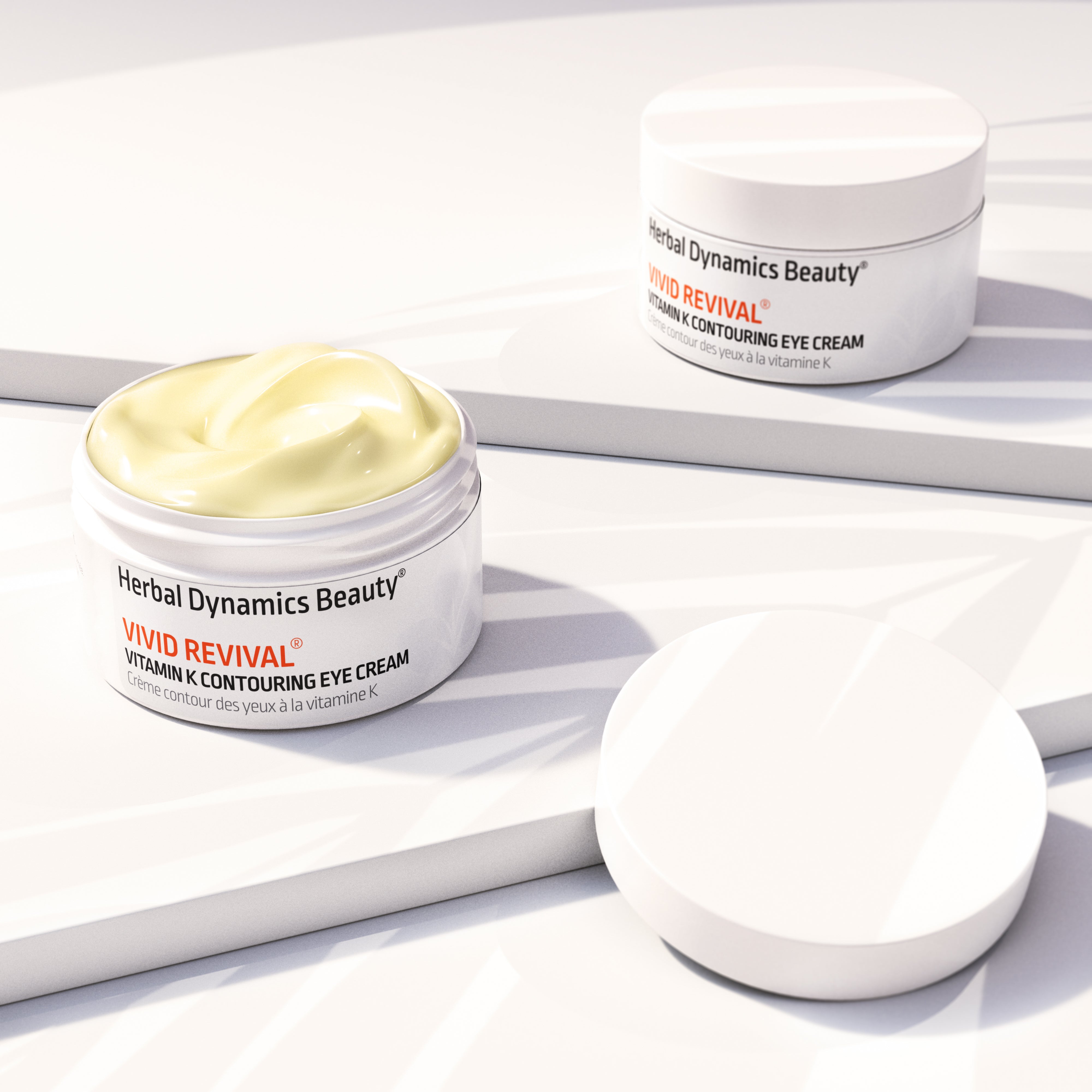
Herbal Dynamics Beauty Vivid Revival® Vitamin K Contouring Eye Cream pairs vitamin K with green tea and moisturizers. Patch test, follow the label and discontinue use if persistent irritation occurs.
All skin tones can experience photoaging and pigment change. Broad-spectrum sunscreen, sunglasses and shade form a practical prevention strategy. Tinted sunscreens containing iron oxides may offer additional visible-light protection for pigment-prone skin, although comfort and eye-area tolerance matter.
Read how sunscreen fits into dark-circle prevention.
A dermatologist can help when the color is difficult to classify, pigment is worsening, the skin is itchy or scaly, or over-the-counter products cause irritation. Seek prompt care for sudden one-sided change, pain, marked swelling or vision symptoms.
When you are ready to compare formulas, use the cause-based eye cream guide rather than choosing solely by skin tone.
This article provides general education and does not diagnose a condition.